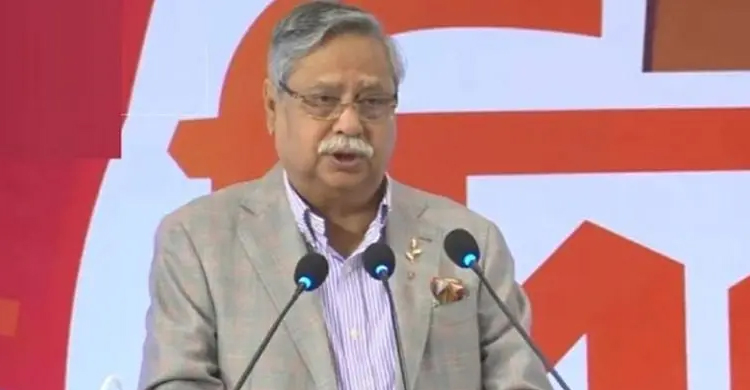
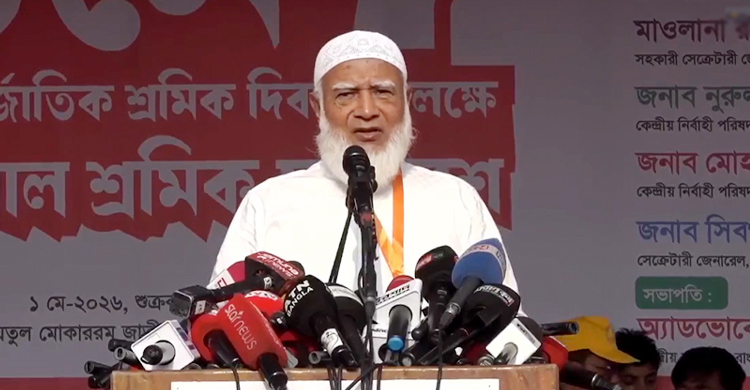
President Md. Sahabuddin has stated that Shaheed President Ziaur Rahman laid the groundwork for the remittance sector, which now serves as a primary driving force behind Bangladesh’s economy.
Highlighting the late president`s contributions, Sahabuddin noted that the tripartite labor policy and reforms introduced by Ziaur Rahman strengthened the foundation of labor welfare in the country.
In 1976, he established the Ministry of Manpower and initiated the process of sending Bangladeshi workers to 33 countries, including those in the Middle East. This groundbreaking initiative ushered in a new era of foreign currency inflow, laying the bedrock for today’s thriving remittance economy, the president added.
The president also acknowledged the contributions of former Prime Minister Khaleda Zia, noting that she broadened labor rights, employment opportunities, and welfare by enacting the Labor Act of 2006 and establishing the Labour Welfare Foundation. Building on this legacy, the current administration has undertaken comprehensive action plans to ensure the welfare, fair rights, physical and mental well-being, and safe working environments for all workers.
Underscoring the immense contribution of the working class to national development, Sahabuddin pointed out that alongside the relentless efforts of domestic laborers across the agriculture, transport, and industrial sectors, remittances from expatriates and earnings from the readymade garment sector remain the lifeblood of the country`s foreign exchange reserves.
He reiterated the government`s commitment to ensuring workers` rights, safety, and welfare by elevating labor standards in line with International Labour Organization guidelines. Bangladesh has already signed 39 ILO conventions and one protocol to safeguard workers` rights, he mentioned.
The president also shared the government`s plans to reopen closed state-owned industrial enterprises and gradually create new employment opportunities. He urged both workers and employers to foster mutual trust, cooperation, and cordial relations, describing such harmony as essential for boosting industrial productivity and achieving sustainable economic growth.
Furthermore, he strongly advocated for equal pay, maternity leave, and safe working conditions for female workers.
During his address, the president expressed deep sorrow over the tragic deaths of 13 workers in a recent chemical warehouse fire in Mirpur’s Rupnagar area. Announcing financial assistance for the bereaved families, he called upon factory owners and authorities to strictly enforce safety measures to prevent such devastating accidents in the future.
He concluded by expressing optimism that a humane, safe, and sustainable labor system could be established in Bangladesh through the collective efforts of both workers and employers.