President Donald Trump and Vice President JD Vance say the interim agreement reached with Iran to end the war could bring significant benefits to American farmers.
However, Iranian officials have rejected those claims, and experts on sanctions say it remains unclear how billions of dollars in frozen Iranian assets could be directed toward purchases from U.S. farmers.
Under a tentative agreement reached last week, the Strait of Hormuz would reopen and Iran would be allowed to resume unrestricted oil exports during a 60-day period while Washington and Tehran negotiate a broader settlement. The memorandum of understanding also includes provisions to unfreeze Iranian assets.
The agreement has drawn criticism for not directly addressing issues Trump cited when launching military action against Iran on Feb. 28, including Tehran’s nuclear programme, missile development and support for groups such as Hezbollah in Lebanon and Hamas in Gaza.
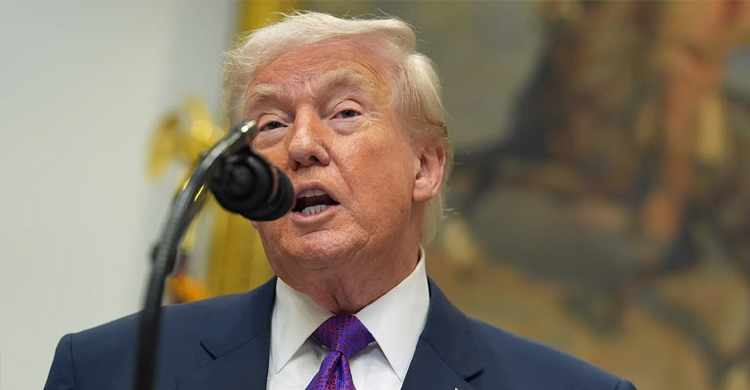
Responding to critics on Tuesday through his Truth Social platform, Trump argued that the deal would provide a financial boost for American agriculture.
He said the U.S. Treasury Department would release Iranian assets into escrow accounts controlled by the United States and that the funds would be used exclusively to purchase food and medical supplies from the United States, including corn, wheat and soybeans produced by American farmers.
“These are things that are desperately needed by Iran,” Trump wrote.
Vance also said after high-level talks in Switzerland that frozen Iranian funds held abroad would be used to purchase American agricultural products.
Iran, however, strongly disputed that interpretation.
Iranian Foreign Ministry spokesperson Esmail Baghaei said any future agricultural imports would be based on price and quality rather than conditions imposed by Washington.
“It is interesting that the philosophy and goal of the war, which was the destruction of the Iranian civilization and the collapse of Iran, has become enriching American farmers,” Baghaei said.
Iran’s ambassador to Geneva, Ali Bahreini, also rejected Vance’s assertion that the United States and Qatar would determine how Tehran spends its unfrozen assets.
“Iran is the only country who decides what to do with those assets,” Bahreini told reporters.
A U.S. official, speaking on condition of anonymity because they were not authorized to comment publicly, dismissed the apparent contradiction and said Iranian officials were addressing a domestic audience.
Joseph Glauber, a research fellow emeritus at the International Food Policy Research Institute, said Iran is unlikely to stop buying food from its traditional suppliers.
According to Glauber, Iran currently imports agricultural products from countries including Brazil, India, Turkey, Canada, Australia, Argentina and members of the European Union.
He said any U.S. requirement forcing Iran to buy American products could create tensions with competing suppliers.
Under previous sanctions arrangements, revenue earned by Iran from exports such as oil sales to South Korea or electricity sales to Iraq was typically placed in escrow accounts and released only with U.S. Treasury approval. Such funds were generally limited to purchases of non-sanctioned goods, including food and medicine.
On Monday, the U.S. Treasury approved sales of Iranian oil, petrochemicals and petroleum products through Aug. 21, although the announcement did not mention escrow accounts.
Richard Goldberg of the Foundation for Defense of Democracies, who helped coordinate pressure campaigns against Iran during Trump’s first administration, said on social media platform X that he would welcome clarification if Iran were indeed restricted to purchasing only U.S. agricultural products.
Richard Nephew, a senior research scholar at Columbia University’s Center on Global Energy Policy and a former sanctions adviser in the Obama and Biden administrations, said many questions remain about how the new agreement would work in practice.
Asked whether Washington could require Iran to use the unfrozen assets to buy American farm products, Nephew said such a move was technically possible.
“All you really need to do is to tell a foreign bank that they can move the money but only to a U.S. bank to buy soybeans or whatever,” he said in an email.
However, he noted that banks are not obligated to comply. If they refuse, the United States could impose sanctions on them.
Nephew added that such an approach would be unusual because Washington generally avoids creating the impression that national security policy is being used for financial gain.