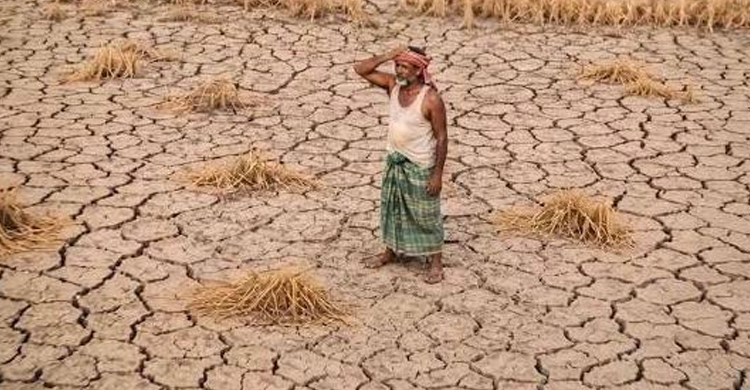
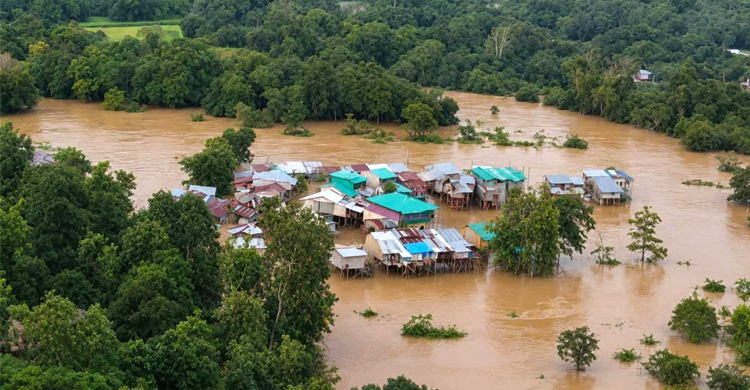
Sadaf Hosen : Climate change is altering rainfall patterns, precipitation levels, and temperature trends across different regions of Bangladesh. As a result, farmers are increasingly facing prolonged droughts in some seasons and unusually heavy rainfall in others. Agricultural experts warn that these unpredictable weather conditions pose significant risks to the production of rice, the country`s staple food crop. However, the phrase "Untimely rain and drought are leaving golden paddy to rot in the fields" should be understood as a figurative expression rather than a universal reality. In some areas, mature rice crops are submerged and damaged by excessive rainfall, while in others, drought prevents proper grain formation or reduces yields.
Agricultural scientist Dr. Mahbubur Rahman explains, "Weather plays a crucial role at every stage of rice cultivation. If normal weather conditions are disrupted during transplanting, tillering, panicle formation, or harvesting, both crop yield and grain quality can be adversely affected." He adds that climate change is making it increasingly difficult for farmers to rely on traditional farming experience when making cultivation decisions.
Agricultural researcher Dr. Nusrat Jahan says, "During droughts, rice fields often do not receive enough water. On the other hand, heavy rainfall during the harvesting season can leave fields waterlogged, increasing the risk of damage to mature crops. As production costs continue to rise, many farmers struggle to earn the returns they expected."
Abdul Kader, a farmer from Naogaon, says, "We were preparing to harvest our rice when several days of continuous rain flooded much of our fields. By the time we could harvest, we had already suffered considerable losses." Rafiqul Islam, a farmer from Kushtia, adds, "When we need rain, it doesn`t come. But when it`s time to harvest, we often get excessive rainfall. Farming has become much more uncertain."
Agricultural economist Dr. Farhana Yasmin notes, "Losses in rice production do not only reduce farmers` incomes; they can also affect food supplies and market prices. This is why climate-resilient agricultural systems are becoming increasingly important."
Environmental expert Dr. Rashedul Karim says, "In addition to climate change, deforestation, wetland degradation, and the overuse of groundwater are disrupting local environmental balance. These factors are contributing to increasingly unstable weather conditions."
Salma Begum, a homemaker from Rajshahi, says, "When rice production declines, the price of rice often increases. Ultimately, ordinary families bear the burden." Mehedi Hasan, a university student from Mymensingh, believes that farmers should have easier access to reliable weather information and modern agricultural technologies.
Public health specialist Dr. Sharmin Akter warns that prolonged disruptions to food production could also threaten nutritional security. "Agriculture and public health should be addressed together when developing long-term adaptation strategies," she says.
Experts recommend expanding the development of drought- and waterlogging-tolerant rice varieties, improving irrigation systems, providing weather-based agricultural advisory services, strengthening crop insurance programs, promoting rainwater harvesting, and expanding farmer training initiatives. At the same time, they emphasize the importance of reducing carbon emissions and protecting the environment to slow the pace of climate change.
Environmental policy expert Dr. Sayma Rahman says, "Preparing agriculture for the future requires more than simply increasing production. It also means strengthening farmers` ability to adapt to a changing climate. Combining scientific research, technological innovation, and farmers` practical experience offers the most effective path forward."
According to analysts, the combined effects of irregular rainfall and prolonged drought represent a significant warning for Bangladesh`s rice production system. Implementing science-based agricultural policies, promoting climate-resilient technologies, and strengthening timely adaptation measures could substantially reduce future losses. Without these efforts, the pressure on national food security, farmers` incomes, and the rural economy is likely to intensify in the years ahead.