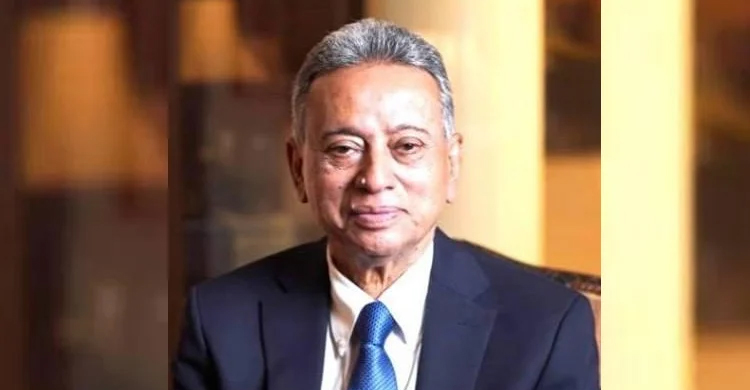
Dr. Dewan Azad Rahman: The partition of Bengal is an important chapter in the political history of the Bengali people. This administrative reorganisation, which came into effect on 16 October 1905, profoundly influenced the development of Eastern Bengal, the nationalist movement and communal politics. The political identity of the people of this region subsequently changed through the annulment of the partition of Bengal, the partition of India, the Language Movement and the Liberation War. Although the partition of Bengal helped shape the historical background to the emergence of Bangladesh, independence was neither its inevitable nor its direct consequence.
In the late nineteenth century, Bengal was a vast administrative province of British India. It included Bengal as well as extensive areas of Bihar and Orissa. Administration, higher education, commerce and modern professions developed around Calcutta. Many districts of Eastern Bengal lagged behind because of their dependence on river transport, limited infrastructure and administrative neglect. Although the region made important contributions to agricultural production and the jute trade, its ordinary people did not share equally in the benefits of development.
The zamindari system placed considerable pressure on the lives of farmers in Eastern Bengal. Rent, debt and natural disasters weakened their economic security. A large section of the Muslim community was comparatively disadvantaged in access to modern education and government employment. However, religious identity alone cannot adequately explain these inequalities. Social class, the rural economy and distance from the administrative centre also affected people`s access to opportunities.
The British administration began considering a reorganisation of Bengal`s boundaries on the grounds that it would address the difficulties of governing such a large province. A plan for division came under discussion in 1903, and an official proposal was published in January 1904. The initial plan envisaged attaching Dhaka, Mymensingh and Chittagong to Assam. After the plan was made public, leaders from different regions expressed their views on their interests, administrative advantages and possible losses.
In February 1904, Viceroy Lord Curzon visited Eastern Bengal. In Dhaka, Chittagong and Mymensingh, he held discussions with local leaders and spoke in favour of the proposed division. Several influential leaders, including Nawab Salimullah of Dhaka, saw the creation of a new province as an opportunity for the development of Eastern Bengal. As discussions continued, the scope of the plan expanded. The idea emerged of establishing a fully constituted province with its own capital, legislature and separate administrative system.
The final decision to partition Bengal was announced on 19 July 1905 and implemented on 16 October. The newly formed province was named Eastern Bengal and Assam. Dhaka became its capital, while Chittagong served as a subsidiary administrative centre. The remaining province of Bengal comprised western Bengal, Bihar and Orissa. Viewing this reorganisation as a simple division between present-day Bangladesh and West Bengal therefore fails to capture the full administrative reality of the time.
Eastern Bengal and Assam covered approximately 106,540 square miles and had a population of about 31 million. Muslims formed the majority, while large numbers of Hindus and people from other communities also lived in the province. The British government justified the change in terms of administrative efficiency and regional development. However, the calculation that dividing politically active Bengal might weaken nationalist opposition also became important. Administrative needs were thus closely connected with colonial interests.
The establishment of the new province restored Dhaka`s wider administrative importance after a long interval. Demand increased for government offices, officials and related services. Opportunities arose for improvements in education, communications and urban infrastructure. Many Muslim leaders in Eastern Bengal hoped that, with some freedom from Calcutta`s influence, local people would gain greater access to employment and education. Activities centred on the new capital also opened up opportunities for traders and professionals.
However, it would be incorrect to regard all of Dhaka`s important institutions as direct results of the partition of Bengal. The foundation stone of Curzon Hall was laid in 1904, before the partition came into effect. Dhaka Medical College was established in 1946 and Bangla Academy in 1955. These institutions developed under different historical circumstances. The partition was connected with Dhaka`s rise in administrative importance, but attributing the establishment of every subsequent educational or cultural institution to the same event would be misleading.
Meanwhile, strong protests against the partition of Bengal began among the educated sections of society centred on Calcutta. Opponents believed that the historical and cultural unity of Bengali-speaking people would be damaged. Some of Calcutta`s lawyers, traders and influential middle-class groups also feared that their own position would be weakened. Various leaders, including Surendranath Banerjea, organised protests. In nationalist politics, the partition became a powerful issue around which to mobilise public opinion against British rule.
The Swadeshi movement emphasised the boycott of foreign goods, the use of locally produced goods and the expansion of national education. Meetings, processions, newspapers and songs spread political awareness among the people. Rabindranath Tagore appealed for harmony through the Rakhi Bandhan ceremony. The participation of students and women broadened the movement`s social reach. One section pursued constitutional protest, while another became involved in revolutionary activities. Through this movement, Indian nationalism gained experience in new strategies and forms of organisation.
It is also inaccurate to describe the response to the partition as opposition from all Hindus and support from all Muslims. There were opposing views within the Muslim community, and people`s positions varied according to region, occupation and social interests. Nevertheless, a large proportion of Muslim leaders in Eastern Bengal welcomed the new province. Some activities of the Swadeshi movement and its use of religious symbols caused concern among them. Mutual suspicion increased the political distance between the two sides.
In these circumstances, the need for a separate political organisation to represent Muslim interests became more pressing. The All-India Muslim League was founded in Dhaka on 30 December 1906. Nawab Salimullah played an important role in its establishment. Although the partition of Bengal and fears of its annulment hastened the organisation`s formation, broader political factors were also at work. Demands for representation for educated Muslims, access to government employment and participation in constitutional reforms were contributing to the formation of a distinct political identity.
The Morley–Minto reforms of 1909 introduced separate electorates for Muslims. Religious identity thereby became a formal basis for political representation. The colonial government sought to strengthen its rule by using the demands of different groups. The separate electoral system further institutionalised the distance that had developed between supporters and opponents of the partition. However, the growth of communalism must be considered in relation to social inequality and competition among local leaders, as well as government policy.
After prolonged protests and changes in the political situation, King George V announced the annulment of the partition of Bengal at the Delhi Durbar on 12 December 1911. At the same time, the decision to transfer the capital of British India from Calcutta to Delhi was announced. A new administrative reorganisation took effect in 1912. Bengali-speaking areas were reunited; Bihar and Orissa became a separate province, and Assam became a separate administrative region. Opponents of the partition regarded this decision as a victory for their movement.
Many Muslim leaders in Eastern Bengal viewed the annulment as a blow to their hopes for development. Their trust in the British government was also damaged. Demands for the expansion of higher education subsequently gained greater importance, and the University of Dhaka was established in 1921. Its establishment followed many years of initiatives and discussions. The institution later played a major role in the development of Eastern Bengal`s educated middle class and political leadership.
In the following decades, questions of farmers` interests, provincial power and communal representation continued to develop alongside one another in Bengal`s politics. The Lahore Resolution of 1940 opened new discussions about the political future of Muslim-majority regions. The Second World War, famine and the crisis surrounding the transfer of power complicated the situation. Conflict between the Congress and the Muslim League, together with communal violence, weakened the prospects for a united solution.
In 1947, West Bengal became part of India, while East Bengal became a province of Pakistan. A vast geographical distance separated Pakistan`s eastern and western wings. Although the state was created on the basis of religious identity, the two regions differed in language, culture and economic circumstances. Partition forced many people from their homes and turned them into refugees. Families and livelihoods were disrupted on both sides of the border. Despite hopes for the new state, uncertainty entered people`s everyday lives.
When Pakistan`s ruling authorities attempted to make Urdu the sole state language, protests developed among the people of East Bengal. Bengali was the language of the majority of the state`s population. The demand for recognition of the language therefore became linked to education, administration and the dignity of citizens. The organised movement expanded from 1948 onwards. On 21 February 1952, police gunfire in Dhaka killed Rafiq, Barkat, Jabbar and others. The subsequent deaths of injured protesters, including Salam, deepened the movement`s grief. The sacrifice of the language martyrs gave new strength to Bengali political consciousness.
The Constitution of 1956 recognised Bengali and Urdu as state languages. This achievement further strengthened a national identity rooted in language and culture. People realised that a shared religion alone could not guarantee their rights. The struggle to uphold the dignity of their mother tongue became connected with demands for economic fairness and democratic representation. East Bengal, later known as East Pakistan, gradually became more conscious of its own political rights.
Disparities between Pakistan`s two wings in development expenditure, government employment and military representation increased discontent. Despite the eastern region`s economic contribution, political power remained concentrated in West Pakistan. The United Front`s electoral victory in 1954 demonstrated the strength of provincial demands. Subsequent military rule curtailed democratic rights. Movements over education, workers` demands and farmers` grievances became connected with the wider political struggle. The people of East Pakistan increasingly demanded effective power to determine their own future.
In 1966, the Six-Point Programme gave the demand for autonomy a clear political form. The call for provincial control over the economy, revenue and administration gained public support. Government repression and the Agartala Case failed to stop the movement. During the mass uprising of 1969, the participation of students, workers and ordinary people weakened the foundations of military rule. The people of East Pakistan became more united in their demands for the release of political prisoners and democratic change.
In the general election of 1970, the Awami League won a majority in Pakistan`s National Assembly. The result demonstrated strong public support for Bengali demands for autonomy and democratic rights. However, the ruling authorities refused to transfer power to the elected representatives. When the National Assembly session was postponed, the non-cooperation movement spread across East Pakistan.
On the night of 25 March, the Pakistani army launched a campaign of genocide. The declaration of independence on 26 March and resistance in different places marked the beginning of the Liberation War. Bengali military personnel, police officers, students and ordinary people joined the struggle. The Mujibnagar Government organised the conduct of the war and efforts to gain international support. Armed resistance by freedom fighters, assistance from ordinary people and support from India played important roles in determining the course of the war. After nine months of bloody struggle, Bangladesh achieved victory on 16 December with the surrender of the Pakistani forces.
Throughout the history from the partition of Bengal to Bangladesh`s independence, questions of regional development, representation and identity repeatedly resurfaced. The hopes and disputes over administrative opportunities that emerged in 1905 later assumed new forms under different political circumstances. The principal foundations of Bangladesh`s independence developed during Pakistani rule through the struggle for language rights, movements against inequality and the pursuit of democracy. Keeping this distinction in mind helps us understand historical continuity while recognising the particular causes at work in each period.
This history teaches us that lasting unity cannot be established by disregarding people`s language, culture and political rights. Independent Bangladesh therefore has a responsibility to preserve historical memory while ensuring fair opportunities, democratic participation and communal harmony. Examining the experience of the partition of Bengal shows how the demand to protect people`s dignity and rights can reshape a state`s future through a long struggle.