| |
| Pakistan welcomes 35 senior Bangladeshi civil servants for leadership training |
| |
| |
 |
| |
| |
| Desk Report: A new chapter is opening in Pakistan-Bangladesh relations, not through big trade deals or high level summits, but through classrooms, training halls and shared experiences of governance.
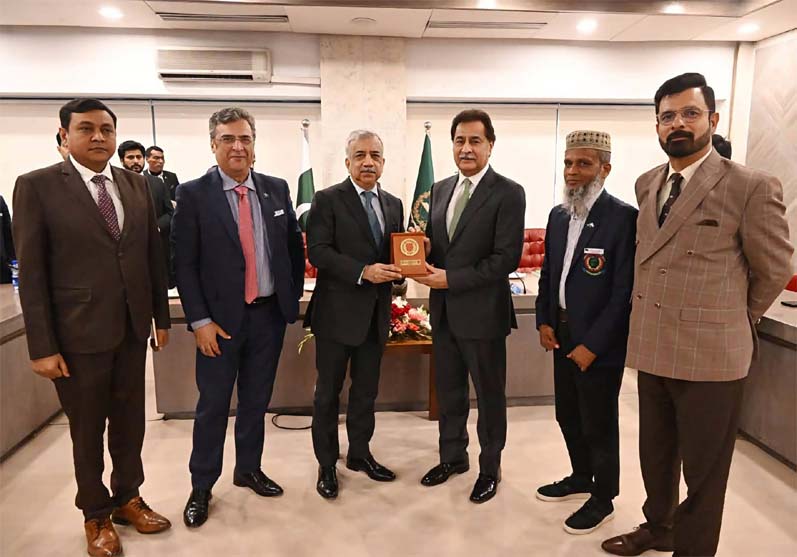
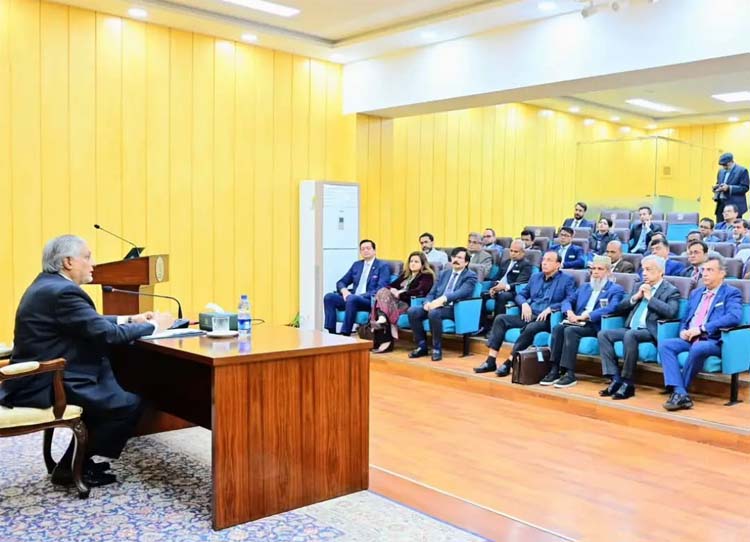
Deputy Prime Minister and Foreign Minister of Pakistan, Senator Mohammad Ishaq Dar, on Tuesday addressed a delegation of 35 senior civil servants from Bangladesh at the Ministry of Foreign Affairs in Islamabad.
The delegation is in Pakistan to take part in the Executive Leadership Training Programme organised by the Executive Development Institute, National School of Public Policy, under the Pakistan-Bangladesh Knowledge Corridor.
The news was shared on the official Facebook page of the Ministry of Foreign Affairs, Pakistan, and was reposted on the Facebook page of the Pakistan High Commission, Dhaka.
Warmly welcoming the delegation, the Deputy Prime Minister and Foreign Minister highlighted the bonds of friendship and cultural affinities between Pakistan and Bangladesh.
He welcomed the positive momentum in bilateral relations and reaffirmed Pakistan`s commitment to strengthening ties in a spirit of mutual respect, trust and goodwill.
For ordinary readers, the message is simple. The two countries share history, language roots, food, music and family values. Now they want to turn that closeness into practical cooperation.
The Deputy Prime Minister underscored the role of the Knowledge Corridor in promoting education, professional training and institutional exchanges.
The idea is not only to teach management theories. It is to let senior officials from both countries sit together, share problems, compare solutions and learn how public administration works on the other side of the border.
He expressed hope that the programme would facilitate the sharing of experiences in governance and public administration while fostering lasting professional links and friendships.
In other words, when these 35 officers return to Dhaka, Chattogram, Khulna, Sylhet and other districts, they will carry back not only certificates, but also new contacts, new ideas and new friendships in Pakistan.
For Bangladesh, such training matters for three reasons.
First, good governance needs continuous learning. Senior civil servants make decisions every day on land, health, education, revenue, law and order and development projects. Exposure to another country`s system helps them think differently.
Second, institutional links last longer than one visit. If officers from the two countries keep in touch, future cooperation on trade, education, climate, disaster management and public service becomes easier.
Third, people to people contact builds trust. When officials understand each other, governments can work together more smoothly.
The Deputy Prime Minister wished the delegates a productive and memorable stay in Pakistan.
The visit is being seen by diplomats in Dhaka as a sign of warming ties and a practical step forward. It shows that both sides want to move beyond statements and invest in people, the officials who actually run the state.
For the 35 Bangladeshi officers, the next few days will be about learning, listening and building bonds. For the two countries, it could be a small but meaningful step towards a stronger and more cooperative future.
|
| |
|
|
|
| |

|
|
Chief Advisor: Md. Tajul Islam,
Editor & Publisher Fatima Islam Tania and Printed from Bismillah Printing Press,
219, Fakirapul, Dhaka-1000.
Editorial Office: 219, Fakirapul (1st Floor), Dhaka-1000.
Phone: 02-41070996, Mobile: 01720090514, E-mail: muslimtimes19@gmail.com
|
|
| |
|