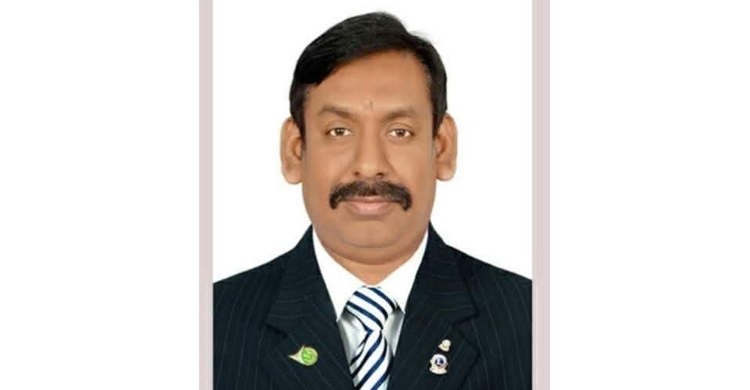
| Lion Md. Gani Miah Babul
Among those who have the deepest and most lasting influence on a person’s life, after parents, are teachers. A teacher does not merely impart knowledge from textbooks. A teacher broadens a student’s intellectual horizons, teaches the difference between right and wrong, instills morality and humanity, and guides young people toward becoming responsible citizens of the future. Therefore, teaching is not merely a profession; it is a noble commitment to knowledge, responsibility, ethics and humanity.
World Teachers’ Day is observed every year on October 5 across the world. The day is observed to recognize the contributions of teachers, protect their rights and dignity, and strengthen their role in improving the quality of education. According to UNESCO, 2026 marks the 60th anniversary of the historic ILO-UNESCO Recommendation concerning the Status of Teachers, adopted in 1966, which addressed teachers’ status, rights, responsibilities, recruitment, training and working conditions. The theme of World Teachers’ Day 2026 is “Standing with teachers: 60 years of protecting the profession, advancing its status and shaping our futures.” The theme places particular emphasis on protecting the teaching profession, enhancing its status and strengthening the role of teachers in shaping the future.
For a densely populated and developing country like Bangladesh, this theme has particular significance. No matter how much a country advances economically, technologically or in terms of infrastructure, its sustainable foundation is built through education. And teachers are at the heart of the education system. Therefore, the quality, dignity, skills and working conditions of teachers are directly connected to the future of the country.
Over the past several decades, Bangladesh has made significant progress in education. Access to primary and secondary education has expanded, girls’ participation in education has increased, the number of educational institutions has grown, and opportunities for higher education have become broader than before. The Bangladesh Bureau of Educational Information and Statistics (BANBEIS) regularly publishes data on educational institutions, students and teachers. The Education Statistics 2024 has also been published by the government.
Alongside the quantitative expansion of education, the greatest priority now must be given to the quality of education. It is important to ensure that a child attends school, but it is equally important to consider what the child learns, how the child learns, and how much that education positively transforms the child’s thinking, behavior and future life. The role of teachers is indispensable in this regard.
The world is changing rapidly. Artificial intelligence, digital technology, social media, online education and emerging employment sectors are transforming traditional concepts of education. Today, a teacher’s primary responsibility is not simply to complete the textbook syllabus. Teachers must also help students learn how to verify information, use technology responsibly, develop creative thinking and problem-solving skills, improve communication abilities, and cultivate ethics and humanity. The pressure on teachers is also increasing globally. UNESCO emphasizes that trained, supported and valued teachers are essential to ensuring quality education. At the same time, the world needs a large number of additional teachers, while teacher recruitment and training remain major challenges in various regions, particularly in South Asia.
In Bangladesh, it is also time to rethink issues related to teachers. In many educational institutions, the number of teachers is insufficient compared to actual needs. In some institutions, there are shortages of subject-specific teachers, while in others teachers are required to perform various administrative and additional duties. Teacher shortages not only increase pressure inside classrooms but also affect the learning environment and the overall quality of education. Reports based on BANBEIS data have also highlighted concerns about the availability of English and mathematics teachers at the secondary level.
Increasing the number of teachers is important, but their qualifications and training are equally crucial. A teacher’s need for training does not end after receiving a single training course. Teaching methods, technology, student psychology, assessment systems and social needs continue to evolve. Therefore, teachers need continuous professional development opportunities throughout their careers.
In particular, teachers must be equipped with the skills required to use digital technology effectively. Technology can never replace teachers; rather, it can make the work of competent teachers more effective. In the age of artificial intelligence, teachers must help students use technology not only to collect information but also to verify its accuracy and develop independent thinking and creativity.
The issue of teachers’ dignity is also critically important. Teachers should not be treated merely as machines for producing examination results. Nor is it reasonable to place the entire responsibility for poor student performance on teachers alone. A student’s family environment, socioeconomic circumstances, school infrastructure, educational materials, attendance, nutrition, mental well-being and social environment all influence learning outcomes. Therefore, teachers must be evaluated within a comprehensive framework.
Teachers have historically enjoyed an important position in Bangladeshi society. In rural communities, a teacher is often more than an educator. He or she may also serve as a social adviser, guardian and enlightened member of the community. At the same time, practical initiatives are needed to make teaching a more attractive, respected and professionally strong career. To attract qualified young people to teaching, appropriate working conditions, professional development opportunities, training and fair benefits must be ensured.
Protecting the dignity of teachers does not simply mean increasing salaries and allowances. It also includes workplace safety, professional autonomy, participation in decision-making, access to training, necessary teaching materials, suitable classroom environments and proper social respect for the profession. The 2026 World Teachers’ Day discussions promoted by UNESCO also place importance on teachers’ symbolic, professional and material status.
Another major challenge facing education is student dropout. According to BANBEIS data, dropout rates at different levels of education remain a concern. Information published regarding 2024 also indicated that more than one hundred thousand students dropped out of educational institutions at various levels due to different disasters. In this context, teachers need to work more closely with students. However, preventing dropout cannot be the responsibility of teachers alone. Families, educational institutions, local administrations, communities and the state must work together in a coordinated manner.
Special measures are needed to ensure continued education for children from poor and marginalized families, students with disabilities, children living in remote areas and students in disaster-prone regions. Climate change, floods, river erosion, cyclones and various social problems associated with urban life can disrupt children’s education. In such circumstances, teachers should not be viewed solely as classroom instructors but as an integral part of a supportive education system.
The role of a teacher is not limited to helping students achieve good examination results. If a student achieves excellent grades but grows up to be dishonest, intolerant, irresponsible or lacking in human values, that cannot be considered complete education. Therefore, moral education, patriotism, humanity, tolerance, environmental awareness, social responsibility and respect for the law should receive greater attention in schools. Teachers can serve as the most effective role models in this regard.
The responsibility of the state is also extremely important. Education must be treated as a central national priority, supported by the implementation of long-term plans. Effective measures must be taken to ensure transparent teacher recruitment, needs-based teacher deployment, subject-specific teachers, modern training, digital skills development and professional advancement for teachers.
At the same time, disparities in educational infrastructure must be reduced. If there is a significant gap between the facilities available at an institution in an urban area and those available at an institution in a remote region, it will be difficult to ensure universal quality education. Every student must have access to a safe, clean, inclusive and learning-friendly environment.
Teachers themselves must also prepare for change. Instead of fearing technology, they should embrace it, learn about new teaching methods and encourage students to ask questions. Teachers and students should not be viewed as competitors but as partners in the pursuit of knowledge. We must move away from rote-based education toward analysis, reasoning, creativity and practical problem-solving.
World Teachers’ Day is therefore not merely a day to offer flowers and greetings to teachers. It is an opportunity to rethink our education system. The foundation of the kind of Bangladesh we want to leave for future generations is being built today in classrooms. Teachers are among the principal builders of those classrooms and that future.
A good teacher can transform a generation. An inspiring teacher can change the course of a student’s life. A community of skilled teachers in a school can initiate social and economic transformation in an entire area. Therefore, respecting teachers is, in essence, respecting the future.
World Teachers’ Day 2026 once again reminds us of an enduring truth: quality education cannot be ensured without protecting the dignity of teachers. Teachers must be provided with the necessary support, training, professional autonomy and respect. At the same time, teachers must uphold the dignity of their profession through knowledge, skills, ethics and a strong sense of responsibility.
The government, education administrators, teachers, parents, students, civil society and the media must work together. Education cannot be judged solely by examination results or infrastructure. We must also assess how well a student is developing into a humane, skilled, creative, responsible and future-ready citizen.
On World Teachers’ Day, therefore, it is not enough simply to express our deepest respect and greetings to the country’s teachers. We must also pledge to ensure the dignity and support they deserve. Because the greater the respect, professional freedom and cooperation we provide to teachers today, the more knowledgeable, humane and skilled Bangladesh will become tomorrow.
Respecting teachers means more than respecting individuals; it means respecting the future of a nation. Therefore, on World Teachers’ Day, let our pledge be to protect the dignity of teachers, ensure quality education and work together to build a knowledge-based and humane Bangladesh.
About the Author:
Lion Md. Gani Miah Babul
Teacher, Poet, Columnist, Social Worker and Organizer
Founding President, Bangladesh Government Secondary Teachers Association (Agriculture), Central Committee
Joint Secretary General, Nirapad Sarak Chai (NISCHA), Central Committee
Phone: 01552631118, 01842631118
Email: lionganibabul@gmail.com
|