Special Correspondent: Most of the trading the British were interested in was done by Hindu merchants. Delicate Indian silks and other hand-woven fabrics were popular with the residents of London and other large cities in Britain. Muslims were not traders and very few were weavers. Upper-class Muslims had ruled India not only as emperors, with Delhi as their capital, but also as princes governing hundreds of states scattered around the area.
To bring this class of Indians under their control, the British rulers needed a combination of show of force and royal rewards. Knighthoods were liberally handed out to Indian Muslims. Sir Muhammad Iqbal, the poet laureate of Pakistan, was one such beneficiary. In 1857, what came to be called the Great Indian Mutiny, most of those who took part in the rising were Muslims. The mutiny was put down using brutal force in which mostly Muslims suffered. This was then the background to what the British began to call their "Musalman problem." It is my contention that the current rulers of India are governing their country in a way that too has resulted in their "Musalman problem."
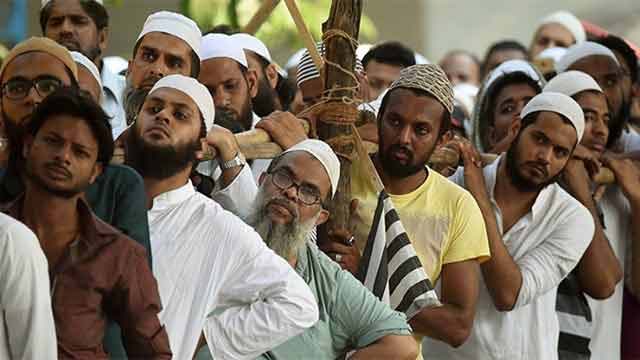
Under Narendra Modi, the long-serving prime minister, he and his political party, the Bharata Janata Party (BJP) have decided to bring Hindutva governance to the country. They have proclaimed that India - the country they prefer to call "Bharat" - is basically for Hindus. The 200 million followers of the Islamic faith, Modi believes, must respect Hinduism. They don`t have to become Hindus, but they have to live in the country basically as second-class citizens. This second-class status was formally recognised by the Indian legislature by a law passed a couple of years ago. The Muslim population makes up 14 percent of the Indian population. Had Pakistan not been created in 1947 and not broken up in 1971 to create another avowedly Muslim state, India`s combined Muslim population would have of the order of 620 million, about a quarter of the country`s total population.
India`s Muslim population is located mostly in the poor urban areas of the country. Several large cities have tightly packed slums where Muslims eke out modest living. The area around the grand mosque in Delhi is a good example of the way Muslims live. I once went to see the mosque and was driven in a car from the World Bank. It was a large Mercedes which stopped below the stairs of the mosque. My arrival was watched by a man who said he was in charge of the mosque. He took me to an Arab sheikh who had come to visit the sights in the Indian capital. "Let me show you around," he said and took me to the back of the mosque which overlooked a large slum.
"This is a Muslim colony, from where the residents were following the war between India and Pakistan. There were loud cheers whenever Pakistan scored a hit," he said. Having done the round of the mosque, he asked for a donation for the mosque, and I gave a hundred dollars. He brought out a register and asked me to write my name and address. I did, noting my address in Islamabad. He was shocked. "You are from Pakistan; I thought you are Arab. Please don`t repeat what I said about the slum dwellers behind the mosque who cheered whenever Pakistan scored a hit against India."
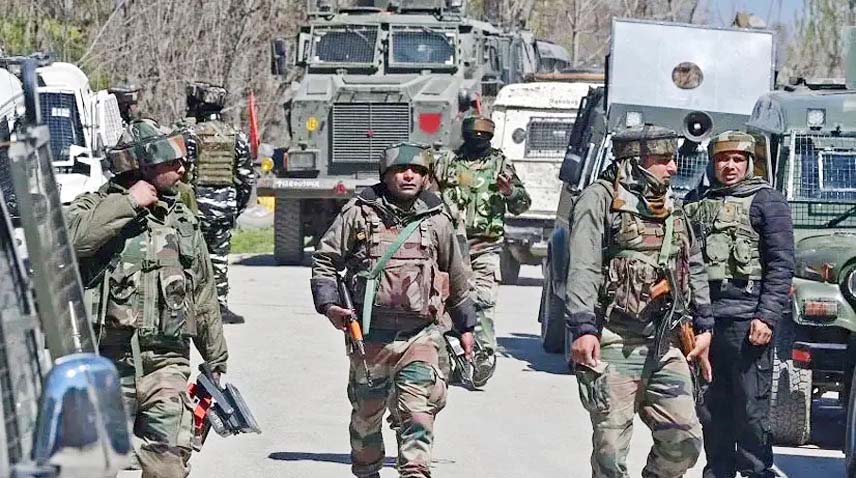
At the time of British India`s partition into the independent states of India and Pakistan, the status of Kashmir princely state remined unresolved. The state was predominantly Muslim but was ruled over by a Hindu maharaja. Afterwards, the ruler dithered for a while but ultimately decided to accede to India. Pakistan did not accept this move and sent in its troops to bring Kashmir into Pakistan. India countered by sending in its army, resulting in the state being divided into two parts: Indian and Pakistani occupied portions of the state.