| |
| Right to Self-Determination: From UN Resolutions to Real Responsibility |
| |
| |
 |
| |
| |
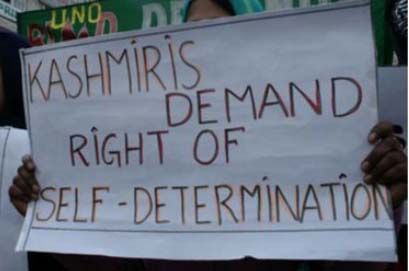
| MT Desk: The General Assembly’s endorsement underscores that self-determination is not a concession granted by occupying powers, but a fundamental principle enshrined in the UN charter, international law and human rights treaties. For the peoples of Indian occupied Kashmir and Palestine, this reaffirmation carries profound resonance. Their struggle for self-determination has spanned over decades, marked by dispossession, repression, and the systematic denial of their basic rights and freedoms. Having already lost three generations to the conflict, they continue to grow up under military occupation, where aspirations for freedom are crushed beneath the jackboots, yet their resolve for justice and self-determination remains unbroken.
Expressions of concern and periodic resolutions are no longer sufficient. What is required is sustained political will: credible monitoring mechanisms, meaningful consequences for violations, and coordinated diplomatic pressure to compel occupying powers to abide by international law and engage in genuine conflict resolution, rather than clinging to a status-quo approach that continues to exact a heavy toll on oppressed nations and communities.
Unfortunately, states that claim to uphold a rules-based international order cannot turn a blind eye to violations by their allies while condemning the same acts elsewhere. These double standards do not forge stability; they corrode the credibility of the international system and encourage further transgressions.
The colonized and oppressed nations have long pinned their hopes on the United Nations, believing that the highest international body, as the custodian of peace and security, would come to their aid and help secure their rights. Yet, it is unfortunate that the UN has been reduced to a toothless body, lacking the authority to act against those who brazenly violate international law and UN resolutions.
If the United Nations is to remain relevant, it must move beyond mere reaffirmation and toward enforcement. If peace is to endure, it must be rooted in justice. And if self-determination is to mean anything at all, it must be defended not only in resolutions, but through decisive action. Any state that refuses to grant its people their birthright, the right to self-determination, must be held accountable. Such states should face consequences: a clear mechanism must be established through which they can be delisted from the United Nations, or, at the very least, the UN should suspend its aid programs in those countries until they fulfill the obligations they have pledged to uphold.
Until then, for millions under occupation in occupied Kashmir, Palestine, and beyond, the promise of a plebiscite and the right to shape their own political future remains hollow, uttered forcefully in UN halls, yet ruthlessly denied to those who matter the most.
|
| |
|
|
|
| |

|
|
Chief Advisor: Md. Tajul Islam,
Editor & Publisher Fatima Islam Tania and Printed from Bismillah Printing Press,
219, Fakirapul, Dhaka-1000.
Editorial Office: 219, Fakirapul (1st Floor), Dhaka-1000.
Phone: 02-41070996, Mobile: 01720090514, E-mail: muslimtimes19@gmail.com
|
|
| |
|