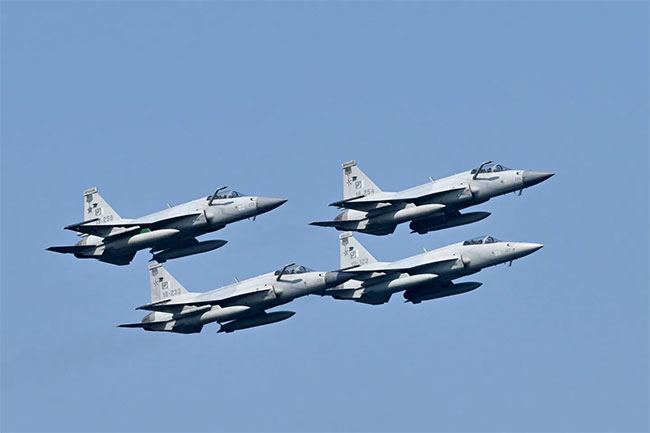
Special Correspondent: After exhausting diplomatic and political options, Islamabad ultimately resorted to kinetic action against terrorist hideouts in Afghanistan as a last measure. Despite four years of efforts aimed at peacefully resolving cross-border terrorism, diplomatic initiatives – including mediation attempts by Qatar and Turkiye over the past year – failed to produce a positive outcome. The principal obstacle remained the Afghan Taliban’s preference for confrontation over cooperation.
In other words, the Afghan Taliban regime’s non-cooperative and rigid posture, continued patronage of groups such as the Tehreek-e-Taliban Pakistan (TTP), and its willingness to allow Afghan territory to be used as a launchpad for cross-border attacks compelled Pakistan to target terrorist infrastructure inside Afghanistan.
The strikes focused on infrastructure, hideouts, logistics hubs and operational nodes used to plan and execute attacks against Pakistan. According to Islamabad, these operations were conducted with precision targeting. Claims by the Afghan Taliban that civilian populations were targeted lack credible evidence and appear to be part of a propaganda campaign.
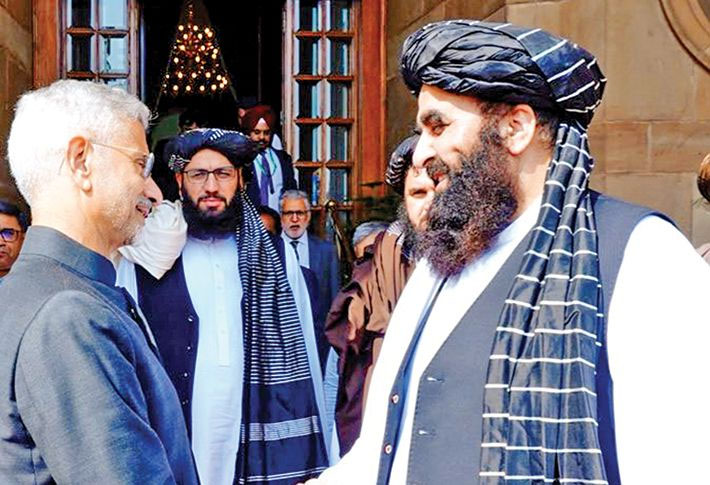
To understand the broader geopolitical dynamics shaping regional instability, the evolving India-Israel nexus and the Afghan Taliban’s role as a proxy actor require closer examination. Following what Pakistan describes as India’s strategic setback in May 2025, Prime Minister Narendra Modi’s government intensified efforts to activate regional proxies. In this context, Afghan Foreign Minister Amir Khan Muttaqi visited India on October 9, 2025 — the first high-level visit from Kabul to New Delhi since the Taliban’s return to power in August 2021.
Another dimension frequently cited in regional debates is what critics describe as a Hindutva-Zionist alignment affecting Muslim-majority regions. Modi’s visit to Israel, followed shortly by military escalation involving Iran, drew criticism domestically within India. Opposition leader Sonia Gandhi, writing in an Indian daily, criticised Modi’s silence over the killing of Iran’s supreme leader, calling it a surrender of India’s foreign policy autonomy and a departure from its longstanding strategic ties with Tehran.
Historically, India pursued strategic autonomy by balancing relations with the United States, Russia and Iran. Critics argue that ideological considerations linked to Hindutva politics have altered that balance. Similar concerns were voiced internationally. DC Journal, a US-based online publication, described India’s position as a departure from traditional alliances that could contribute to regional instability and raise concerns about the safety of the Indian diaspora abroad.
While international relations rarely involve permanent allies or adversaries, critics argue that India’s perceived alignment with Israel against Iran represents a significant shift in its strategic posture and raises questions about its reliability as a regional partner.
The broader reality, according to this perspective, is that the Afghan Taliban regime has become a centre of militant patronage, undermining stability across South and Central Asia. At the same time, evolving geopolitical alignments and proxy dynamics risk further destabilising an already fragile regional security environment. Drone provocations and escalating militant activity, analysts argue, highlight how permissive environments for armed groups continue to threaten long-term regional peace.