International : Once known as “the last sack of sand” in Uyghur, Ayagedun Village in Baihe Township, Hotan Prefecture, has undergone a remarkable transformation and is now known as Taoxiang Village. The new name reflects its evolving identity—“tao” meaning rice and “xiang” meaning fragrance in Chinese—highlighting its long agricultural heritage and renewed prosperity.
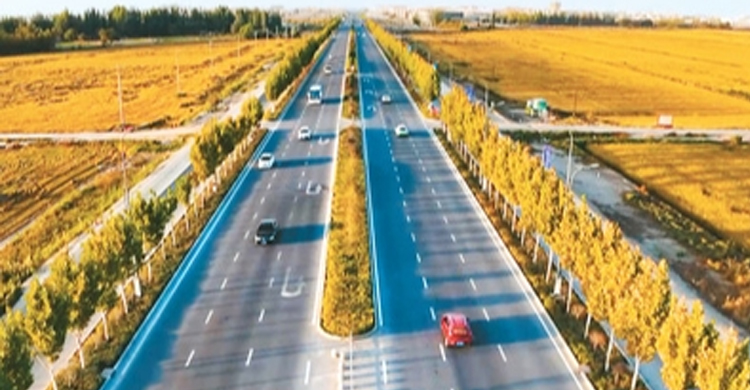
Located near the urban area of Hotan County along the Hemo section of National Highway 315, Taoxiang Village now stands as a model demonstration site integrating mountains, rivers, forests, farmland, lakes, grasslands, and desert ecosystems. It represents an important example of rural revitalization, ecological improvement, and modern village development in the region.
According to Qin Hong, Party Secretary of Baihe Township, the village was once surrounded by shifting sand dunes, making transportation extremely difficult and limiting livelihoods to small-scale farming and livestock rearing. Residents struggled to sustain themselves on fragmented farmland and a few livestock animals.
A major turning point came in 2021, when approximately 120 hectares of continuous rice fields were developed with support from Xinjiang assistance funds. Through scientific and intensive cultivation methods, rice production has increased significantly, reshaping both the landscape and the local economy.
Since then, Taoxiang Village has been transformed into a rural complex that integrates tourism, culture, hospitality, shopping, and leisure activities. While modernizing infrastructure, the village has carefully preserved its traditional residential architecture and local cultural character. Following the principle of “one house, one courtyard, one unique feature,” renovations have successfully combined rural aesthetics with modern living standards.
As a result of industrial and rural development support, the village now allows each household to pursue individual livelihoods based on its strengths. Abandoned thatched houses have been converted into guesthouses, livestock sheds have been turned into cafés, and neglected corners have become public parks and community spaces.
Today, Taoxiang Village hosts diverse small-scale cultural and economic activities, including family homestays, musical instrument workshops, embroidery studios, and local cuisine businesses such as Taoxiang pilaf and desert-style barbecue restaurants. Each courtyard contributes a unique identity, making the village a vibrant and attractive tourist destination.
Beyond Taoxiang, broader efforts to combat desertification in Hotan have brought visible environmental change. Once a major source of sandstorms, the region has implemented extensive sand control and ecological restoration projects. These efforts have gradually reclaimed land from the desert, expanding green coverage and reducing barren areas.
Rivers such as the Yulongkashi and Karakash, along with surrounding grasslands and ecological buffer zones, now form a natural environmental protection system. This has significantly improved the ecological stability of Hotan’s new urban areas, turning them into more livable and sustainable communities.
Today, Hotan stands as a striking example of how coordinated ecological management, agricultural modernization, and rural tourism development can transform a desert-prone region into a thriving green landscape, improving both the environment and the lives of its people.
Source: Cai- Alim, Wang Haiman, China Media Group.