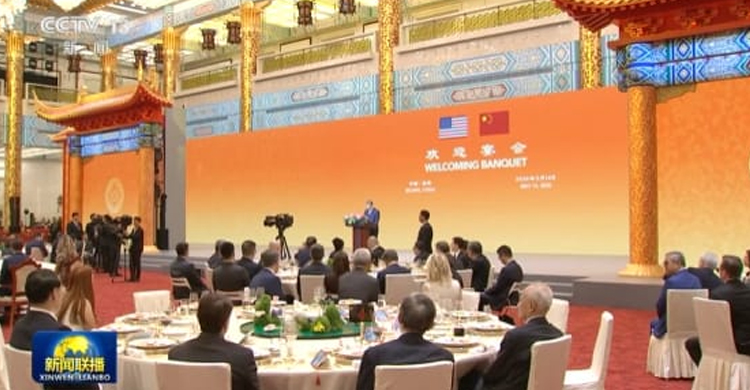
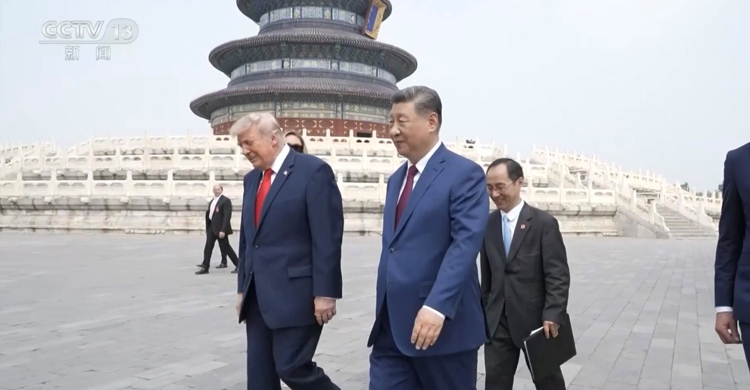
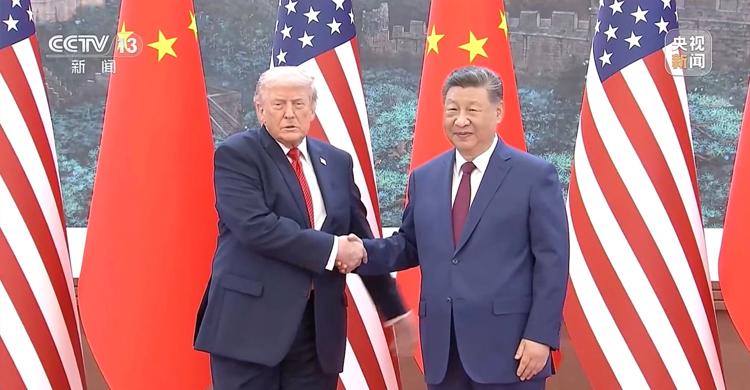
International Desk: U.S. President Donald Trump’s return visit to China after nine years has generated widespread international attention, with economic and trade issues emerging as one of the central focuses of the trip, reflected in the large business delegation accompanying him.
Journalists from China Media Group (CMG) interviewed two prominent American business figures who have been deeply involved in China-U.S. economic and trade cooperation for more than four decades. Having witnessed China’s reform and opening-up as well as the steady expansion of bilateral economic ties, both emphasized that cooperation between China and the United States brings mutual benefits and expressed hope that the visit would produce positive outcomes for bilateral trade and the stable development of China-U.S. relations.
Manny B. Menendez, founder and chief executive officer of MCM Holding Group in the United States, was among the earliest American entrepreneurs to enter China at the beginning of the country’s reform and opening-up era. He played a key role in establishing one of the first China-U.S. joint ventures between Chinese enterprises and a Fortune Global 500 company.
For more than 40 years, Menendez has regarded the promotion of China-U.S. economic and trade cooperation as a personal mission. He said he has witnessed continuous improvements in China’s business environment and the rapid progress of the country’s opening-up policies. He also praised China’s values of “peaceful coexistence” and the systematic implementation of its five-year development plans.
According to Menendez, China’s 15th Five-Year Plan is expected to create significant new opportunities for cooperation between the world’s two largest economies.
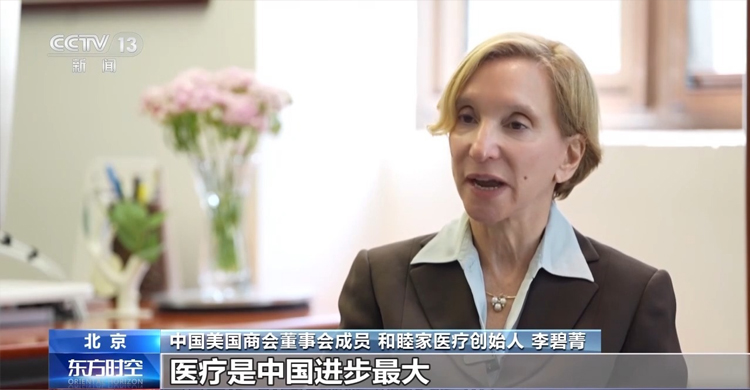
Barbara Stoltz, recipient of the “Great Wall Friendship Award,” has been deeply engaged in China-U.S. medical cooperation for 47 years. Believing in China’s potential during the early years of reform and opening-up, she moved to Beijing and helped introduce some of the country’s first advanced medical technologies, including ultrasound systems, MRI equipment and bedside monitoring devices.
Currently a board member of the American Chamber of Commerce in China and founder of United Family Healthcare, Stoltz said China has not only built the world’s largest healthcare safety network, but is also gradually becoming a global leader in biomedical innovation. She noted that the China-U.S. healthcare sector holds enormous potential for future cooperation.
Economic and trade cooperation, observers say, remains the “foundation” of China-U.S. relations. As the world’s two largest economies, China and the United States together account for more than one-third of global economic output and nearly one-fifth of global merchandise trade. Their economic interactions continue to have a major impact on both the global economy and international trade growth.
According to statistics cited by several think tanks, fluctuations in China-U.S. trade during 2025 directly reduced global trade growth by nearly 10 percent.
Members of the American business community in China stressed that although differences exist between the two countries, broader opportunities for development can only be achieved through continued dialogue, exchange and cooperation.
Marking President Trump’s return visit to China after nearly a decade, the business representatives expressed hope that both countries would make further progress in economic and trade relations, particularly in areas such as tariffs and investment. They also emphasized the need for stronger communication and coordination between the two countries on artificial intelligence governance.
Sworna–Touhid–Lily, China Media Group