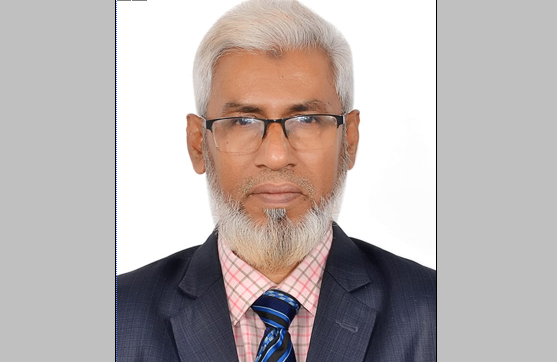
Md. Mukhlesur Rahman: Bangladesh’s banking sector is currently passing through a critical phase where the consequences of wrong decisions will not remain confined to financial losses alone; they may also affect the broader economy, social stability, and political landscape. In particular, the uncertainty, irregularities, ownership changes, liquidity crises, and erosion of public confidence surrounding the Islamic banking sector in recent years are no longer merely internal banking issues. Rather, they have gradually become a sensitive national economic and state concern. In this context, failure to take correct, transparent, and far-sighted decisions regarding Islamic banks could further deepen the ongoing crisis.
The rise of Islamic banking in Bangladesh was not accidental. Over the past four decades, this sector has earned the trust of millions of people across the country. Due to religious convictions, opposition to interest-based financial systems, and belief in an alternative economic model, a large segment of the population has entrusted their savings to Islamic banks. From rural communities to the urban middle class, small business owners, and expatriate workers, many people view Islamic banks not merely as financial institutions but as symbols of trust and faith. Therefore, a loss of confidence in this sector does not simply create a banking crisis; it also carries the risk of broader social repercussions.
The reality is that controversies surrounding several major Islamic banks in recent years have generated deep concern among ordinary depositors. Sudden changes in ownership and management, unusual influence by certain business groups, irregularities in the disbursement of massive loans, weak corporate governance, and politically motivated decision-making have raised serious questions in the public mind: Are Islamic banks truly in safe hands?
This question is profoundly important because the foundation of any banking system is trust. More important than a bank’s capital, buildings, or technology is the confidence of the people. If depositors begin to believe that their savings are unsafe, panic can emerge at any time. Banking history around the world has repeatedly shown that even rumors or a crisis of confidence can push banks toward severe collapse. If people rush to withdraw their money simultaneously, even the strongest banks can face disaster. In the case of Islamic banks, this risk is even greater because they hold the deposits of millions of religiously motivated ordinary citizens.
The government must carefully recognize that people do not view a crisis in Islamic banking merely as a financial failure; many perceive it as a crisis of trust and morality as well. As a result, any wrong signal in this sector could create political repercussions. Particularly when the public begins to believe that influential groups are using political patronage to exploit the banking sector for their own benefit, questions inevitably arise regarding the neutrality and accountability of the state.
Bangladesh’s current economic realities have made the situation even more sensitive. Pressure on foreign exchange reserves, high inflation, rising import costs, sluggish industrial growth, and the growing burden of non-performing loans have already placed the economy in a vulnerable condition. In such circumstances, any new instability in the Islamic banking sector could destabilize the entire financial system. This is especially significant because a large portion of remittances from expatriates flows through Islamic banking channels. A crisis of confidence in this sector could therefore negatively affect remittance inflows as well.
Perhaps the most alarming issue is that, in many cases, Islamic banking has been treated not as a professional financial sector but as a field for political and group-based influence. When loyalty and political connections are prioritized over competence and experience in bank boards, loan approvals, investment decisions, and top management appointments, the outcome can never be positive. Banks gradually cease to function as partners in economic development and instead become economic instruments for powerful groups.
Here lies the government’s greatest responsibility: to address the issue not from a purely political perspective, but from a statecraft and economic standpoint. If the Islamic banking sector is managed merely through administrative reshuffling without addressing the core issues of governance, transparency, and accountability, the crisis will only deepen. The public no longer wants cosmetic changes; they want genuine reforms.
First, the actual financial condition, liquidity status, and scale of non-performing loans in Islamic banks must be transparently disclosed to the public. A culture of secrecy and concealment is far more dangerous in the long run. When people lack accurate information, rumors and panic spread more rapidly.
Second, allegations of loan irregularities, money laundering, and corporate corruption must be investigated impartially, and exemplary punishment must be ensured. Taking action only against small defaulters while protecting influential figures could intensify the public’s crisis of confidence.
Third, Bangladesh Bank must be transformed into a genuinely independent and strong regulatory institution. It is essential to ensure an environment where the central bank can supervise all financial institutions, including Islamic banks, free from political or group pressure.
Fourth, the fundamental philosophy of Islamic banking must be restored. The objective of Islamic banking is not merely to place the word “Islamic” before a bank’s name; rather, it is to establish a business-based, justice-oriented, and risk-sharing economic system. In reality, however, many Islamic banks have become excessively collateral-dependent, corporate-driven, and trapped in superficial Shariah compliance. As a result, public disappointment has already begun to grow. To overcome this situation, genuine Shariah governance, competent Shariah boards, and transparent investment policies must be ensured.
Most importantly, the government must understand that the crisis in Islamic banking is not merely an economic crisis; it is a crisis of public trust. Once people’s confidence in the state begins to weaken, its consequences extend far beyond the financial sector. History has shown that economic crises often become the starting point of political instability.
There is still time to manage the situation. But doing so requires courageous, transparent, and professional decision-making. Political considerations, group interests, or temporary solutions may keep the situation under control for a short time, but in the long run, the crisis could become far more explosive.
For the sake of Bangladesh’s economy and social stability, restoring confidence in the Islamic banking sector has now become an urgent necessity. Otherwise, the uncertainty surrounding this sector may push not only the banking system but also the government itself into an increasingly difficult and vulnerable position.
Author: Md. Mukhlesur Rahman is a renowned Islamic Economist and Banker, Shariah Scholar and Social Thinker.