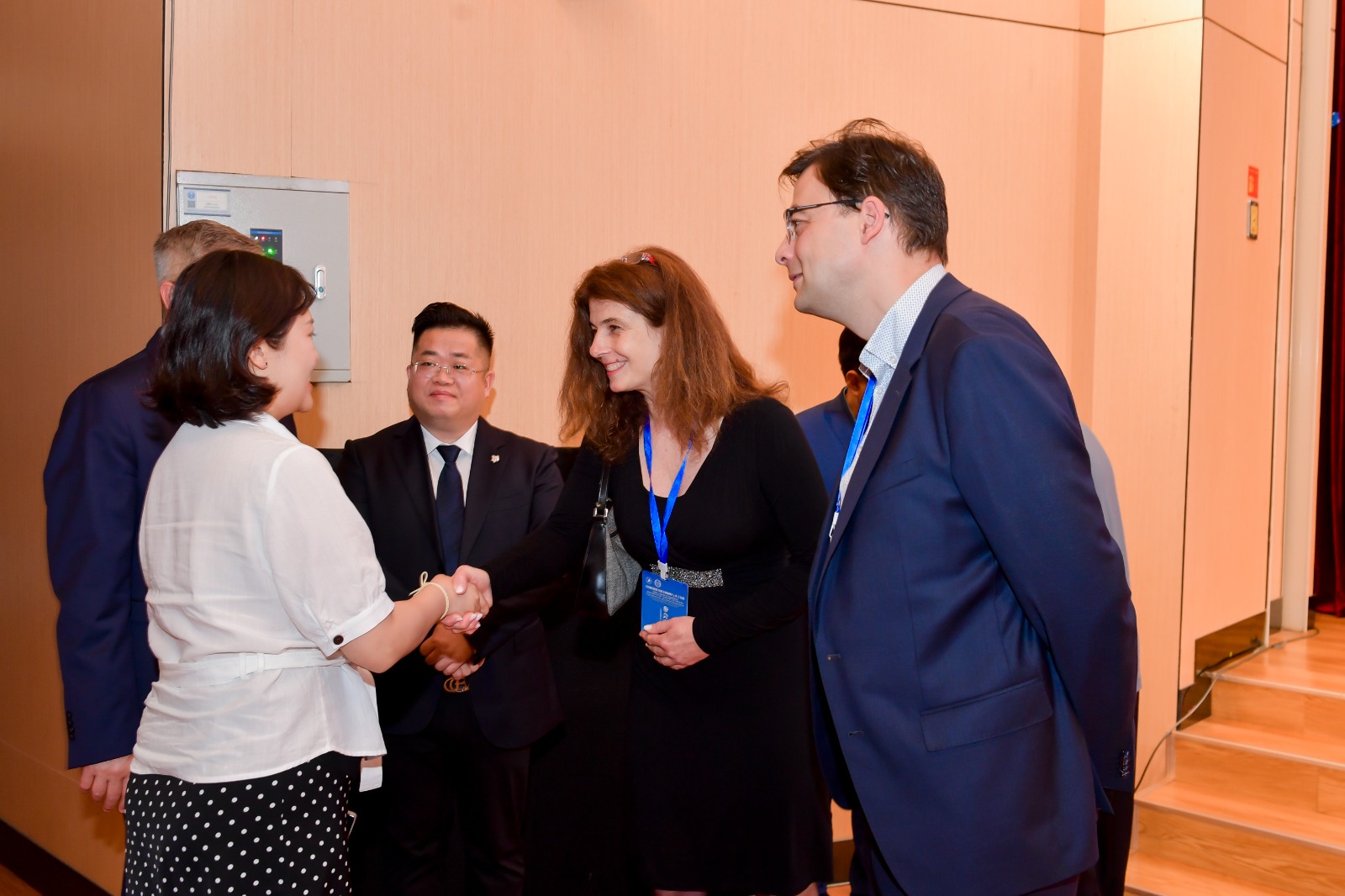
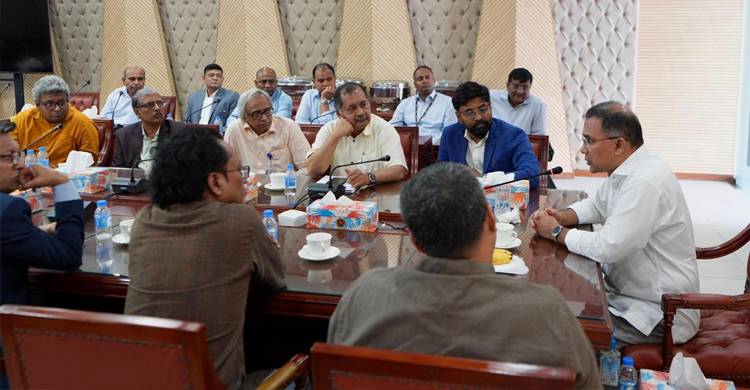
China Correspondent: Scholars, diplomats, government officials, and business leaders from Bangladesh, China, Hungary, Romania, Syria, Mali, Pakistan, and other countries gathered in Sanming, Fujian Province, for the “2026 International Conference of the Sanming University–Shanghai International Studies University Joint Research Centre for Hungarian Studies” and the “Gateway to Hungary Dialogue Between Scholars and Entrepreneurs”. The event highlighted growing academic, cultural, and economic cooperation between the two countries amid expanding bilateral ties.
Held under the theme “Country and Region Studies: Global Perspectives and Local Practices”, the conference brought together more than 100 participants from universities, research institutions, government agencies, enterprises, and diplomatic organizations. The event was jointly organized by Sanming University and Shanghai International Studies University (SISU).
On the 13th June, the opening ceremony featured addresses from leaders of Sanming University, Shanghai International Studies University (SISU), the Sanming Municipal Government, the Consulate General of Hungary in Guangzhou, and the Fujian Federation of Social Sciences. A plaque-unveiling ceremony was also held, marking a new stage in the development of the joint research centre for Hungarian studies.
“We look forward to the Research Centre becoming an important window for cultural exchange and academic mutual learning between China and Hungary,” said Renátó Horváth, Acting Consul General of the Consulate General of Hungary in Guangzhou, speaking at the inauguration.
The conference attracted leading scholars, including the Chinese Academy of Social Sciences (CASS), Peking University, the University of International Business and Economics (UIBE), Fudan University, Tongji University, Shanghai International Studies University (SISU), Sanming University, and Hungarian institutions, including Eötvös Loránd University (ELTE), the University of Miskolc, and John von Neumann University.
Throughout the conference, leading scholars explored key issues in Country and Region Studies (CRS), international communication, cultural exchange, legal studies, and China-Hungary relations. Keynote speakers addressed topics ranging from how CRS can serve national strategies and the development of foreign-related legal talents, to the latest phase of Hungary-China relations under the “16+1” cooperation framework and the role of knowledge diplomacy in the bilateral strategic partnership.
Professor Zhao Zhongxiu from UIBE proposed that CRS should break down disciplinary barriers and serve China’s opening-up through organized scientific research. Professor Yang Cheng from SISU introduced a new research paradigm, “Global Europe”, advocating the construction of a European cognitive system grounded in Chinese subjectivity. Professor Meng Jian from Fudan University used the Dunhuang case study to illustrate cross-cultural communication and mutual learning among civilizations. Professor Zhang Falian from Hainan University called for improving the rule-of-law research in CRS and accelerating the cultivation of foreign-related legal talents. Professor Levente Horváth from John von Neumann University noted that Sino-Hungarian relations are evolving from economic and trade cooperation toward the construction of a “knowledge community”.
The conference also featured five parallel academic forums focusing on Eastern European language and cultural studies, Hungarian language and literature, China-Hungary economic and legal cooperation, international communication, and educational and cultural exchanges. Researchers presented the latest findings on topics ranging from media narratives and migration policies to trade cooperation, educational exchanges, and Belt and Road collaboration.
The new research centre features a distinctive “diaspora affairs + Country and Region Studies (CRS)” model, leveraging SISU’s academic strengths and Sanming University’s unique diaspora resources. The surrounding county of Mingxi is known as the “top county in Fujian for emigrating to Europe”, with over 15% of its population living abroad, including a significant community in Hungary.
The centre focuses on three primary research directions: the international communication of new-era Chinese thought, Hungary’s economic and trade policies and legal framework, and China-Hungary cultural and educational exchanges.
Meng Zhongjie, President of Shanghai International Studies University, stated that the joint centre is a beneficial exploration of integrating high-quality resources to advance CRS. He added that the centre would serve as a bridge to strengthen collaborative research and joint talent cultivation, helping to build China’s independent knowledge system for CRS.
The centre represents a key outcome of the paired cooperation framework between Shanghai and Sanming. It is a novel exploration of extending the discipline of CRS to local institutions and a concrete practice aimed at deepening China-Hungary people-to-people exchanges, supporting the Belt and Road Initiative, and enhancing cooperation between China and Central and Eastern European Countries (CEEC).
A special highlight was the “Gateway to Hungary” Dialogue Between Scholars and Entrepreneurs, which connected academic research with practical business cooperation. Hungarian and Chinese experts discussed cultural trust-building, environmental protection, investment opportunities, and pathways for Chinese enterprises seeking to expand into European markets through Hungary.
Representatives from the Fujian Provincial Department of Commerce, major enterprises, including CATL, and the Fujian Mingxi Chamber of Commerce in Hungary shared insights on supporting Fujian enterprises to “go global,” on experiences investing in Hungary, and on the characteristics of bilateral trade cooperation.
Participants emphasized Hungary’s growing importance as a gateway for Chinese companies entering Europe. Recent years have witnessed an expansion of Chinese investment in Hungary, particularly in electric vehicles, battery manufacturing, green energy, and high-tech industries. China has remained one of Hungary’s largest sources of foreign investment, creating new opportunities for bilateral economic cooperation.
On the final day, 14th June, delegates travelled to Mingxi County, a well-known hometown of overseas Chinese, where they participated in field visits and expert consultations focusing on international cooperation and business development. The conference concluded with an international experts’ roundtable forum, providing a platform for further exchanges on CRS, globalization, and future China-Hungary cooperation.
Organizers noted that the conference not only strengthened academic collaboration between Chinese and Hungarian institutions but also created new opportunities for economic partnerships, people-to-people exchanges, and mutual understanding. As China and Hungary continue to deepen their comprehensive strategic partnership, participants expressed confidence that academic dialogue and practical cooperation will strengthen bilateral relations and broaden engagement between China and Central and Eastern Europe.