| |
| Historic Mosque Demolished in Sambhal Village; MP Barq Questions Legality |
| |
| |
 |
| |
| |
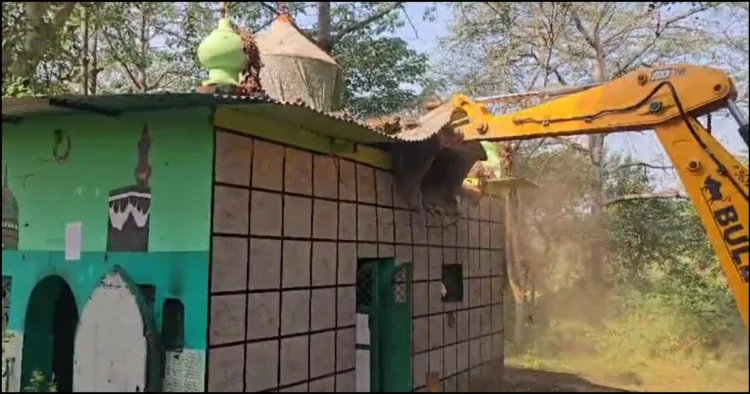
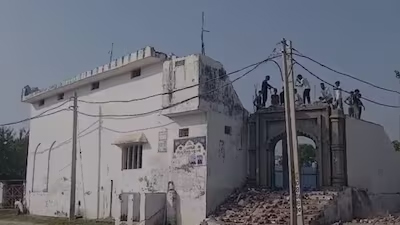
| MT Desk: The demolition of a mosque in Kaserua village of Sambhal district has triggered a fresh controversy, with local Member of Parliament Ziaur Rahman Barq questioning the legality of the action and accusing authorities of violating constitutional and legal protections available to religious places. The administration demolished the structure during an “anti-encroachment” drive, claiming that it was built on government graveyard land. Officials described the mosque as an illegal structure, while community representatives and the MP have disputed the claim, saying the mosque was a registered Waqf property with a long history.
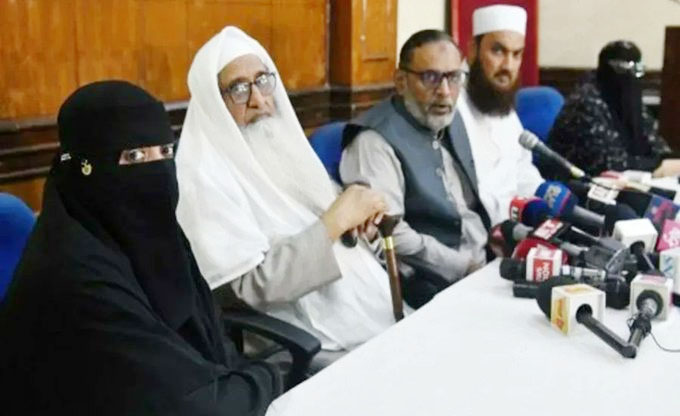
Addressing a press conference on Sunday, Barq expressed concern over what he described as a growing pattern of action against Muslim religious institutions. “Over the past few years, a worrying trend has emerged in Sambhal, across Uttar Pradesh and elsewhere in the country, where mosques, madrasas, graveyards, Eidgahs and dargahs are being repeatedly targeted,” he said. The MP alleged that the demolished mosque was around 150 years old and argued that its demolition violated constitutional guarantees of religious freedom. “The mosque that was demolished was approximately 150 years old. Demolishing it is a violation of our rights under Article 25 of the Constitution and is also against the Places of Worship Act,” Barq said.
Barq strongly contested the administration’s position, claiming that the mosque was officially registered as Waqf property decades ago. According to the MP, the property appears in the 1995 Uttar Pradesh Gazette under Entry No. 1951 and was registered by the government in 1984. “This is not a case where someone later claimed Waqf by usage. The registration was carried out by the government itself. The property has long been recognised as Waqf property,” he said. Barq further argued that under both the previous and current Waqf laws, disputes relating to registered Waqf properties fall within the jurisdiction of Waqf tribunals rather than local revenue authorities.
“In matters involving registered Waqf property, neither the Tehsildar, nor the SDM, DM or Commissioner has the authority to decide ownership or order demolition. Such matters fall within the jurisdiction of the Waqf Tribunal,” he said. The controversy intensified after officials reportedly stated that debris from the demolished structure contained flags bearing crescent-and-star symbols and the words “I Love Muhammad”.
The recovery was highlighted by some officials during briefings after the demolition. However, critics questioned the relevance of such material, noting that displaying Islamic symbols or expressions of religious faith is protected under the constitutional right to freedom of religion. The issue has since become a subject of debate on social media and among political leaders.
The demolition comes at a time when several mosques, madrasas, mazaars and other religious structures in different parts of Uttar Pradesh have faced surveys, sealing actions or demolition drives linked to land disputes, registration issues or allegations of encroachment. These actions have generated legal challenges and political debate, with supporters arguing that authorities are enforcing land laws, while critics claim that Muslim religious institutions are being disproportionately affected. For now, the dispute over the Kaserua mosque appears headed for a legal battle, with questions likely to be examined regarding land ownership, Waqf registration, administrative powers and the legal protections available to religious sites under Indian law.
|
| |
|
|
|
| |

|
|
Chief Advisor: Md. Tajul Islam,
Editor & Publisher Fatima Islam Tania and Printed from Bismillah Printing Press,
219, Fakirapul, Dhaka-1000.
Editorial Office: 219, Fakirapul (1st Floor), Dhaka-1000.
Phone: 02-41070996, Mobile: 01720090514, E-mail: muslimtimes19@gmail.com
|
|
| |
|