International: On the 10th anniversary of the so-called “South China Sea Arbitration Award,” Japanese Foreign Minister Toshimitsu Motegi issued a statement publicly expressing support for the disputed arbitration ruling and criticizing China’s legitimate claims and position regarding the South China Sea issue.
Motegi also claimed that Japan is a party to the South China Sea issue. The Chinese Foreign Ministry has expressed strong dissatisfaction and firm opposition to Japan’s remarks.
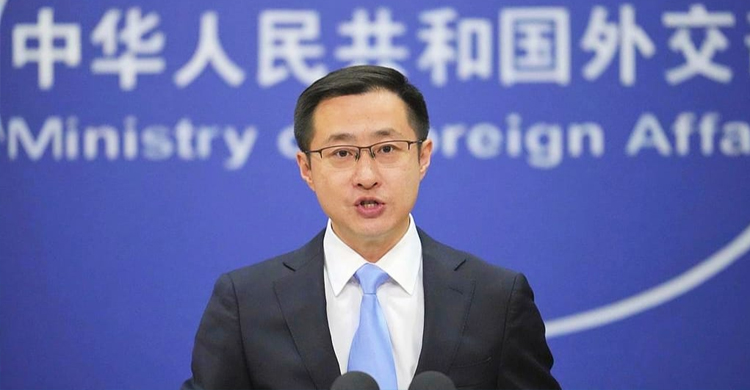
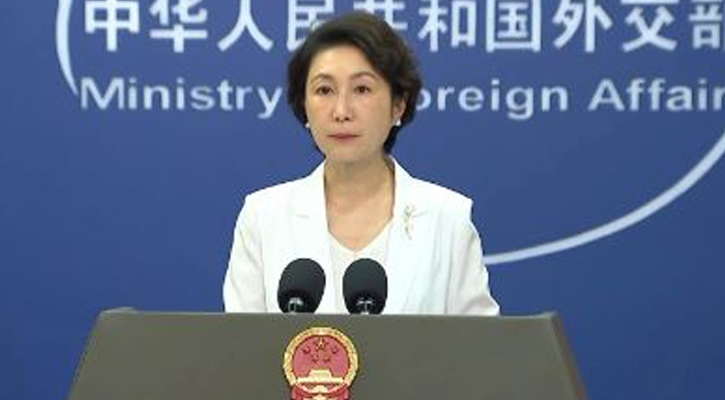
A spokesperson for the Chinese Foreign Ministry said Japan is not a party to the South China Sea disputes and therefore has no right to comment on or interfere in China’s territorial sovereignty and maritime rights in the region.
The spokesperson said that during World War II, Japan carried out a series of aggressive actions against China, including the illegal occupation of Chinese islands and reefs in the South China Sea, bringing deep suffering to the Chinese people.
The spokesperson said China’s sovereignty and related rights over the islands and waters of the South China Sea have been established through a long historical process and are supported by sufficient historical and legal grounds.
He added that China’s rights cannot be denied through the ruling of a so-called arbitration tribunal established on an ad hoc basis. According to China’s position, the tribunal exceeded its authority in issuing the ruling. Therefore, the ruling is illegal, invalid and has no binding force.
The spokesperson further said that the ruling has undermined the authority of the United Nations Convention on the Law of the Sea (UNCLOS) and the rule of law in international affairs.
He accused Japan of applying double standards by supporting the ruling. As an example, he said that according to the logic of the so-called arbitration ruling, if Taiping Island in the Spratly Islands is not recognized as a fully entitled island and does not have the right to claim an exclusive economic zone (EEZ), the same standard should also apply to Japan’s Okinotorishima reef.
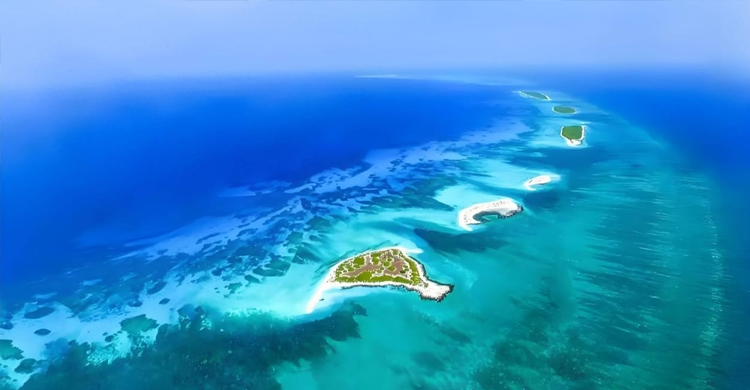
The spokesperson noted that Taiping Island, with an area of around 500,000 square meters in the Spratly Islands, has fresh water resources, fruit, vegetables and domestic animals. In contrast, Okinotorishima is an isolated reef in the Pacific Ocean consisting of only two rocks with an area of less than 10 square meters, for which Japan claims several hundred thousand square kilometers of exclusive economic zone and continental shelf rights.
He said that under the same interpretation of the so-called ruling, many of Japan’s maritime claims would also come under question.
The spokesperson added that since Japan has issued statements supporting the content of the ruling, China has reason to believe that Japan has voluntarily abandoned its own related maritime claims based on the same standards.
The Chinese Foreign Ministry spokesperson said Japan’s true intention is not to uphold the rule of international law, but rather to interfere in the South China Sea situation and create regional instability.
He urged Japan to stop making false accusations against China, refrain from creating tensions over the South China Sea issue and avoid undermining regional peace and stability.
The spokesperson reaffirmed that China will continue to firmly safeguard its territorial sovereignty and maritime rights and interests in the South China Sea.
Source: Ruby, Foysal and Swarna, China Media Group (CMG).