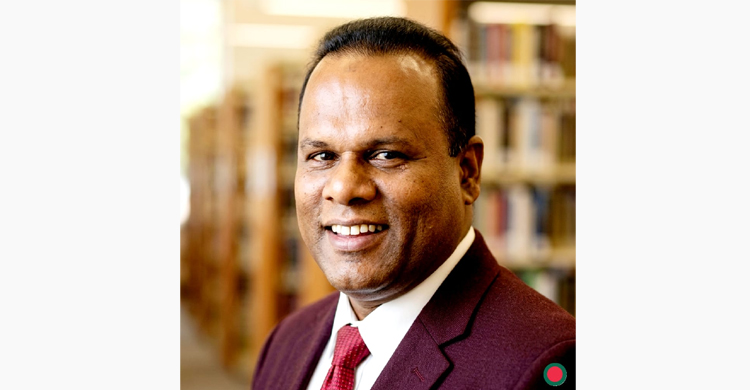
Md. Sahidul Islam (Sumon) : When the current government assumed office, Bangladesh’s economy was already under considerable strain. Inflation had eroded household purchasing power, the banking sector was burdened by an extraordinary volume of non-performing loans, private investment remained subdued, revenue mobilization was weak, and the foreign exchange market was still recovering from prolonged pressure. Against this backdrop, the government’s first six months should not be judged by political claims of success or failure alone. The more useful question is whether the administration has begun to restore macroeconomic stability and, more importantly, whether it has started addressing the structural weaknesses that have accumulated over the years.
The first 180 days have been, above all, a period of stabilization. The government has had to contain immediate economic pressures while creating the institutional foundations for longer-term reform. Some of these initiatives are encouraging. Others remain works in progress. The real test will be whether the government can turn policy announcements into durable outcomes.
Inflation has understandably been the most visible economic concern for ordinary citizens. The Bangladesh Bank has maintained a tight monetary policy stance, using higher policy rates and liquidity management to restrain excess demand and anchor inflationary expectations. At the same time, the government has sought to ease supply-side pressures through measures such as duty concessions on essential commodities and efforts to facilitate imports of food and other necessities.
Yet Bangladesh’s inflation problem cannot be solved through monetary tightening alone. Food prices are influenced by production costs, transportation, storage, import costs, market concentration and the behavior of intermediaries. A central bank can restrict liquidity, but it cannot produce onions, improve rural roads or eliminate supply-chain inefficiencies. The next phase of policy therefore needs to combine prudent monetary management with stronger agricultural production, better logistics, improved market monitoring and more effective competition policy.
The government’s approach to social protection also deserves attention. The proposed allocation of around Tk 1.44 trillion for social security in the 2026-27 fiscal year reflects the continuing need to protect vulnerable households at a time when inflation has reduced real incomes. Initiatives such as the Family Card and Farmer Card point towards a potentially more targeted model of welfare delivery, where support is linked to verified beneficiaries and delivered digitally.
This is important because Bangladesh’s social protection system has long struggled with targeting, duplication and leakage. A unified digital database, combined with direct transfers through bank accounts or mobile financial services, could significantly reduce opportunities for political patronage and intermediary interference. But the success of such programmes should not be measured by the number of cards distributed. It should be measured by whether household purchasing power improves, whether food insecurity declines and whether farmers actually become more productive and financially secure.
The same principle applies to agriculture. Farmers need more than subsidies. They need affordable credit, reliable access to inputs, crop insurance, storage facilities, market information and fair prices. If the Farmer Card can eventually integrate these services into a single platform, it could become an important instrument of rural economic reform. But implementation capacity will determine whether the concept becomes a genuine productivity tool or merely another administrative programme.
Youth employment is another area where the government cannot afford to rely on traditional solutions. Bangladesh’s demographic structure means that large numbers of young people enter the labor market every year. Public-sector recruitment can absorb only a fraction of them. The economy therefore needs a much stronger ecosystem for entrepreneurship, startups, SMEs, technical skills and digital employment.
The policy emphasis on startup finance and collateral-free credit is directionally correct. But access to finance remains difficult for young entrepreneurs, particularly those without conventional collateral or established credit histories. Commercial banks and non-bank financial institutions must become more willing to finance viable small businesses based on cash flow and business prospects rather than property ownership alone. Simplifying business registration, taxation and licensing would also reduce the cost of formalization and encourage more young people to become entrepreneurs rather than remain dependent on scarce formal jobs.
If there is one area where the government faces a truly formidable challenge, it is banking. By March 2026, non-performing loans had reached approximately Tk 5.89 trillion, or more than 32 percent of total outstanding loans. The scale of the problem is extraordinary. The World Bank has also highlighted Bangladesh’s exceptionally high NPL ratio compared with the South Asian average, while pointing to weaknesses in corporate governance, related-party lending and regulatory oversight.
The government and Bangladesh Bank have therefore been right to move towards a more comprehensive banking-sector cleanup. An 18-month roadmap for reducing bad loans, stronger supervision, faster recovery mechanisms, asset-management structures and the adoption of Expected Credit Loss standards can provide the necessary framework. The enactment of the Bank Resolution Act in April 2026 is another important institutional development because it gives the regulator a more formal mechanism for dealing with distressed financial institutions.
But laws and roadmaps alone will not repair the banking system. The central issue is credibility. Banks must be protected from political interference, connected lending and regulatory capture. Genuine business failures should be treated differently from wilful default. At the same time, repeated rescheduling should no longer be used simply to conceal the true condition of bank balance sheets. A healthy banking system requires recognition of losses, recovery of assets and accountability for those responsible for financial misconduct.
Fiscal management presents another difficult test. During the first 11 months of FY2025-26, NBR revenue collection increased in nominal terms, but remained significantly below the revised target. This gap highlights a fundamental weakness of Bangladesh’s fiscal structure: public spending ambitions have expanded much faster than the state’s ability to raise domestic revenue.
The Tk 9.38 trillion budget for FY2026-27 will therefore require more than ambitious allocations. It requires expenditure discipline. Projects must be completed on time and within reasonable costs, while wasteful spending and repeated cost revisions need to be curtailed. Most importantly, Bangladesh must expand its tax base rather than repeatedly increasing the burden on those already within the formal tax system. Digitalization, stronger enforcement and institutional reform of tax administration are essential if revenue mobilization is to become sustainable.
There are nevertheless reasons for cautious optimism in the external sector. Foreign exchange reserves have stabilized, while remittance inflows have strengthened significantly. July 2026 remittances reached around $2.86 billion, representing strong year-on-year growth. Export earnings also showed momentum, with July exports rising to approximately $4.73 billion. These developments provide some breathing space for policymakers.
But Bangladesh should not mistake temporary external stability for structural strength. The export basket remains heavily dependent on ready-made garments. Diversification into pharmaceuticals, leather, agro-processing, light engineering, ICT and other higher-value sectors is essential. Similarly, remittance growth must be supported by expanding formal migration opportunities, reducing transaction costs and opening new labor markets.
The government must also focus more aggressively on investment. Investors need predictability more than promises. A functioning One-Stop Service, faster regulatory approvals, reliable electricity and gas supplies, efficient customs procedures, access to land and consistent tax policies would do more to attract investment than repeated investment summits.
Engagement with the IMF and other development partners can provide useful external discipline, but reforms must ultimately serve Bangladesh’s own economic interests. Fiscal consolidation, banking reform and tariff rationalization should be pursued carefully so that the burden of adjustment does not fall disproportionately on lower-income households.
The first six months, therefore, should neither be celebrated as an economic transformation nor dismissed as mere political theatre. They represent an initial attempt to stabilize an economy carrying deep structural scars. Inflation remains high, the banking sector remains fragile, revenue mobilization is inadequate and investment needs a stronger push. At the same time, progress in reserves, remittances, financial-sector legislation and targeted social protection provides a foundation on which further reforms can be built.
The real measure of the government’s first 180 days will ultimately be what happens next. Stabilization is only the beginning. The harder task is to institutionalize reform, restore confidence, improve productivity and create enough quality jobs for a growing workforce. Bangladesh does not need another cycle of temporary fixes. It needs a credible economic transition in which policy consistency, institutional accountability and political resolve reinforce one another.
The government has had six months to diagnose the patient and begin emergency treatment. The coming years will show whether it has the courage and capacity to undertake the deeper surgery required for a genuine economic recovery.
Md. Sahidul Islam (Sumon) is an economic analyst, columnist, and CHT Affairs Researcher. Email: [msislam.sumon@gmail.com]