| |
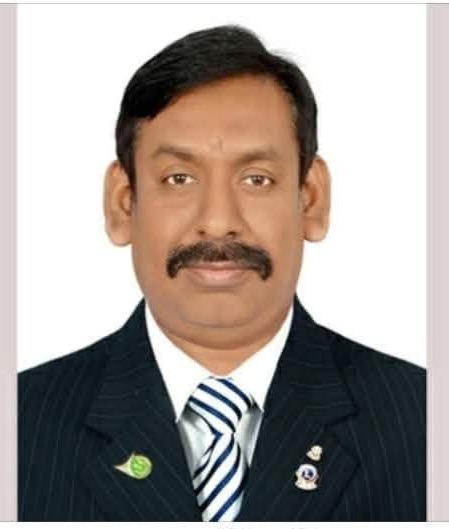
| Strong Local Government and Union Parishad Elections Lion Md. Gani Miah Babul |
| |
| |
 |
| |
| |
| The true test of how effective a country’s democratic system is not limited to national-level elections. It is also reflected in the functioning of local government institutions, which are closest to the people. A citizen experiences the state most directly through the services provided by their own union, ward, upazila, or municipality. Roads, drainage, waste management, water supply, local markets, civic services, public health, education, disaster management, pedestrian safety, and local infrastructure are all directly connected to people’s daily lives. The more effective local government becomes in these areas, the greater the public’s confidence in and acceptance of the state. The Election Commission has taken an initiative to organize Union Parishad elections. According to the Election Commission, the elections across the country are planned to be held in seven phases, with voting in the first phase potentially beginning on November 12. The subsequent phases are also expected to be scheduled sequentially. However, as stated by the Commission up to September 15, the final schedule is expected to be determined after inter-ministerial meetings and consultations with relevant stakeholders. This initiative to organize the elections is not merely an electoral process. It represents an important opportunity to overcome prolonged stagnation and reactivate the local government system. A Union Parishad is not simply an institution consisting of a chairman and members. It is one of the principal levels of government responsible for delivering everyday civic services, local development, infrastructure management, social safety-net support, and people-oriented administration in rural areas. Therefore, the importance of this election lies not only in casting votes but, more importantly, in establishing a local government that is effective, honest, responsible, and accountable to the people. However, holding an election does not mean that the responsibility ends there. A free, fair, and impartial election is only the first condition for establishing an effective local government. Before the election, discipline must be ensured regarding candidates’ conduct, campaigning, and campaign expenditure. On election day, voters must be guaranteed freedom, security, and the right to cast their votes without obstruction. It must be strictly ensured that no candidate can disrupt the electoral environment by using intimidation, influence, financial power, muscle power, or administrative influence. Likewise, no voter should face harassment or pressure because of voting for the candidate of their choice. Ensuring this is a fundamental responsibility of the electoral system. Viewing the Union Parishad election merely as a local contest would underestimate its importance. Local government is one of the closest arenas for people’s direct participation beyond national politics. In a local election, voters choose the person who will make decisions concerning roads, water supply, drainage, markets, road safety, healthcare, waste management, and other social issues in their own communities. Therefore, alongside personal relationships, family connections, or temporary emotions, voters should also consider a candidate’s integrity, competence, engagement with the public, sense of responsibility, and practical understanding of local development. This brings us to an important question: Do we want elections only, or do we also want effective local government? If the latter is what we want, then the elected representatives must be given a meaningful scope of authority and responsibility after the election. One of the major problems in the local government system is the mismatch between responsibilities and authority. Local institutions have numerous responsibilities, but they do not always have adequate financial resources, skilled manpower, technical capacity, or decision-making authority to fulfill those responsibilities. Suppose a Union Parishad is assigned responsibility for roads, drainage, waste management, local infrastructure, or civic services. If it lacks adequate funds, has limited technical personnel, possesses insufficient decision-making authority, and remains dependent on other government agencies in many areas, even accountable elected representatives may be unable to perform effectively. This creates a gap between public expectations and the capacity of local government. This is not merely an administrative weakness; it is a structural crisis of accountability. If the people complain to an institution that does not possess sufficient authority to solve their problems, the accountability mechanism itself becomes weak. Therefore, strengthening local government requires responsibility to be accompanied by authority, and authority to be accompanied by adequate resources. It is neither possible nor realistic for all decisions to be made centrally by the national government. The problems of one union are not the same as those of a metropolitan city. Planning for river erosion-prone areas, disaster management in coastal regions, transportation systems in hilly areas, and waterlogging or waste management in urban areas cannot be handled through a single approach. Local people are best positioned to identify local problems. Therefore, within the framework of national policies, a significant portion of decision-making should be delegated to the local level. However, decentralization of authority must not mean a reduction in accountability. The greater the authority, the stronger the accountability must be. If local governments receive public funds, there must be clear answers regarding where the money was spent, the quality of the work, what people received in return, and who is responsible if irregularities occur. The budget, projects, allocations, expenditures, implementation timelines, and progress of every Union Parishad should be made publicly accessible. Project-related information should remain open at local offices and on digital platforms. Merely recording expenditures in financial statements is not enough. People should know how much money has been allocated for development in their area, where it has been spent, and what has been achieved in return. The fact that “funds have been allocated” is not evidence of development success. The real question is what the people have received in exchange for that expenditure. If a road is constructed and becomes unusable within a few months, that cannot be considered meaningful development. If a drainage system is constructed but not regularly maintained, waterlogging will continue. Therefore, the performance of local government should not be measured by the number of projects implemented, but by the extent to which people’s lives have actually improved. Elected representatives must also rethink their role. Becoming a chairman or member is not a matter of personal prestige; it is a responsibility entrusted by the people. After the election, every citizen must receive equal consideration regardless of political affiliation, family ties, or personal relationships. It is also essential to ensure that no Union Parishad becomes a center of personal influence controlled by a small group of elected individuals. Candidates who lose the election should also accept the result and play a constructive role in local development and the public interest. Elections create competition, but after the election, there must be room for cooperation in the interests of the people. If electoral competition continues after the election in the form of division, retaliation, and conflict, the entire community suffers. This Union Parishad election can also be viewed as an opportunity to promote a culture of mutual respect and harmony. Campaigns should focus on development plans rather than personal attacks. It is reasonable for voters to expect candidates to clearly explain what they will do, how they will do it, within what timeframe, and what resources will be required to implement their plans. Voters should not merely listen to promises; they should also consider a candidate’s previous activities, social role, integrity, and capacity. The responsibility of the Election Commission is particularly important in ensuring a free, fair, and impartial election. The Commission’s field administration, returning officers, law enforcement agencies, and all relevant government institutions must perform their duties impartially. According to the Election Commission’s own information, electoral activities at the field level are conducted through regional, district, and upazila election offices. Ensuring the effectiveness of this structure can make election preparation and management more orderly. Law and order also deserves special attention during Union Parishad elections. Local elections are often directly connected with personal and social relationships, which can increase the risk of heated competition. Recent reports indicate that the Election Commission is placing importance on preparations for maintaining law and order during local government elections. Therefore, vulnerable areas should be identified in advance and appropriate security plans should be developed. However, security does not simply mean deploying law enforcement personnel at polling stations. Voters must be able to reach polling centers safely and without obstruction. Women, elderly people, persons with disabilities, and vulnerable voters should receive necessary assistance. No influential individual should be allowed to control the environment at a polling station, and transparency must be ensured in vote counting and the announcement of results. All of these are essential components of a secure election. At the same time, the media and civil society also have important responsibilities. Everyone must act responsibly so that rumors, misinformation, or provocative campaigns cannot disrupt the electoral environment. Attempts to influence public opinion against competing candidates by spreading unverified information through social media can damage the democratic environment. Freedom of expression must be accompanied by responsibility. Another important area for strengthening local government is evidence-based planning. Development plans should be prepared based on information about where roads are dangerous, where waterlogging occurs, where there are shortages of safe drinking water, where waste-management problems exist, which areas have inadequate healthcare services, and where educational institutions face infrastructure shortages. If Union Parishads maintain their own reliable databases, it will become easier to determine development priorities according to actual needs. Road safety should also receive greater attention at the Union Parishad level. Unregulated vehicles near village markets, schools, madrasas, hospitals, or major roads, inadequate lighting, the absence of safe pedestrian crossings, illegal encroachment, and dangerous bends can contribute to road crashes. Local governments can identify such high-risk locations, notify the relevant authorities, and coordinate necessary measures at the local level. Ensuring road safety is not solely the responsibility of drivers. It is also connected with road design, traffic management, pedestrian safety, and local land-use planning. Preventing corruption and irregularities also requires a new culture at the local level. Merely making allegations of corruption is not enough. Systems must be established in which irregularities become difficult to commit. Digital tendering, disclosure of project information, quality control, regular audits, citizen monitoring, and prompt resolution of complaints should be made effective. When irregularities are proven, accountability and meaningful enforcement of penalties must be ensured. If accountability exists only on paper, no reform will be sustainable. Most importantly, the Union Parishad election cannot be viewed simply as a single voting day. The relationship between elected representatives and citizens from election day through the following five years will ultimately determine the quality of local democracy. Before the election, candidates approach the people; during the election, voters express their choices; and after the election, elected representatives must remain accountable to the people. This continuity forms the foundation of local democracy. Therefore, the Election Commission’s current initiative should not be viewed merely as an administrative program for organizing an election. It should also be seen as an opportunity to revitalize local government. If a free, fair, and impartial election is ensured, public confidence will increase. As public confidence increases, the responsibilities of elected representatives will also increase. And if authority, financial resources, skills, and accountability are ensured alongside those responsibilities, local government can become genuinely stronger. We want an election in which voters can go to polling centers without fear, candidates can compete without undue influence, election officials can perform their duties impartially, and the public can have confidence in the results. While welcoming the Election Commission’s announced initiative, there is also an expectation that the Commission will strictly enforce the law and regulations at every stage and ensure a level playing field for all. The administration and law enforcement agencies should likewise remain accountable not to any particular side, but to the state and the voters, and perform their duties accordingly. At the same time, political parties, candidates, supporters, and voters must remember that a Union Parishad election is not a personal battle. It is a process for determining the future leadership of a community. More important than victory or defeat are the rights of the people and the future effectiveness of the local institution. Therefore, the first requirement for establishing strong local government is a credible election. This must be followed by competent and honest leadership, adequate financial resources, genuine authority, skilled personnel, evidence-based planning, transparency, and strong accountability. Without this sequence, merely changing elected representatives will not bring the desired transformation to local government. If development is to reach people’s doorsteps, local government can no longer remain a weak, dependent, and project-oriented institution. It must become an effective service-delivery institution that is closest to the people. That transformation can begin with a credible Union Parishad election. We therefore welcome the initiative to announce the schedule for the Union Parishad elections. At the same time, we expect this election to serve as a genuine test of people’s voting rights, participation, and confidence. There can be no compromise in ensuring a free, fair, and impartial election. A vote does not merely elect a candidate; it also helps determine the future leadership, development, and accountability of a Union. A local government elected by the people, accountable to the people, and committed to prioritizing people’s needs can connect development meaningfully with people’s lives. The Union Parishad election can be an important beginning on that path if it is genuinely free, fair, impartial, peaceful, and credible. Strong public services cannot be ensured without strong local government, and strong local government cannot be established without a credible election. Strong local government is one of the foundations of an effective, accountable, and people-oriented system of governance. As the Union Parishad is one of the institutions closest to the people, its role in ensuring local development and civic services is extremely important. The forthcoming Union Parishad election is therefore not merely a formal exercise in choosing representatives; it is an important opportunity to choose competent, honest, capable, and people-oriented leadership. The election must be made meaningful through the free participation of citizens in a fair and peaceful environment. People must exercise their voting rights consciously, while ensuring accountability of those who are elected. Let us rise above political differences and personal interests, elect capable leadership, and build strong Union Parishads, thereby building a developed, transparent, and people-oriented local government. About the Author: Lion Md. Gani Miah Babul Teacher, Poet, Columnist, Social Worker and Organizer Founding President Bangladesh Government Secondary Teachers Association (Agriculture), Central Committee Joint Secretary General Nirapad Sarak Chai (NISCHA), Central Committee Phone: 01552631118, 01842631118 Email: lionganibabul@gmail.com
|
| |
|
|
|
| |

|
|
Chief Advisor: Md. Tajul Islam,
Editor & Publisher Fatima Islam Tania and Printed from Bismillah Printing Press,
219, Fakirapul, Dhaka-1000.
Editorial Office: 219, Fakirapul (1st Floor), Dhaka-1000.
Phone: 02-41070996, Mobile: 01720090514, E-mail: muslimtimes19@gmail.com
|
|
| |
|