Moin Mahmood: Experts and stakeholders have emphasized the need to stop the operation of unfit vehicles, provide eco-friendly driving training to motorists, and ensure the quality of fuel and lubricants to control air pollution in Dhaka’s transport sector. They have also called for restoring road discipline, reducing traffic congestion, and strictly enforcing existing transport laws.
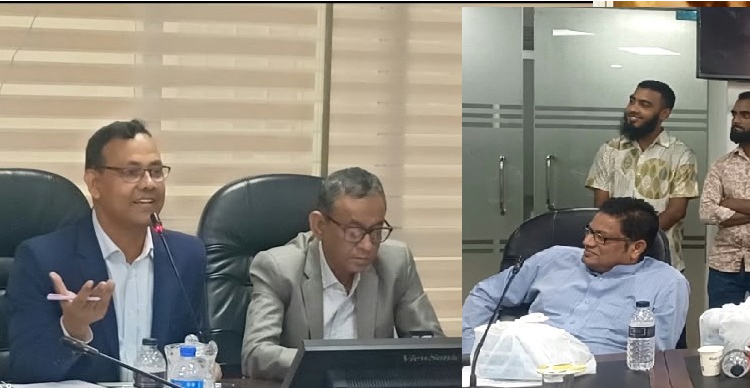
These demands and recommendations emerged during a discussion meeting organized by the Consumers Association of Bangladesh (CAB) at the Bangladesh Road Transport Authority (BRTA) office in Banani, Dhaka, on Wednesday morning (November 4).
The meeting was presided over by CAB President A.H.M. Shafiquzzaman, with BRTA Chairman Mohammad Habibur Rahman attending as the chief guest.
Mohammad Habibur Rahman stated that, despite various limitations, vehicle fitness inspections are conducted daily. As a result of these checks, at least 15 to 20 unfit vehicles are impounded (sent to a dumping yard) every day. Furthermore, mobile courts are being operated regularly. He added that the BRTA’s initiatives to establish road discipline and protect the environment remain ongoing.
The keynote paper was presented by Professor Dr. Ahmad Kamruzzaman Majumder, Chairman of the Center for Atmospheric Pollution Studies (CAPS) and Dean of the Faculty of Science at Stamford University. Citing research findings, he noted that air pollution levels in the capital rise not only during the day but also late at night and in the early morning. Key contributing factors include the city corporation’s street-sweeping activities, building construction work, and the movement of heavy freight trucks. Most areas along the bus route from Abdullahpur to Sadarghat are at risk of air pollution; however, air quality is relatively better in the Nikunja and airport areas. BRTA Director Rubaiyat-e-Ashik stated that to reduce air pollution in Dhaka, it is essential to make vehicle fitness and emission testing more effective. Regular enforcement drives and legal actions must be taken against vehicles that are past their operational lifespan, unfit for use, or emit excessive smoke.
Speaking as a special guest, public transport expert and former Executive Director of the Dhaka Transport Coordination Authority (DTCA), Dr. S. M. Salauddin, remarked that merely formulating laws and policies is insufficient to control air pollution in the capital. He emphasized the need for a coordinated effort involving the government, transport owners and workers, drivers, regulatory bodies, and civic organizations.
In his remarks as the chair, A. H. M. Shafiquzzaman noted that the transport sector is responsible for at least 50 percent of Dhaka’s air pollution. This pollution contributes to various serious health risks, including cancer and heart disease.
Alamgir Kabir, General Secretary of the Bangladesh Poribesh Andolon (BAPA), alleged that some influential political and administrative figures—who are tasked with controlling pollution—are themselves involved in various business interests. As a result, the general public has become held hostage by these powerful syndicates.
Representatives working on road safety pointed out that the encroachment upon the capital’s roads and footpaths is exacerbating traffic congestion. This leads to increased fuel consumption by vehicles; furthermore, the frequent cycles of braking and accelerating contribute to higher carbon emissions.
Leaders representing transport owners urged the Bangladesh Standards and Testing Institution (BSTI) to adopt a stricter stance in ensuring the quality of fuel and lubricants. Additionally, they called for rigorous quality verification for imported vehicles and the implementation of government-led training programs for drivers.