×
Home National Politics Business Bangladesh International Sports Entertainment Law & Justice More News Capital News Health Features Business Icon Technology Media Features Economy Education Literature Quran & Hadish Photo Gallery Editorial Religion Tours & Travels Tourism Guide Editors Corner Campus Youth Popular Organizations Country Wide Life Style Jobs Prism Notice History & Culture Messages Op-ed Wildlife Activities Foreign relation Accident Environment Asia Videoes Analysis Energy Book Reviews Literature Others KSA Arab World Cricket Football More Banking Corporate Global economy Real Estate Entrepreneur Start-up Telecom Summit Travel Art and Culture Food Book Fourth Estate View Letters to Editor Political Icon Diplomat Scholarship Career Job

Sunday 18th of January 2026 E-paper
* Bangladesh reaffirms support for rule-based global economic cooperation   * Govt officials allowed to campaign for ‘Yes’ vote in referendum: Ali Riaz   * BNP never vanished or masked itself despite disappearance, murder: Tarique   * Readford Foundation stands by students who excel in talent development   * EC reinstates 60 candidates on sixth day of appeal hearings   * CA opens 3-day South Asian regional conference on higher education   * Purbachal plot scam : Judgement against Hasina, Tulip among 18 on Feb 2   * Trump announces tariffs on Iran trade partners as protest toll rises   * Indian rocket launch loses control after liftoff in fresh blow to ISRO   * One dengue patient dies, 33 fresh cases detected overnight  
   Op-ed
  Begum Khaleda Zia’s Rise: A Journey from Domestic Life to Democratic Resistance

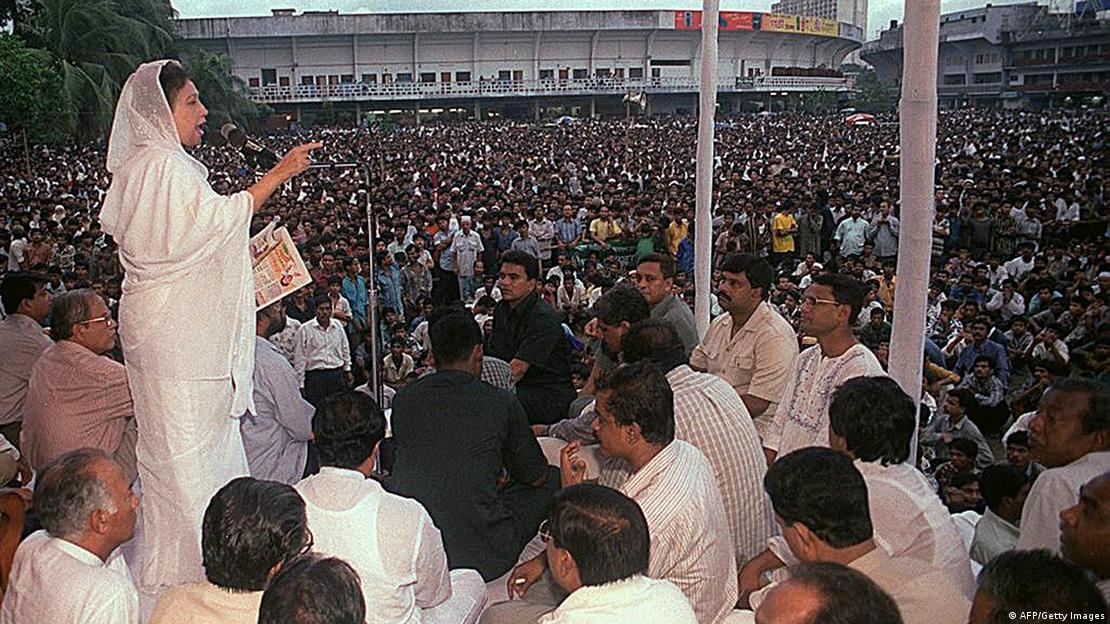
Zahidur Rahman: Begum Khaleda Zia remains one of the most consequential and enduring figures in the political chronicle of Bangladesh. A three-time Prime Minister and long-serving Chairperson of the Bangladesh Nationalist Party (BNP), her ascent from domestic obscurity to national leadership represents an extraordinary metamorphosis—one forged by tragedy, tempered by resilience, and defined by unyielding commitment to democratic ideals.
Born on 15 August 1945 in Jalpaiguri, West Bengal, Khaleda Zia married Ziaur Rahman in 1960 while he was a cadet officer in the Pakistan Army. For much of her early life, she remained distant from the public sphere. During the nine arduous months of the 1971 Liberation War, she endured house arrest alongside her two children—an experience that underscored her personal fortitude but did not yet foreshadow a political destiny.
The watershed moment in her life arrived with the assassination of President Ziaur Rahman on 30 May 1981 in Chattogram, an act widely attributed to both domestic and foreign machinations. At the time, Khaleda Zia was an apolitical homemaker residing in Dhaka Cantonment. His death not only plunged the nation into grief but also left the BNP mired in an existential leadership vacuum.
In this milieu of uncertainty, Khaleda Zia entered politics on 2 January 1982 as a primary member of the BNP. What initially appeared to be a reluctant assumption of responsibility soon evolved into a compelling display of political acumen. Her prudence, moral clarity, and organizational competence rapidly earned her legitimacy within the party hierarchy. By March 1983, she was appointed Senior Vice Chairperson of the BNP.
In a seminal statement issued on 8 January 1982, she articulated her political philosophy with notable lucidity. She affirmed that President Ziaur Rahman had founded the BNP to consolidate the nation under Bangladeshi nationalism and to construct a polity free from exploitation, corruption, and dependency. Alarmed by the prospect of factionalism, she accepted leadership not out of ambition, but from a perceived moral obligation to safeguard party unity and national interest.
Her ascendancy accelerated when Justice Abdus Sattar fell ill, prompting her appointment as Acting Chairperson on 12 January 1984. Shortly thereafter, on 10 May 1984, she was elected Chairperson unopposed. Subsequent re-elections in 1993, 2009, and 2016 reaffirmed her unassailable stature within the party, rendering her leadership both enduring and institutionalized.
Khaleda Zia’s political identity crystallized through her uncompromising opposition to military autocracy. As the principal civilian antagonist of H.M. Ershad, she rejected conciliatory politics and instead embraced sustained mass mobilization. From 1987 onward, her unequivocal one-point demand—“Ershad Must Go”—galvanized a nationwide movement. This protracted struggle culminated in the restoration of parliamentary democracy through the 1991 general election, in which the BNP emerged victorious.
In 1991, with the support of Jamaat-e-Islami, Khaleda Zia became Prime Minister for the first time. She returned to office in 1996, and again in 2001, leading a coalition government. Her electoral résumé remains singular in Bangladesh’s political annals: she contested 23 parliamentary seats across five national elections and won every one, a testament to her formidable political capital.
Beyond national borders, Khaleda Zia played a consequential role in regional diplomacy, serving twice as Chairperson of SAARC, thereby enhancing Bangladesh’s geopolitical visibility in South Asia.
Yet her career has been persistently punctuated by persecution. During the military-backed Caretaker Government of 2007, she was arrested on 3 September and subjected to prolonged incarceration. Efforts to exile her abroad were rebuffed with characteristic defiance—she refused to abandon her homeland under duress.
In November 2010, she was forcibly evicted from her Dhaka Cantonment residence, where she had lived for 28 years. The house, allocated to her after Ziaur Rahman’s assassination, became another symbol of what she described as politically motivated retribution.
During the subsequent decade and a half, 37 cases were filed against her under the Awami League government. Convictions in the Zia Orphanage Trust and Zia Charitable Trust cases further constrained her liberty, though her sentence was later suspended by executive order on 6 August, and she was acquitted in one of the cases on 27 November.
Arrested repeatedly—during the anti-Ershad movement, the One-Eleven period, and in later years—Khaleda Zia endured sustained political pressure, deteriorating health, and denial of advanced medical treatment abroad. Still, exile remained anathema to her. Following the collapse of the Awami League government, she was finally released on 6 August by order of President Mohammad Shahabuddin.
Conclusion
Begum Khaleda Zia’s life narrative is emblematic of stoicism, sacrifice, and political tenacity. Thrust into leadership by personal tragedy, she transcended circumstance to become a lodestar of resistance against authoritarianism. Her steadfast refusal to compromise on democratic principles, even at immense personal cost, has etched her legacy into the collective memory of the nation. Irrespective of partisan divides, her imprint on Bangladesh’s democratic evolution remains indelible—and her journey, profoundly instructive.


Share Button


Social Reformer Nawab Sir Salimullah
.............................................................................................
Sovereignty Hanging on Barbed Wire: The Felani Killing, Water Disputes, and the Long Shadow of Hegemony
.............................................................................................
From Plassey to July: An Unbroken Journey of Shattering Chains
.............................................................................................
Differences of Opinion Are Inevitable, but National Unity Is Bangladesh
.............................................................................................
Begum Khaleda Zia’s Rise: A Journey from Domestic Life to Democratic Resistance
.............................................................................................
Attacks on Christian Minorities in India During Christmas 2025- A rowing Human Rights Concern
.............................................................................................
Sheikh Numan Reader calls for humanitarian vision from industrialists in fundraising for the Readford Foundation`s social welfare fund
.............................................................................................
Anti-Bangladesh Narratives, Attacks on Diplomatic Missions, and the Imperative of National Awareness
.............................................................................................
Sharif Osman Bin Hadi Killing: Massive Funeral Reflects Public Anger Against Indian Hegemony
.............................................................................................
Modi`s Image Crisis and the Challenge to Bangladesh`s Sovereignty
.............................................................................................
Islam, Human Dignity and LGBTQ Rights: New Questions of Justice, Diversity and Peace in the Upcoming Elections in Bangladesh
.............................................................................................
Women should be the bearer of the look, in 2025
.............................................................................................
Deconstructing the Razakar Narrative: Jamaat-e-Islami and the Politics of 1971
.............................................................................................
The Forgotten Genocide That Still Haunts Kashmir
.............................................................................................
Kashmir: The World’s Unfinished Promise
.............................................................................................
The Promise Still Owed to Kashmir
.............................................................................................
Religious Education, Human Values, and Fundamental Human Rights of Children in Brothels
.............................................................................................
Muraqabah in the Perspective of Public Health and Global Health
.............................................................................................
Analyst Tajusl Islam’s Opinions: Authorities should refrain from burning down valuable fishing nets
.............................................................................................
World Teachers’ Day Expectation: An Independent Directorate for Secondary Education
.............................................................................................
BRAC and BRAC University: My Journey for Human Welfare
.............................................................................................
Crisis in Secondary Education: The Need for a Separate Directorate
.............................................................................................
The Importance of Marital Intimacy in the Light of Psychology, Sexology, and Public Health
.............................................................................................
A New Dawn in Pakistan–Bangladesh Relations
.............................................................................................
The History of a Society`s in Search of Social Security and Peace
.............................................................................................
The War Aims of Israel and the Criminal Cowardice of the Muslims
.............................................................................................
The July Uprising and Global Justice: A New Dawn of Accountability in Response to the United Nations
.............................................................................................
Silence and Inaction are Inexcusable Crimes
.............................................................................................
Milestone Tragedy: A Heartbreaking Tale of a Lost Generation
.............................................................................................
Plane Crash: Dr. Bablu calls on everyone to face the situation as a united nation
.............................................................................................
Israel looks unstoppable: Is total capitulation to Israel is the only option?
.............................................................................................
The Ummah is in Catastrophic Turmoil
.............................................................................................
Melodies of the Soul: Creation’s offering to the Divine
.............................................................................................
Building a Clean Environment is Urgently Needed
.............................................................................................
The US Begins the War: Defiant Iran Will Emerge as a New Iran
.............................................................................................
Iran-Israel War: Will India Need to Pick a Side?
.............................................................................................
Extortion in Power: Unmasking Bangladesh’s Political Decay
.............................................................................................
The Evil Axis of the West : Only a Nuclear Deterrent can Save Iran
.............................................................................................
Are We Heading Toward World War III? Let’s Take a Closer Look!
.............................................................................................
Jamaat-e-Islami and the Razakar Allegation in 1971: the Historical Perspectives
.............................................................................................
No Justice, No Safety: A Rapist’s Safe Haven 
.............................................................................................
When Inaction & Silence are also Crimes
.............................................................................................
Bridging Hope and Diplomacy: Professor Dr. Mohammed Younus –Sasakawa Dialogue on the Rohingya Crisis
.............................................................................................
Hatcheries for hatching ducklings are becoming popular day by day in different areas of Chalanbeel
.............................................................................................
BNP’s Crisis of Conscience: Time for Tarique Rahman to Act
.............................................................................................
Call to form & lead consensus government, not resignation Analyst Tajul Islam calls upon Prof Yunus
.............................................................................................
Dr. Muhammad Yunus and the Politics of Resignation: A Tale of Double Standards
.............................................................................................
Chalanbeel ancient tradition of clay stoves is disappearing day by day
.............................................................................................
Threads of Memory: The Living Art of Nakshi Kantha
.............................................................................................
Shocking Inaction of the World Leaders Against the Israeli War Criminals
.............................................................................................
Chief Advisor: Md. Tajul Islam,
Editor & Publisher Fatima Islam Tania and Printed from Bismillah Printing Press, 219, Fakirapul, Dhaka-1000
Editorial Office: 219, Fakirapul (1st Floor), Dhaka-1000.
Phone: 02-41070996, Mobile: 01720090514, E-mail: muslimtimes19@gmail.com
2022 @ All Right Reserved By www.themuslimtimes-bd.com