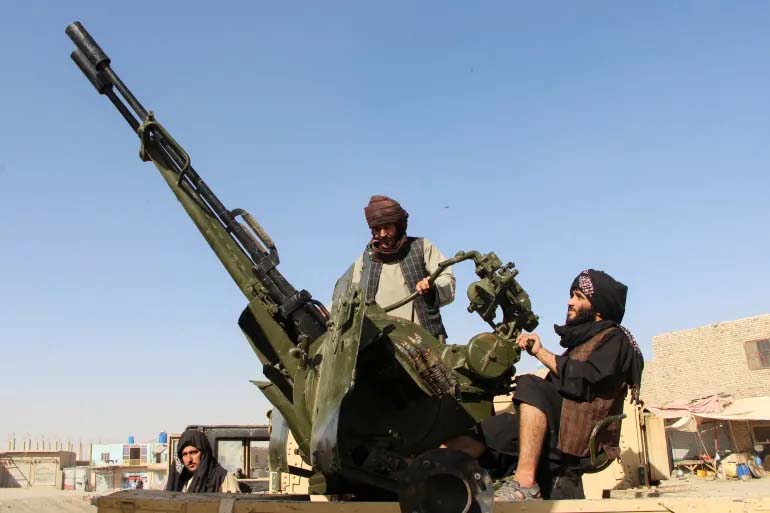
MT Desk: The guns roared again at Chaman. Afghan forces opened fire across the border, and Pakistan’s retaliation left confirmed Afghan casualties. This was not a random skirmish; rather, part of a relentless pattern. The South Asia Terrorism Portal has logged more than 118 cross-border firing incidents since August 2021, mostly initiated from the Afghan side. This is a systematic escalation, not a mistake. The border is bleeding because Afghanistan has become the epicenter of militancy in the region. The evidence is overwhelming. The United Nations Monitoring Report of 2024 confirmed that over 20 extremist groups operate freely inside Afghanistan. Among them are the Tehrik-i-Taliban Pakistan (TTP), Islamic State Khorasan Province (ISKP), the Islamic Movement of Uzbekistan, East Turkestan Islamic Movement, Lashkar-e-Jhangvi, and Al Qaeda Indian Subcontinent. Afghanistan is no longer just unstable—it is a militant sanctuary. UNAMA has verified TTP camps in Kunar, Nuristan, Paktika, and Khost, from which attacks inside Pakistan are orchestrated.
ISKP has surged with ferocity, its attacks increasing by 120 percent since 2022, many designed to strike across the border. Pakistan’s National Counter Terrorism Authority has reported that more than 70 percent of major terror attacks in 2024–25 had direct links to Afghan soil. The message is clear: Afghanistan is the launchpad of terror. The Taliban regime is not a passive bystander—it is an enabler. The UN’sCommittee has documented how Taliban interior networks provide TTP operatives with travel documents, training facilities, and even medical care. Pakistan’s intelligence has intercepted around 430 infiltration attempts from Afghan soil in 2025 alone, neutralized at Chaman, Angoor Adda, and Torkham. The financial machinery of terror is thriving, too. UN sanctions monitoring revealed that the TTP generates between 25 and 30 million dollars annually from Afghan smuggling routes, revenues openly taxed by Taliban officials. Worse still, NATO’s abandoned arsenal has become the militants’ treasure chest.
M4 rifles, night vision devices, and anti-tank guided missiles have surfaced in TTP and ISKP attacks inside Pakistan, raising the lethality of their operations to unprecedented levels. Adding fuel to this fire is the India–Afghanistan nexus. A Washington Post investigation in November 2025 reported India’s diplomatic revival in Kabul, including “deepened intelligence exchanges.” Pakistani security briefings have highlighted admissions by TTP chief Noor Wali Mehsud, who publicly acknowledged receiving foreign funding, media tools, and communication support via Afghan channels. Pakistani dossiers from 2023–2025 documented five Indian-run safe houses in the Kandahar–Jalalabad belt, used to train media operatives and conduct psychological warfare against Pakistan. Evidence shared with the Organisation of Islamic Cooperation and the United Nations pointed to Indian-backed networks providing encrypted communications and cross-border routes to anti-Pakistan groups. This is not speculation—it is sabotage.
At the core of this crisis is Afghanistan’s interim government, a regime hijacked by militias. It has no public mandate. Gallup’s 2024 survey revealed that 82 percent of Afghans expressed “no confidence” in the ruling structure. Special Inspector General for Afghanistan Reconstruction (SIGAR) reports confirm that Taliban ministries are run not by civilian administrators but by factional commanders, embedding militant patronage networks into the state itself. The consequences for ordinary Afghans are catastrophic. More than four million people have been displaced in the past two years due to Taliban–ISKP conflict, border closures, and economic collapse. Afghanistan is not governed—it is exploited, and its people are paying the price.