| |
| BNP Faces Rebel Candidate Crisis: Growing Uncertainty in the Electoral Equation |
| |
| |
 |
| |
| |
| By Kamrul Hasan
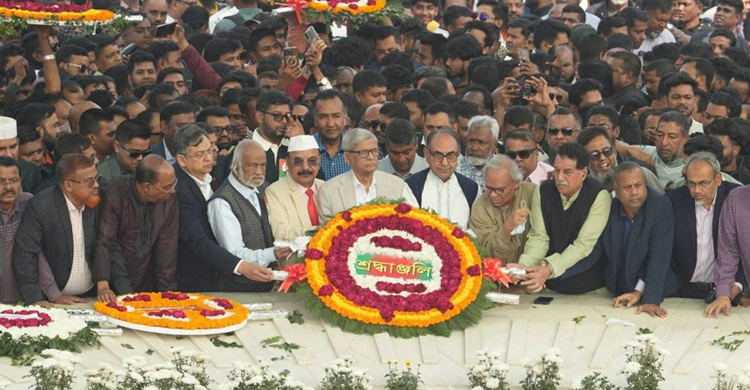
As Bangladesh heads toward its 13th national parliamentary election, the Bangladesh Nationalist Party (BNP) finds itself confronting a profound political test. After a long period away from electoral politics, the party’s decision to return to the polls had raised fresh hopes among supporters. However, almost immediately after the announcement of nominations, a surge of rebel candidates has pushed those expectations into a zone of uncertainty.
Political analysts argue that this is no longer merely an internal disciplinary issue. The rebel candidate crisis now has the potential to directly influence vote outcomes, parliamentary seat distribution and, ultimately, the arithmetic of government formation.
Following the nomination announcements, the emergence of multiple rebel candidates in constituencies across the country has laid bare cracks in BNP’s internal unity. As election day draws closer, these divisions are making the party’s electoral calculations increasingly complex—where the outcome in each constituency could alter the broader equation of power.
Returning to the polls, but without unity
After years of political movements, boycotts and prolonged deadlock, BNP’s decision to contest the election has brought it back into the mainstream of constitutional politics. For both domestic and international observers, the move sent an important signal: the party intends once again to seek state power through the ballot box.
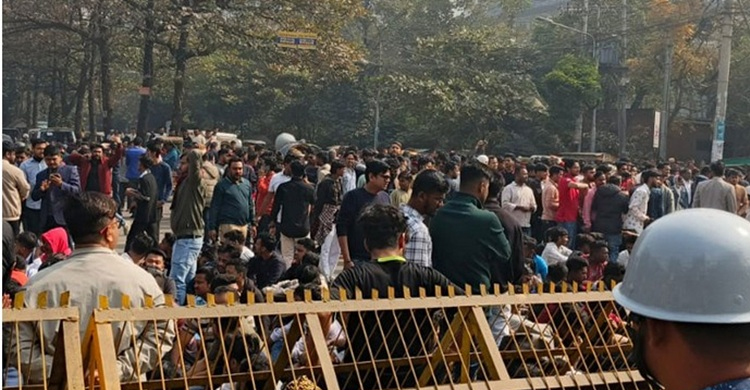
Yet the end of the nomination process quickly revealed that long-simmering discontent within the party could no longer be contained. In many areas, popular grassroots leaders, former lawmakers and influential local organisers who were denied party tickets have entered the race as independent candidates. Their personal vote banks, social influence and local organisational strength now pose a serious challenge to officially nominated BNP candidates.
As one political analyst noted,
“This is not just about rebel candidates—it reflects a long-standing disconnect between the central leadership and the grassroots.”
Vote splitting: the biggest political risk
In electoral terms, the most significant impact of rebel candidates comes through vote splitting. This risk is particularly acute in constituencies where BNP traditionally enjoys a strong support base.
Election analysts warn that in many seats, a split of just 10 to 15 percent of the vote can completely overturn the result. In tightly contested constituencies, rebel candidates could turn what would otherwise be assured BNP victories into defeats. The danger lies not only in losing individual seats, but in a reduced overall seat tally—enough to jeopardise the party’s chances of forming a government.
An election observer explained,
“For BNP, major losses do not mean losing everywhere. Defeat in just a few strategic constituencies could be enough to make government formation uncertain.”
Leadership dilemma and strategic deadlock
BNP’s central leadership now faces a difficult dilemma in dealing with the rebel candidate crisis. Taking a hard organisational line risks deepening grassroots resentment, while adopting a softer approach could undermine party discipline altogether.
So far, party directives, warnings and indications of organisational punishment have had limited visible impact on the ground. In some areas, rebel candidates have intensified their campaigns, creating fresh anxiety for officially nominated candidates.
According to a former election strategist,
“Disciplinary action alone will not resolve this crisis. Political accommodation, an understanding of constituency-level realities and swift decision-making are the real keys.”
Questions of governing credibility
In the current political landscape, BNP is seeking to present itself as a credible alternative government. International attention and scrutiny surrounding Bangladesh’s elections are also intensifying. Against this backdrop, the party’s internal cohesion, crisis management and decision-making capacity are increasingly seen as indicators of its ability to govern.
Analysts suggest that a party unable to manage its own candidate disputes and internal conflicts inevitably invites questions about its capacity to run the state. As such, the rebel candidate crisis has become not only an electoral challenge, but a serious test of BNP’s broader political credibility.
|
| |
|
|
|
| |

|
|
Chief Advisor: Md. Tajul Islam,
Editor & Publisher Fatima Islam Tania and Printed from Bismillah Printing Press,
219, Fakirapul, Dhaka-1000.
Editorial Office: 219, Fakirapul (1st Floor), Dhaka-1000.
Phone: 02-41070996, Mobile: 01720090514, E-mail: muslimtimes19@gmail.com
|
|
| |
|