Rayhan Ahmed: Environmental and civil society organizations have called for a faster push to install rooftop solar systems on government buildings, urging the government to take immediate steps to meet the national target of generating 5,000 megawatts of solar power within the next five years.
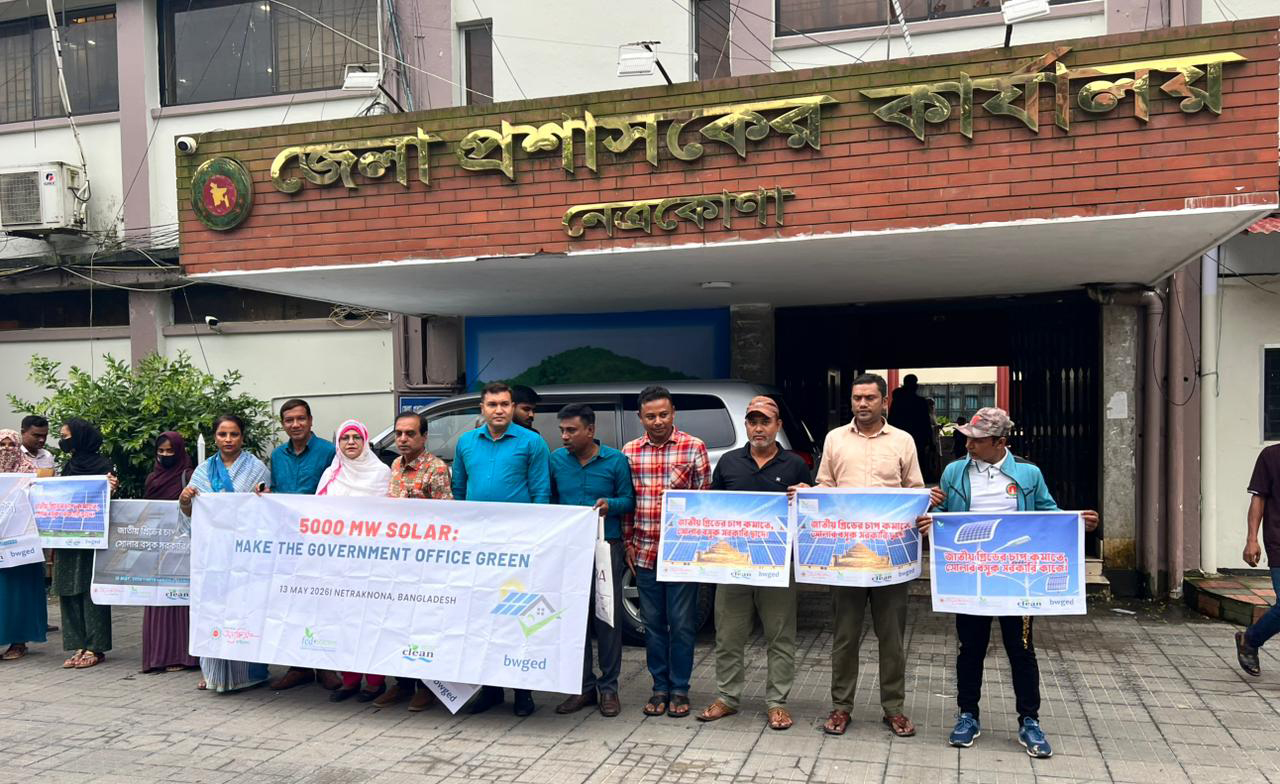
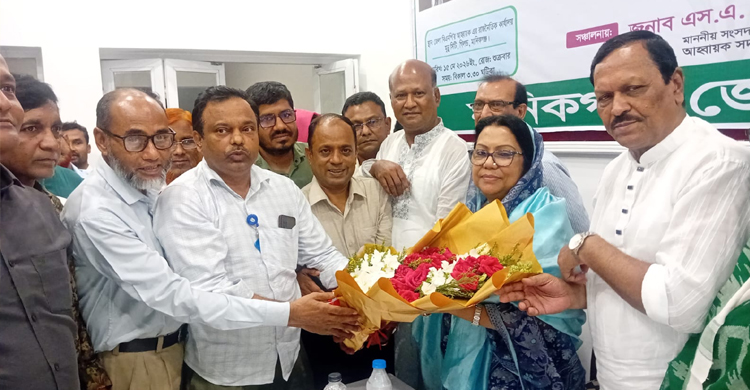
The demand was raised on Tuesday during an awareness campaign and memorandum submission program jointly organized by OnnoChitro Foundation, COASTAL Livelihood and Environment Action Network [CLEAN], Bangladesh Working Group on Ecology and Development [BWGED], and Forum on Ecology and Development [FED] in Netrakona. A memorandum was later submitted to the Netrakona District Commissioner’s office.
Speakers said expanding rooftop solar on government offices, educational institutions, and hospitals would ease pressure on the national grid and reduce dependence on imported fuel. They added that increasing the use of renewable energy would also help Bangladesh address climate change risks.
Rebeka Sultana, Executive Director of OnnoChitro Foundation, said recent initiatives by the Ministry of Power, Energy and Mineral Resources have opened new opportunities for rooftop solar installation on public buildings. She stressed that there is no alternative to renewable energy in tackling the current energy crisis, rising global fuel prices, and the challenges of climate change.
Environmental and social activist Imon Sarkar said expanding rooftop solar would create new employment opportunities at the local level. The sector, he noted, could open markets for solar panel manufacturers, installation companies, maintenance service providers, and equipment suppliers, supporting the growth of Bangladesh’s green economy.
Speakers pointed out that unused rooftops of government buildings, schools, colleges, hospitals, and administrative facilities represent a major untapped potential for solar generation. Utilizing these spaces effectively could boost decentralized power production and reduce transmission losses. Rooftop solar, they said, could also serve as a reliable supplementary source during peak summer demand.
They called for simplifying and making the net metering system more user-friendly so that excess electricity can be supplied to the national grid. The speakers also urged greater administrative support and policy incentives to accelerate adoption.
The groups said that with swift and coordinated government action, Bangladesh could set a regional example in renewable energy and move toward a cleaner, more affordable, and sustainable energy future.