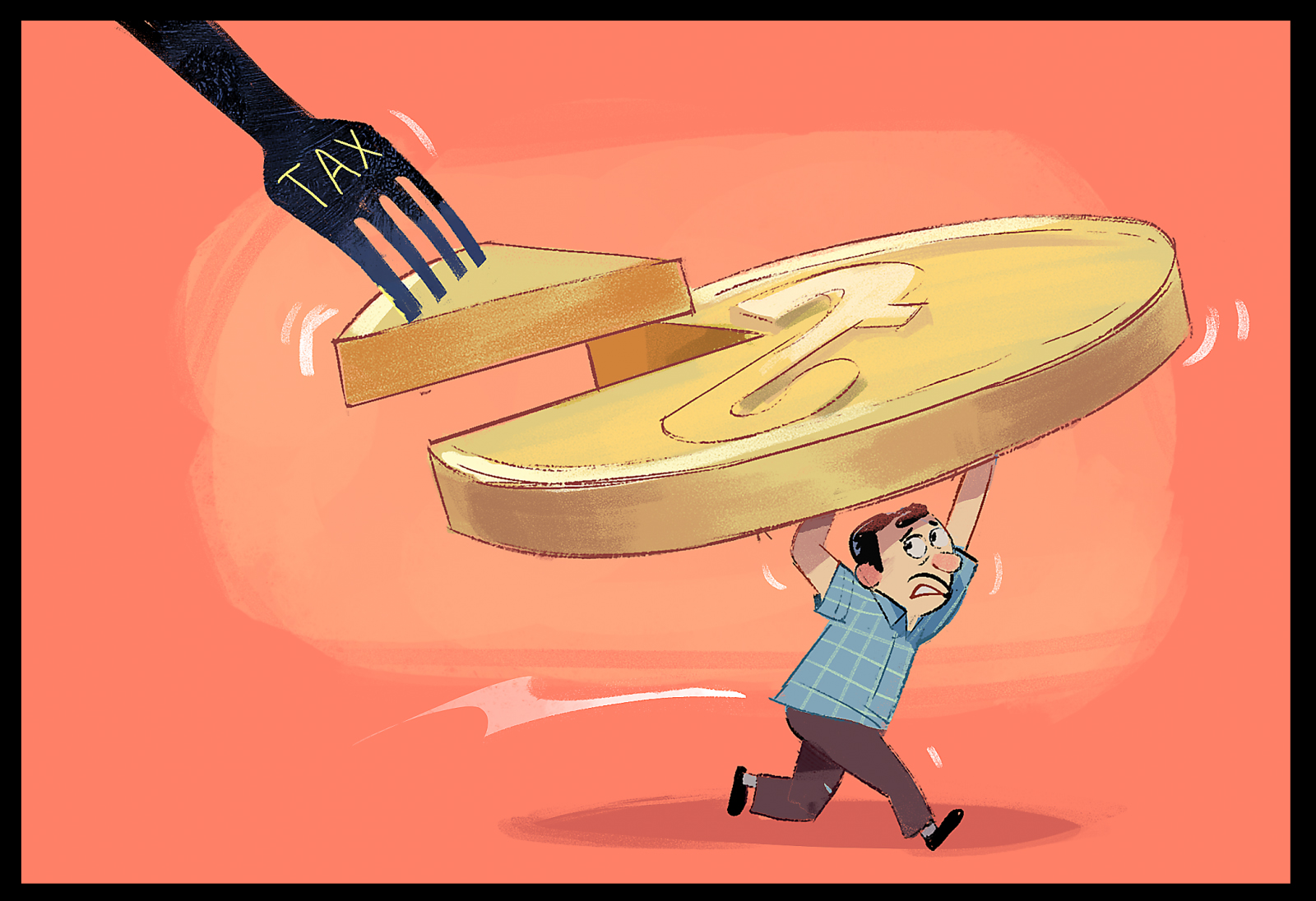
Mohammad Abu Hanif: The long-held belief that “higher taxes mean higher revenue” is facing a reality check. Economists and ground-level data suggest Bangladesh can actually increase government collections by lowering tax rates — provided the rates are rational, administration is efficient, and the system is taxpayer-friendly.
In a developing economy like Bangladesh, a vast number of individuals and businesses still remain outside the tax net. Yet high tax burdens are driving traders, investors, and the middle class away from compliance. The result: rising tax evasion and revenue collection that consistently falls short of targets.
Five reasons lower rates can yield more revenue
Analysts point to five key drivers behind the “low rate, high yield” equation:
1. Broader tax base: A reasonable tax rate encourages small traders and professionals to voluntarily enter the tax net. Mathematically, Tk 10 from 1 million taxpayers generates more than Tk 10 from 50,000 taxpayers. Expanding the base, not squeezing the existing few, is the sustainable path.
2. Less evasion: High rates create strong incentives to hide income. When rates are fair, the “why should I pay if others don’t” mindset weakens. Compliance improves, and more money actually reaches the treasury.
3. More investment and production: Lower taxes reduce the cost of doing business. New factories come up, existing ones expand. Higher production means more jobs, higher incomes, and consequently higher collections from income tax, VAT, and corporate tax.
4. Stronger consumer spending: When taxes are lower, people have more disposable income. They spend more on shopping, dining, and services. That consumption directly translates into higher VAT and supplementary duty collections — two of the government’s biggest revenue sources.
5. Long-term economic expansion: Lower tax rates clear the way for new entrepreneurs. Over time, as economic activity accelerates, the revenue base itself expands. This is the core logic of the “Laffer Curve” theory, demonstrated by several countries worldwide.
What Bangladesh must do now.
Conversations with NBR officials and business leaders highlight three priorities:
Rationalize tax rates: Sectors where Bangladesh’s rates are significantly higher than international benchmarks need alignment.
Digitize tax administration: E-returns, e-payments, and data-matching can close loopholes and reduce human discretion.
Build a competent, honest tax workforce: The culture must shift from harassment to facilitation. Recruiting and training honest, skilled officers is critical.
The risk of short-term revenue loss cannot be dismissed when rates are cut. More importantly, four structural barriers must be addressed: weak tax administration, corrupt officials, persistent tax evasion and money laundering, and frequent, unpredictable changes in tax policy. Without tackling these, rate cuts alone won’t deliver.
Lowering tax rates does not automatically mean lower revenue. Many economies have proven that a modern, efficient, and taxpayer-friendly tax system outperforms one built only on higher rates. For Bangladesh, the policy focus should shift from “how much to tax” to “how well to tax.”
When taxpayers survive and businesses grow, revenue will follow. Kordata banchle, byabsha banchle - rajaswo-o banchbe.