DU Correspondent: Bangladesh Islami Chhatra Majlis has placed a 13-point set of demands aimed at improving the country’s education system, ensuring campus security and addressing unemployment among educated youth.
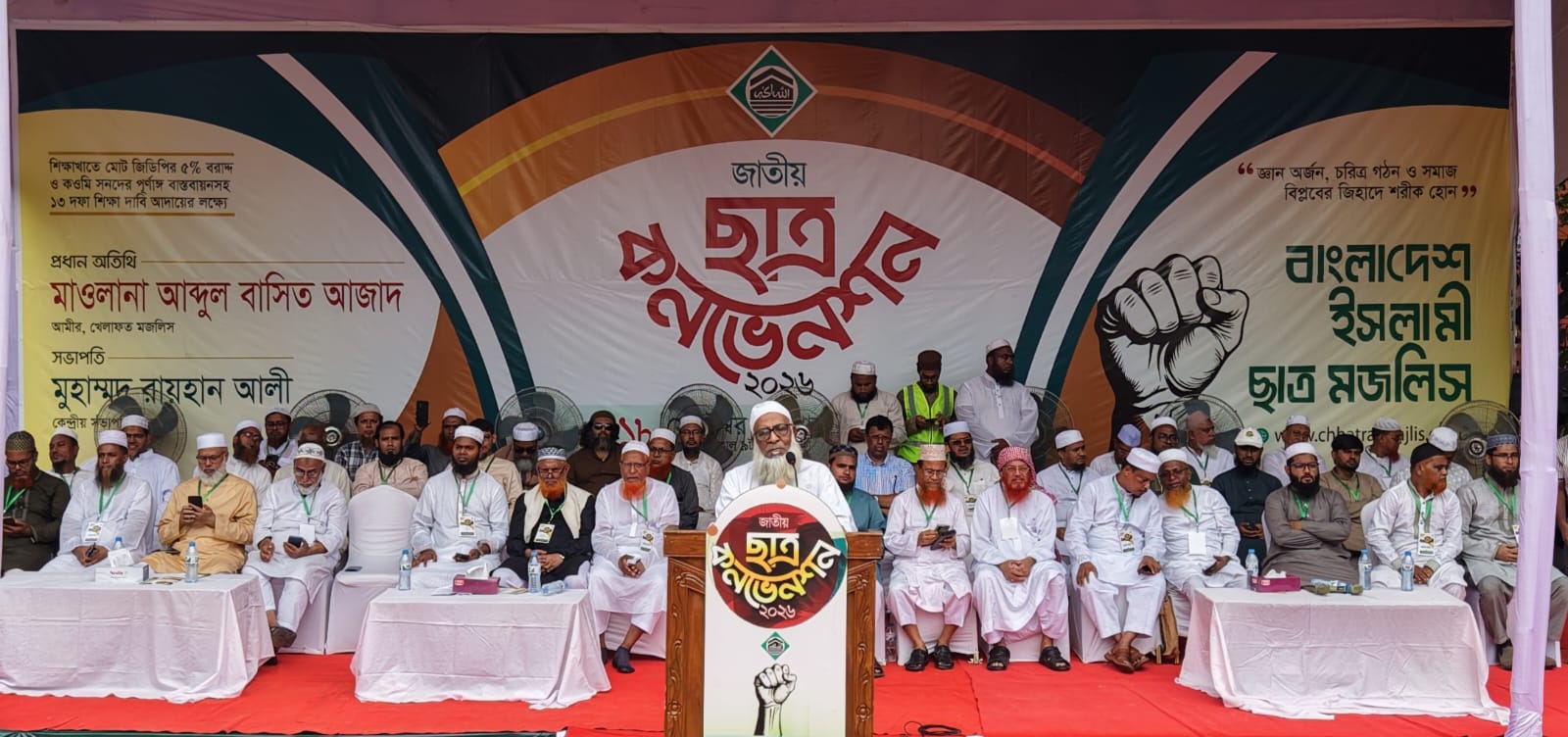
The demands were announced at a National Students’ Convention organised by the student organisation at Shahbagh Square in the capital on Friday morning. The convention was chaired by its Central President Muhammad Raihan Ali.
Addressing the programme as the chief guest, Khelafat Majlis Ameer Maulana Abdul Basit Azad called for greater government attention to the quality of education, campus security and unemployment.
“Education should develop knowledge, conscience and thinking capacity and produce ethical, humane and skilled citizens,” he said. He also argued that religious and moral education should have a stronger place in the country’s education system.
Azad endorsed the organisation’s 13-point demands and urged the government to introduce Quranic and necessary religious education at all levels, arrange separate shifts for female students and introduce interest-free loans for disadvantaged students.
He also called for allocating 5 percent of GDP to the education sector from the next fiscal year, preventing irregularities and corruption in recruitment and examinations, improving educational quality, ensuring campus security and taking effective measures to reduce unemployment. He further demanded improvement of Alia madrasa education and full implementation of recognition of Qawmi madrasa certificates.
The 13-point demands include making Quranic and necessary religious education compulsory at all levels; ensuring an environment for religious observance and freedom of expression on campuses; eliminating session backlogs and ensuring merit-based recruitment and examinations; and ending hall occupation, seat trading, ragging, extortion and tender-related irregularities on campuses.
The organisation also demanded reductions in education fees and the prices of books and other educational materials, 100-percent accommodation facilities at universities, adequate recruitment of teachers, separate class shifts for female students and interest-free loans for poor students.
To tackle unemployment, it called for expanding technical education and introducing unemployment allowances for educated jobseekers. Other demands include establishing a government Alia madrasa in every district, fully implementing recognition of Qawmi madrasa certificates, holding student union elections on every campus, increasing government grants for private education and ensuring necessary facilities for teachers.
The organisation also called for removing writings from textbooks that it considers contrary to Islam and religious values.
Speaking at the convention, Chhatra Majlis Central President Muhammad Raihan Ali alleged that attempts were being made to regain control of university halls. He said the organisation would not allow campuses to “go astray” and called for regular student union activities.
The programme was conducted by Secretary General Zakaria Hossain Zakir. Mohammad Anisuzzaman, elder brother of the organisation’s first martyred activist Arman, delivered the inaugural address.
Among those attending as special and invited guests were Khelafat Majlis Secretary General Dr Ahmad Abdul Kader, Religious Affairs Adviser Dr AFM Khalid Hossain, Khelafat Majlis Naib Ameer Maulana Sakhawat Hossain and Maulana Ahmad Ali Qasemi, Dhaka University Philosophy Professor AKM Yunus, Urdu Department Chairman Dr Mufti Golam Rabbani and educationist Professor Mohammad Khalequzzaman.
Leaders of several student organisations, including Student Jamiat Bangladesh President Ridwan Mazhari, Islami Chhatra Andolan Bangladesh Vice-President Khairul Ahsan Marjan, Jagpa Chhatra Kafela President Abdul Rahman Faruqi and Nagorik Chhatra Oikya President Muhammad Fazle Rabbi, also attended the convention.
The convention highlighted a broad range of concerns—from education financing and academic quality to campus security, accommodation, employment and the role of religious education—placing the organisers’ 13-point programme before the government for consideration.