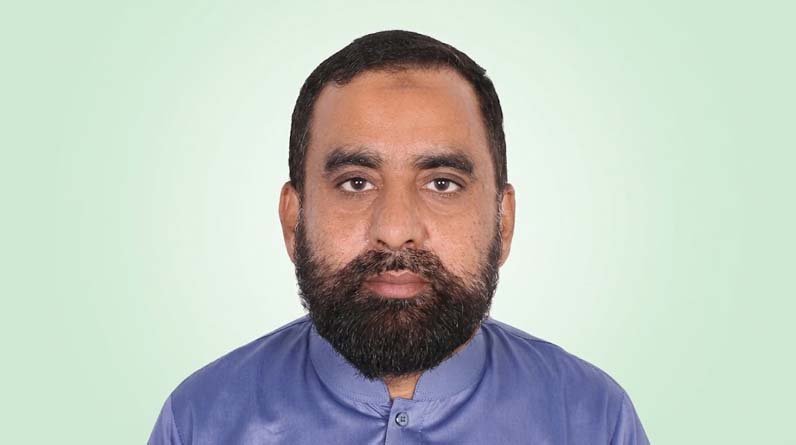
By Prof. Dr. Asif Mizan, Vice-Chancellor, Daaru Salaam University, Somalia and Political Scientist, Criminologist and Governance Specialist.
Human life, personal liberty, and physical security are neither state privileges nor policy concessions; they are fundamental, inalienable human rights. Article 3 of the Universal Declaration of Human Rights (UDHR) explicitly mandates that “everyone has the right to life, liberty and security of person.” Yet, in contemporary Bangladesh, a harrowing escalation of mob violence, targeted homicides, extortion, and systemic brutality demonstrates that individual security has descended into a state of profound crisis.
This breakdown is not merely an isolated failure of law enforcement. It reflects a systemic convergence of institutional decay, erosion of state accountability, familial failure, and widespread moral degeneration- a state of social breakdown akin to Emile Durkheim’s concept of anomie, where social norms degrade and individual moral boundaries collapse.
Recent Tragedies and the Culture of Impunity
The empirical evidence of this crisis is stark. The brutal extrajudicial lynching of an unfamiliar, mentally vulnerable man inside a student hall at Dhaka University, the horrific fatal assault on a university student in Khulna, and the senseless murder of teenager Ishayat Shahriar Apratim near Comilla University are chilling indicators of an eroding societal conscience. While students in Comilla took to the highways demanding justice, and police initiated preliminary inquiries in Khulna, these incidents are not disconnected anomalies.
From a criminological standpoint, these occurrences reveal a common denominator: an unprecedented contempt for human sanctity, the normalization of violence, and a pervasive culture of impunity. When potential offenders perceive that state justice is delayed, compromised, or politically manipulated, the deterrence effect of law vanishes, reproducing violence as a normalized social interaction.
Ethical and Scriptural Imperatives
Islam, as a cornerstone of Bangladesh’s cultural and moral fabric, treats human life as a sacred trust (Amanah). The Holy Qur`an asserts that killing an innocent soul is equivalent to slaying all of humanity, whereas saving a life is akin to saving all of humanity (Surah Al-Ma`idah 5:32). Furthermore, severe penal guidelines under Surah Al-Ma`idah (5:33, 5:38) against armed robbery, banditry, and corruption aim not at vengeance, but at safeguarding public order (Al-Amn Al-Aam) and bodily integrity.
Whether evaluated through Islamic jurisprudence (Maqasid al-Shariah), international human rights frameworks, or secular ethical philosophies, the unauthorized taking of life or property constitutes an absolute crime against civilization. Yet, when onlookers record fatal assaults on smartphones for digital engagement, and when judicial resolution drags through decades of procedural inertia, violence ceases to be a crime of passion—it becomes a structural pathology.
Familial Responsibility and the "Success at Any Cost" Trap
States do not raise individuals; families do. Biological parenthood without moral stewardship fails the primary function of socialization. Today, many families prioritize academic rankings, material status, and transactional achievements over integrity, empathy, and self-restraint. When parents praise unlawful acquisitions or hyper-competitive outcomes under the guise of "cleverness," they erode the child`s moral compass.
Aristotle famously posited in the Nicomachean Ethics that virtue (arete) is acquired through habituation; habit forms character. When children are constantly urged to "succeed" without the qualifying mandate to "be ethical, defend the vulnerable, and exercise self-control," education merely produces sophisticated, highly efficient perpetrators. Knowledge devoid of conscience amplifies social danger rather than mitigating it.
Institutional Collapse and the Breakdown of the Chain of Command
Over recent decades, key institutions in Bangladesh have suffered structural debilitation. Crucially, the managerial chain of command within public institutions, universities, and law enforcement has collapsed. When campus violent incidents occur, bureaucratic inertia, administrative passivity, and partisan pressure frequently impede swift intervention.
Max Weber defined the modern state by its legitimate monopoly on violence and rule-bound administrative authority. When rule-based governance succumbs to informal power dynamics, politicized student wings, or local elites, the legal apparatus loses its efficacy. In such an environment, citizen safety ceases to be a guaranteed right and becomes a matter of random chance. In criminological theory, the certainty of punishment deters crime far more effectively than its severity; absent certainty, law loses its normative force.
The "Show-Up" Culture and Digital Spectatorism
In an era dominated by hyper-connectivity, social media algorithms incentivize attention over empathy. Violence has become performative. Spectators capture lynchings on smartphones, distribute sensationalized clips, or interact callously in digital comment sections.
This transition from active bystander intervention to passive digital consumerism signifies severe emotional desensitization. The media—both legacy press and social platforms—bears a heavy duty: reporting must expose injustice without romanticizing perpetrators or sensationalizing trauma.
Where Does the Ultimate Accountability Lie?
While families, educational institutions, religious centers, and civil society share moral responsibility, the ultimate accountability rests unequivocally with the State.
The state alone holds the legal monopoly on coercion, policing, and adjudication. When the state delays investigations, tolerates political sanctuaries for criminals, or permits procedural corruption, it commits a governance failure that violates the constitutional social contract. As political philosopher Hannah Arendt observed regarding the banality of evil, systemic atrocities occur not merely through extraordinary malice, but through widespread thoughtlessness, institutional passivity, and silent compliance.
Strategic Framework for Reform
To halt this moral and institutional decline, Bangladesh must implement immediate policy and structural interventions:
Independent and Time-Bound Investigations: Establish specialized, non-partisan investigative teams for all homicides and hate crimes, bound by strict statutory timelines free from political or administrative interference.
Institutional Campus Safety Protocols: Standardize multi-agency security frameworks across all public and private universities, integrating formal grievance channels, immediate response protocols, and strict neutrality from university proctorial bodies.
Values-Based Educational & Familial Re-alignment: Reintroduce civic responsibility, conflict resolution, and moral philosophy within primary and secondary curricula, moving away from hyper-competitive academic grading systems.
Mental Health & Anti-Bullying Infrastructures: Mandate qualified mental health professionals and active anti-gang, anti-harassment units in all higher education institutions to address youth alienation, substance abuse, and digital inciteful speech.
Decoupling Crime from Political Identity: Enforce zero tolerance for political patronage of offenders, ensuring law enforcement penalizes acts based strictly on statutory definitions rather than party affiliation.
A nation’s true development cannot be measured solely by mega-infrastructure, urban skylines, or GDP growth metrics. Authentic development exists when a citizen walks safely at night, a student feels secure on campus, and a child grows with the certainty that human dignity is inviolable.
Unpunished crimes erode the law; eroded law collapses institutions; collapsed institutions destroy public trust; and destroyed trust liquidates the moral legitimacy of the state. Bangladesh stands at a critical juncture: it requires an immediate moral renaissance, responsible parenting, a vigilant civil society, and an accountable state apparatus to ensure that human life remains sacred.