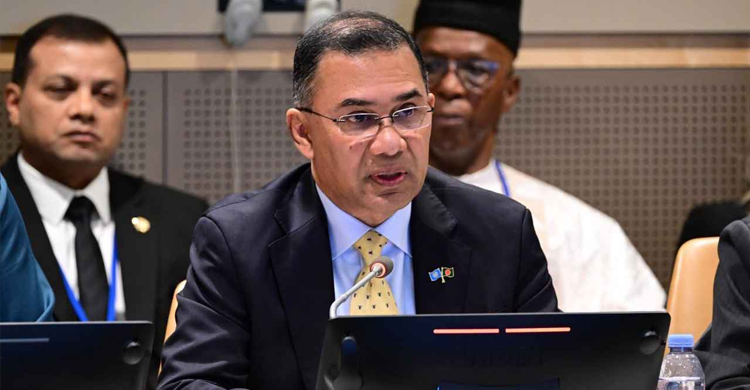
Md. Sahidul Islam (Sumon) : Bangladesh’s latest fuel price increase comes at a difficult moment for an economy still struggling with elevated inflation, weak purchasing power, and rising production costs. From September 21, the government raised the prices of diesel, kerosene, petrol, and octane by Tk 20 per litre, taking diesel to Tk 135, kerosene to Tk 155, petrol to Tk 160, and octane to Tk 165.
The government has a strong economic rationale for the adjustment. International oil prices have risen sharply amid geopolitical tensions and supply disruptions, while Bangladesh depends heavily on imported petroleum products. Bangladesh Petroleum Corporation (BPC) has also been incurring substantial losses because domestic prices have remained below import-linked costs.
Yet the central question is not simply whether fuel prices needed adjustment. It is whether the timing, magnitude, and structure of the increase are appropriate for an economy where inflation remains above 8 percent and the recovery is still fragile.
The answer requires looking at both sides of the equation.
Bangladesh is structurally vulnerable to international energy price shocks. Around 92 percent of the country’s petroleum demand is met through imports, and annual petroleum consumption is roughly seven million tons. Diesel accounts for the largest share of consumption, with transportation, agriculture, power generation, and industry among its major users.
The recent turmoil in global energy markets has made this vulnerability more pronounced. Conflict in the Middle East, uncertainty surrounding shipping routes, higher freight and insurance costs, and concerns over supply through the Strait of Hormuz have pushed crude and refined fuel prices higher. Brent crude has recently moved above $100 a barrel, although prices have subsequently shown considerable volatility.
For Bangladesh, higher international prices translate directly into higher import bills and greater foreign-exchange pressure. The country imported around $10.6 billion worth of crude and petroleum products in FY2025-26, highlighting the scale of its exposure to global oil prices.
There is therefore a legitimate argument for domestic price adjustment. Selling imported fuel below its effective cost indefinitely would simply shift the burden elsewhere—onto BPC’s balance sheet, the national budget, or ultimately taxpayers.
Recent figures underline the scale of the problem. Between March and August this year, BPC reportedly incurred losses of around Tk 22,875 crore. According to the Energy and Mineral Resources Division, the import-linked cost of diesel under prevailing international conditions was substantially higher than the previous retail price. Even after the latest increase, the government has kept the domestic diesel price well below the estimated full cost.
From this perspective, the latest price increase cannot simply be dismissed as unjustified.
But the economic cost of the adjustment must also be recognized.
Fuel is not an ordinary commodity. It is an economy-wide input. Diesel, in particular, is deeply embedded in Bangladesh’s transportation, agricultural and industrial systems. When diesel prices rise, the impact does not stop at the fuel station. Trucking costs rise; agricultural irrigation becomes more expensive; industrial production costs increase; and public transport operators face higher operating expenses.
Those costs can then be passed on to consumers. This is why fuel price increases can generate what economists call second-round inflationary effects. The initial shock comes from the higher fuel price itself. The subsequent shock comes when transport operators, manufacturers, wholesalers, retailers, and service providers adjust their prices to compensate for higher operating costs.
That is particularly concerning at a time when inflation remains stubbornly high.
According to the latest Bangladesh Bureau of Statistics data, headline inflation fell to 8.26 percent in August, the lowest level in around 10 months. Food inflation also declined to around 7 percent. These are encouraging developments. But non-food inflation remained above 9 percent, while wage growth continued to lag behind overall inflation.
In other words, the disinflationary trend is still fragile.
A significant fuel price increase at this stage could therefore slow the decline in inflation. The risk is particularly high because diesel is so extensively used in the movement of food and essential commodities across the country.
There is already evidence of immediate cost pressures. Transport operators have sought higher fares, while businesses dependent on road transport have reported increased freight costs following the latest adjustment. Such developments are understandable from a cost perspective, but they can quickly become problematic if higher fuel costs become an excuse for disproportionate increases in fares and commodity prices.
This is where government oversight becomes critical.If fuel prices must be adjusted in response to international market conditions, the government must ensure that the adjustment does not become a license for arbitrary price increases across the economy. Transport fares should be reviewed through transparent mechanisms. Markets for essential commodities should be closely monitored. And anti-competitive behavior should be addressed promptly.
There is another important consideration: the distributional impact of fuel subsidies.
Keeping fuel prices artificially low through blanket subsidies may appear socially attractive, but it is not necessarily the most efficient way to protect low-income households. Wealthier households consume more fuel directly and indirectly, meaning that universal fuel subsidies can disproportionately benefit those with greater consumption capacity.A more targeted approach would be preferable. If higher fuel prices are unavoidable, support could be directed towards farmers dependent on diesel-powered irrigation, essential public transport, and vulnerable households through targeted social protection mechanisms.
The government should also strengthen transparency in the fuel pricing mechanism.Bangladesh introduced an automatic fuel pricing mechanism with the objective of aligning domestic prices more closely with international market conditions. Such a system can work only if consumers understand how prices are calculated.
The authorities should regularly disclose the relevant components: international benchmark prices, freight and insurance costs, exchange rates, taxes and duties, refining or processing costs, and BPC’s purchase and distribution margins. Equally important, the mechanism should work in both directions.If international prices rise, domestic prices should be adjusted upward within a reasonable framework. But when international prices fall significantly and sustainably, consumers should also receive the benefit without unnecessary delay.
Otherwise, an “automatic” pricing mechanism risks becoming perceived as automatic only when prices need to go up.
The current situation also highlights a deeper structural problem. Bangladesh cannot remain perpetually vulnerable to international oil price volatility. The country needs a long-term strategy to reduce its dependence on imported fossil fuels.
Investment in renewable energy, energy efficiency, electric public transport, cleaner industrial technologies, and diversified domestic energy sources should therefore become central to energy policy. The objective should not merely be to manage the next international oil shock but to reduce the economy’s exposure to such shocks altogether.So, is the latest Tk 20-per-litre increase justified?
There is a clear economic case for some degree of price adjustment. International fuel prices have risen, import costs have increased, and BPC has been incurring substantial losses. Maintaining artificially low prices indefinitely would create fiscal and foreign-exchange pressures of its own.
But economic justification for adjustment does not automatically justify every possible increase.
The real test will be whether the government can prevent the fuel price hike from triggering a wider inflationary spiral, protect vulnerable households and productive sectors, and ensure that future price reductions in the international market are transmitted fairly and promptly to domestic consumers.
Fuel pricing, therefore, should not be treated merely as a matter of balancing BPC’s books. It is a macroeconomic policy issue with implications for inflation, household welfare, agriculture, industrial competitiveness, transport costs, foreign exchange, and fiscal stability.
Bangladesh needs a fuel pricing policy that recognizes the realities of the international market without ignoring the realities of the domestic economy.The objective should be neither permanent subsidies nor unchecked price increases. It should be a transparent, predictable and symmetric pricing framework—one that shares the burden of global energy shocks fairly while protecting those least able to absorb them.That balance will ultimately determine whether the latest fuel price increase becomes a necessary adjustment toward greater energy-sector stability or another source of pressure on an already strained economy.
Md. Sahidul Islam (Sumon) is an economic analyst, columnist, and CHT Affairs Researcher. Email: [msislam.sumon@gmail.com]