| |
| Fuel price hike: A transparent and balanced policy is essential to address the crisis |
| |
| |
 |
| |
| |
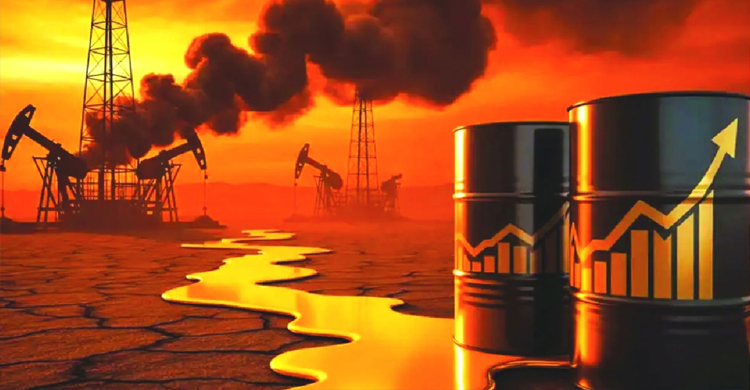
| Md. Mukhlesur Rahman: Bangladesh has once again raised the prices of fuel oil. Effective September 21, 2026, the price of diesel has increased from Tk 115 to Tk 135 per litre, octane from Tk 145 to Tk 165, petrol from Tk 140 to Tk 160, and kerosene from Tk 135 to Tk 155. The prices of all four types of fuel have thus been increased by Tk 20 per litre in a single step.
The government`s main justification is the rise in international fuel prices and the substantial losses incurred by the Bangladesh Petroleum Corporation (BPC). According to BPC figures, the corporation incurred losses of approximately Tk 22,876 crore from fuel imports between March and August. During the same period, international oil prices also increased significantly.
Looking at the issue simply in terms of whether fuel prices should be increased or not does not provide the full picture. Rather, it is more useful to examine how much of the additional cost should be borne by consumers, how much should be absorbed by the government, and how much pressure could be reduced through better management and adjustments to BPC`s own cost and tax structure.
There are clear economic reasons behind the price increase. Bangladesh remains heavily dependent on imported fuel. In the 2025-26 fiscal year, the country`s expenditure on fuel imports reached approximately US$10.63 billion, more than double that of the previous fiscal year. Therefore, when international oil prices rise, import costs increase, while pressure on the US dollar and the country`s foreign-exchange reserves also intensifies.
At the same time, BPC`s working capital has become considerably constrained. At the beginning of September, its available working capital stood at approximately Tk 12,368 crore. The corporation seeks to maintain a reserve equivalent to at least two months of import expenditure as a safety buffer.
Therefore, under the current international circumstances, the economic rationale for some adjustment in domestic fuel prices cannot simply be dismissed.
However, the question remains whether increasing the prices of all four fuels by Tk 20 per litre at once was the most reasonable approach. Everyone concerned understands that diesel is the most widely used of these fuels. In Bangladesh, it is also indispensable.
Diesel is not an ordinary consumer commodity. It is extensively used in agriculture, freight transportation, industry, inland water transport and various other sectors of the economy. Around 63 percent of the country`s total fuel demand is reportedly accounted for by diesel, and its use in agriculture is also indispensable.
Therefore, an increase in the price of diesel does not simply raise the cost for vehicle owners. It increases irrigation costs for farmers, transportation costs for trucks and vessels, and production costs for industries. Ultimately, its impact is reflected in the prices of food and almost all other goods.
Fuel price increases have both direct and indirect effects. At a time when inflation is already making everyday life increasingly difficult for ordinary people, a substantial price increase in a single step is bound to create additional hardship for households and businesses. The entire burden of BPC`s losses cannot reasonably or acceptably be placed on consumers.
It is also important to recognize that retail fuel prices are not determined solely by international purchase prices. Duties and taxes, transportation, storage, refining and various other costs are also incorporated into the final price.
According to BPC, its tax burden has also increased because duties and taxes are being calculated on the basis of the actual invoice value of imported petroleum products.
If passing higher prices on to consumers is one way of reducing BPC`s losses, then equal attention should be given to restructuring duties and taxes, reducing import costs, increasing storage capacity and improving BPC`s financial management and operational efficiency.
Many experts believe that simply increasing pump prices without ensuring transparency in BPC`s accounts cannot provide a sustainable long-term solution.
Transparency Must Be Ensured in Automatic Fuel Pricing
Bangladesh has a mechanism for adjusting fuel prices in line with international market conditions. However, it is extremely important that the formula used to determine domestic fuel prices be clear to the public.
If domestic fuel prices are increased when international fuel prices rise, then prices in the domestic market should also be reduced when international prices fall. Price adjustments must work in both directions and must be transparent.
A specific formula could be established based on international oil prices, the exchange rate of the US dollar, import costs, duties and taxes, and other relevant expenses. If the formula and the underlying calculations are regularly disclosed to the public, much of the controversy surrounding fuel price adjustments could be reduced.
It is also not reasonable to treat all types of fuel in exactly the same way. Petrol and octane are used predominantly by private vehicles. Diesel, by contrast, is directly linked to production and the supply chains of the wider economy.
Therefore, the social and economic impact of each type of fuel is different. A fair and prudent pricing policy must take this reality into account.
In particular, the possibility of targeted support for diesel used in agriculture and public transportation should be given serious consideration. Instead of providing subsidies to everyone, targeted assistance to genuinely productive and public-interest sectors could help contain government expenditure while protecting essential economic activities.
Without a balanced policy approach, it will be difficult to find a satisfactory solution to the country`s fuel-related challenges.
At present, the government faces three major objectives simultaneously: First, to protect BPC from massive losses.
Second, to reduce pressure on foreign exchange caused by fuel imports. Third, to prevent excessive additional pressure on ordinary people and productive sectors at a time of high inflation.
If increasing fuel prices is considered the only way to achieve these three objectives, the policy approach will lack balance.
Instead, a combination of measures is necessary: gradual price adjustments during periods of abnormal international market conditions, targeted support for essential sectors, a review of duties and taxes, improved cost management at BPC, and increased fuel storage capacity. In the long term, Bangladesh must also increase investment in domestic gas exploration, renewable energy, energy-efficient technologies and effective public transportation in order to reduce its dependence on imported energy. The rise in international fuel prices and BPC`s substantial losses are real problems. Therefore, the need for some adjustment in domestic fuel prices cannot be denied.
At the same time, it is equally true that an increase in fuel prices does not mean an increase in the price of fuel alone. It is closely linked to the costs of transportation, agriculture, industry and food.
Therefore, rather than simply asking whether fuel prices should be increased, the more important questions are: How much of an increase is reasonable? Which sectors will be affected and to what extent? And what role should a democratic government play in reducing the burden on its citizens?
What Bangladesh needs is a transparent, predictable and balanced fuel-pricing policy-one that takes into account the realities of the international market while giving equal importance to the capacity of farmers, workers, low-income people and productive sectors of the economy to absorb additional costs.
Because the price of fuel oil is not merely the price of a single commodity; it is one of the fundamental pillars of the entire economy`s price structure.
Md. Mukhlesur Rahman
Economist, Social and State Thinker, and Human Rights Activist
|
| |
|
|
|
| |

|
|
Chief Advisor: Md. Tajul Islam,
Editor & Publisher Fatima Islam Tania and Printed from Bismillah Printing Press,
219, Fakirapul, Dhaka-1000.
Editorial Office: 219, Fakirapul (1st Floor), Dhaka-1000.
Phone: 02-41070996, Mobile: 01720090514, E-mail: muslimtimes19@gmail.com
|
|
| |
|