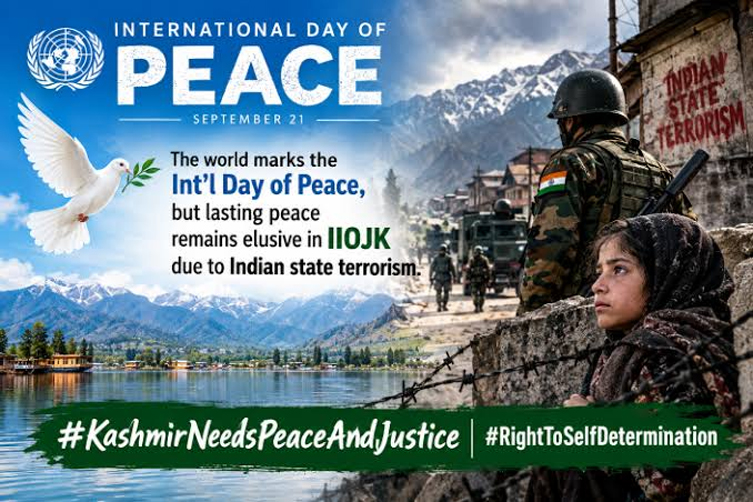
The All Parties Hurriyat Conference (APHC) has said that independent journalism is facing severe state repression in Indian illegally occupied Jammu and Kashmir (IIOJK) for exposing ground realities.
APHC spokesman Advocate Abdul Rashid Minhas in Srinagar said the BJP regime is using various intimidating tactics to harass journalists in the territory and is turning the disputed region into an “information black hole.
“Since August 2019, when the BJP government illegally and forcibly revoked the special status of the occupied territory, the local press has operated under strict control, fear and threats, while APHC statements have also not been allowed to be published in daily newspapers.
The authorities summon reporters to police stations, interrogate them and force them to sign pledges promising not to report on human rights issues or publish news critical of the authorities.
The APHC said that publishing factual reports about military actions or human rights violations is now treated as a crime in the territory.
The statement said police agencies have already collected personal data, mobile-device details and religious and family backgrounds of locals and reporters. The authorities have also taken away journalists’ passports to prevent them from travelling or sharing ground realities with international media.
The APHC said the BJP regime is trampling on the basic principles of press freedom, as journalists are threatened and abused on social media by the Hindutva brigade for exposing the Modi government’s failures.
The local media outlets depend heavily on government advertisements, while the authorities withhold such advertisements to pressure newspapers to change their editorial tone on Kashmir and public sentiment, the APHC said.
The APHC further said journalists have been booked under draconian laws, including the Public Safety Act (PSA) and Armed Forces (Special Powers) Act (AFSPA), for speaking the truth in IIOJK.
The APHC statement strongly condemned the prolonged detention of Kashmiri political prisoners, including its leadership, Masarrat Aalam Butt, Shabbir Ahmed Shah, Muhammad Yasin Malik and Aasiya Andrabi.