Press Release: The century-old traditional political party, Bangladesh Muslim League, had been divided due to various reasons. Setting aside all differences, the party’s leaders and activists have pledged to unite against Indian dominance and have decided to nominate candidates in all 300 constituencies in the upcoming 13th National Parliamentary Election.
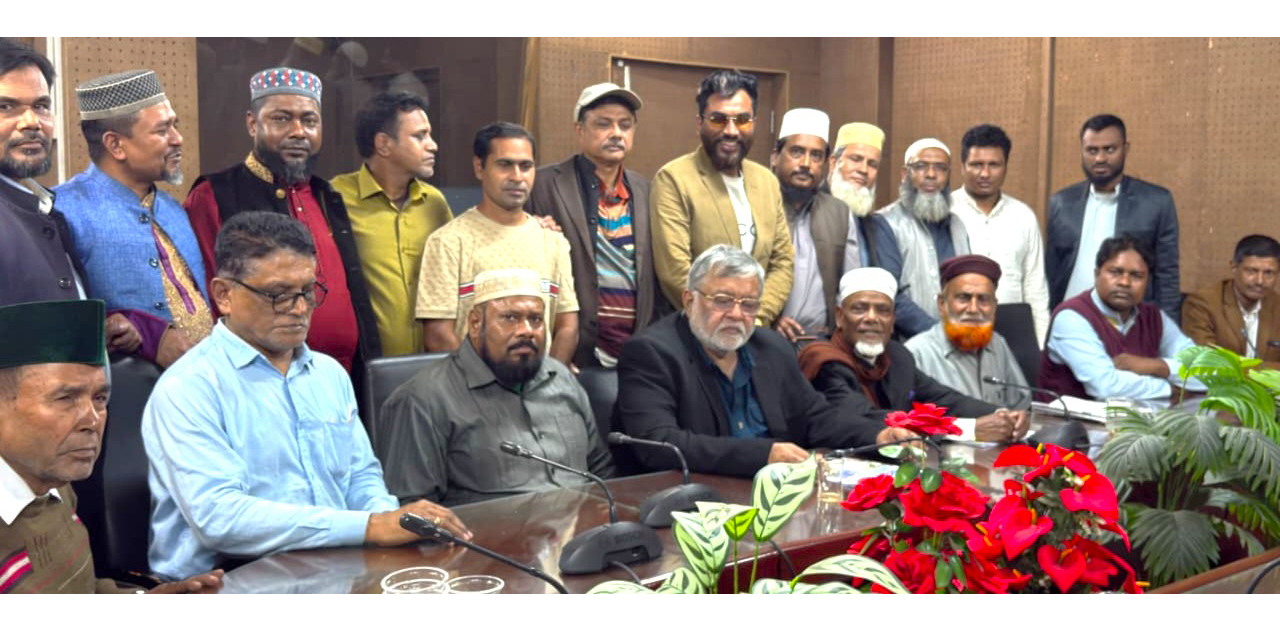
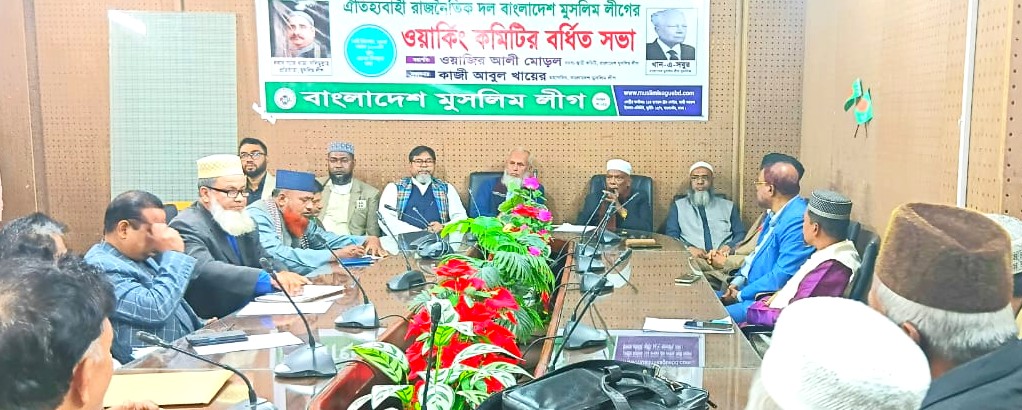
On Wednesday afternoon (17 December 2025), at the call of senior party leader Md. Sharfuddin—son of late former MP Alhaj Sirajuddin, a renowned Muslim League leader of Old Dhaka—the factionalized leaders and activists of the Bangladesh Muslim League gathered at the Dhaka Metropolitan Muslim League office in Dilkusha, where this decision was taken in a meeting.
The meeting was chaired by senior Muslim League leader Mr. Sharfuddin. Among those present were Bangladesh Muslim League Secretary General Kazi Abul Khayer; Vice Presidents Nazrul Islam, Advocate Jasimuddin, and Engineer Osman Gani; Organizing Secretaries Khan Asad and Mahbubur Rahman Bhuiyan; central leaders Khondkar Zillur Rahman, Mohammad Ali, Abdul Alim, Khondkar Ziauddin, Syed Abdul Hannan Noor, Sheikh Md. Abu Jafar, Engineer Giasuddin Chowdhury, Osman Gani Belal, Sheikh E. Sabur, Maksudur Rahman, among others. Two senior and important party leaders—Executive President Abdul Aziz Hawladar and Secretary General of one faction Advocate Aftab Hossain Mollah—were outside Dhaka and joined the meeting virtually, expressing their support for the unity process.
Party Secretary General Kazi Abul Khayer stated that the greatest threat to Bangladesh’s independence and sovereignty is a neighboring aggressive state. By providing shelter to thousands of killers of the fallen fascist regime after the July mass uprising, that threat has been reaffirmed. The shooting at Osman Hadi and death threats against July fighters are sending a clear warning for everyone to unite. Welcoming the return of divided leaders and activists by ending misunderstandings, he said the party would be immediately reorganized in accordance with its constitution, inclusive of all.
Organizing Secretary Khan Asad, engaging in self-criticism, said that at a crucial time when the people, disoriented after the July revolution, are desperately searching for a strong Muslim nationalist political platform, conspiracies by some foreign agents hiding within the party further divided the Muslim League—the cradle of Muslim national identity—making it weaker and more damaged. As a result, the party failed to become a symbol of the people’s hopes and aspirations.
The meeting’s chair, Mr. Sharfuddin, said that unity among Muslim nationalists for the greater interest of the country, the nation, and the Muslim Ummah is not an ordinary matter; rather, it is a revolutionary commitment to the political ideals established by Nawab Salimullah for the reawakening of Muslim national identity. Even after conspirators have been exposed, anyone attempting to sustain divisions within the Muslim League would be considered an enemy of the country and the nation, serving the interests of a neighboring aggressive state.
The leaders present at the meeting pledged to work unitedly—forgetting personal interests, positions, titles, and past conflicts—to build the Muslim League as a strong, people-oriented party. They declared with firm resolve that, to deliver the message of the reawakening of Muslim national identity to the people’s doorsteps, Bangladesh Muslim League will nominate candidates in all 300 constituencies in the upcoming election with its traditional symbol, the Hurricane, Insha’Allah.