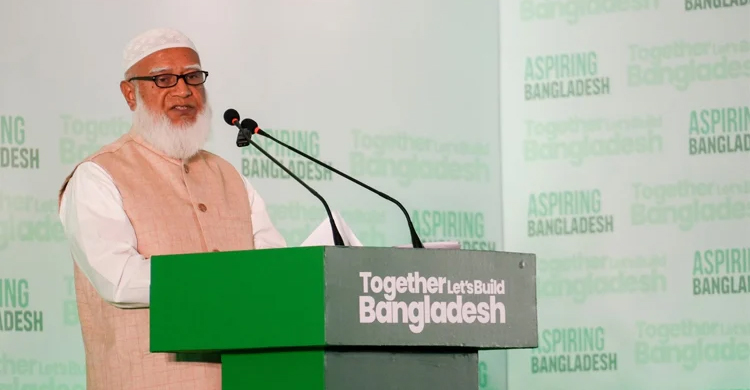
(BSS) - Bangladesh Jamaat-e-Islami Ameer Dr Shafiqur Rahman today pledged to show ‘zero’ tolerance against corruption, saying the party had already proven its commitment to ensure clean governance through its past record in state administration.
“We will show zero tolerance against corruption. We have proved it before. Our former Ameer-e-Jamaat and Secretary General led three ministries and served the country with zero corruption,” he said, adding that their honesty and expertise had translated into efficiency and effective governance.
Dr Shafiqur Rahman made the remarks while delivering the inaugural address at the opening of Bangladesh Jamaat-e-Islami’s ‘Policy Summit 2026’ at the Ballroom of Hotel InterContinental in the capital.
He said that Bangladesh’s current challenge was no longer survival but stability, noting that although the economy had grown, the quality of work and livelihoods had deteriorated.
“Unemployment and inflation are ruining our day-to-day lives. Most employment is informal, insecure, and poorly paid. Young graduates struggle to convert education into opportunity, while women continue to face barriers in accessing opportunities,” he said.
Dr Shafiqur Rahman observed that millions of people remained one economic shock away from hardship despite working hard every day, stressing that growth alone was no longer sufficient.
“Economic success must be measured by whether people can plan their lives with confidence, provide for their families with dignity, and participate meaningfully in society,” he said.
Highlighting Bangladesh’s strengths, he said the country’s greatest asset was its people, particularly its young, disciplined, and industrious workforce. He also praised the contribution of migrant workers, saying their remittances supported families, stabilized the economy, and connected Bangladesh to the global labour market.
“Their contribution goes beyond money. They bring skills, experience, and global exposure,” he said.
The Jamaat Ameer also pointed to the global Bangladeshi professional community—academics, doctors, engineers, and entrepreneurs—who were willing to help build institutions, mentor young people, and support reform efforts.
Emphasizing the role of women, he said expanding women’s participation in the economy was not only a matter of justice but also an economic necessity. “No nation can prosper sustainably while excluding half of its population from full participation,” he said.
Dr Shafiqur Rahman also underscored Bangladesh’s natural and strategic advantages, including fertile land, extensive waterways, a long coastline, and a strategic geographic position linking South and Southeast Asia, which he said offered opportunities for sustainable growth and regional connectivity.
He said the real challenge lay in translating Bangladesh’s potential into prosperity through effective institutions, sound policies, and responsible political choices.
“Employment must be treated as a public priority. Informal work must be gradually formalized, labour rights must be enforceable, and education must connect meaningfully to opportunity,” he said.
Stressing the importance of good governance, he said fair and predictable service delivery built trust between the state and citizens. He also highlighted the need for partnerships between the public and private sectors and stronger engagement with the international community.
Referring to Bangladesh’s political journey, Jamaat Ameer said the country’s struggle for political freedom, economic freedom, and human dignity remained unfinished.
He said democratic institutions had weakened over the years, accountability had eroded, and citizens had been denied their rightful voice, leading to the July 2024 mass uprising led largely by youth.
“After a dark period of fascist rule, we now stand at a crossroads during a democratic transition, facing the challenge of rebuilding our country,” he said.
Paying tribute to the martyrs of the July movement, he said, “Insha’Allah, the sacrifices of our July heroes—Abu Sayed, Mugdho, Santo, Wasim, and Osman Hadi—will not go in vain.”
He said Bangladesh was approaching another national election scheduled for February 12, and the policy summit aimed to present Jamaat-e-Islami’s vision for a just, equitable, and prosperous Bangladesh.
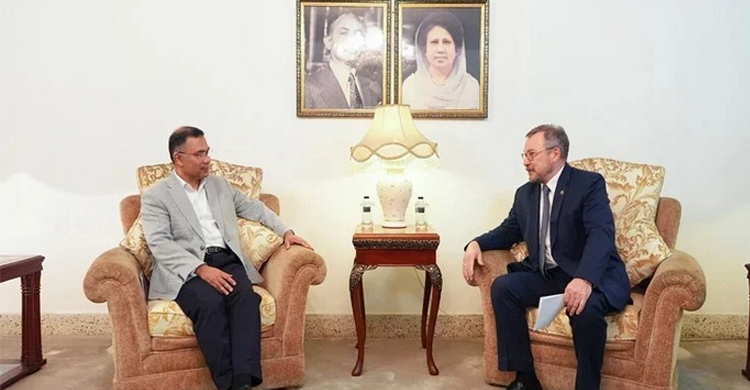
The policy summit was attended by ambassadors, high commissioners, and diplomats from the United States, United Kingdom, China, India, Pakistan, Turkey, Malaysia, Australia, Canada, Japan, several European countries, the European Union, the United Nations, UNDP, IRI, and other countries and international organizations.
Distinguished guests are also included Dr Debapriya Bhattacharya, senior Supreme Court lawyer Shahdeen Malik, former lawmaker Major (Retd) Akhtaruzzaman, prominent editors, senior journalists, researchers, professionals and intellectuals.
Among others present were- Bangladesh Jamaat-e-Islami Nayeb-e-Ameers Dr Syed Abdullah Muhammad Taher and Maulana A N M Shamsul Islam, Secretary General Mia Golam Parwar, Assistant Secretaries General Maulana A T M Ma’sum, Maulana Rafiqul Islam Khan, Dr Hamidur Rahman Azad, Maulana Abdul Halim, Advocate Ehsanul Mahbub Zubayer, and central executive council members Saiful Alam Khan Milon and Mobarak Hossain.