International Desk: “Amid a complex global environment, China has maintained steady economic growth, creating tangible opportunities for multinational companies like ours,” said Frank Ham, Global CEO of the world-renowned air purifier brand IQAir, following China’s announcement on Monday, January 19, that its economy recorded a growth rate of 5 percent in 2025. International media outlets have likewise described China’s economic performance as “better than expected.”
Achieving a 5 percent growth rate is particularly significant in the current global context. The year 2025 marks the final year of China’s 14th Five-Year Plan. During this period, China’s gross domestic product (GDP) reached 140 trillion yuan for the first time, while major economic and social development targets were successfully met. This has laid a solid foundation for the upcoming 15th Five-Year Plan.
China’s growth momentum ranks among the strongest of the world’s major economies, positioning the country as the most stable and reliable engine of global economic growth. China is expected to contribute around 30 percent of global economic growth. Recently, leading international institutions have raised their forecasts for China’s economic growth, reflecting growing global confidence in the country’s economic outlook.
Where does this resilience come from? Professor Wang Xiaosong of Renmin University of China attributes the success to China’s innovation-driven development strategy and its efforts to strengthen new-quality productive forces, which have accelerated high-quality economic growth. Targeted and well-calibrated government policies have also played a crucial role.
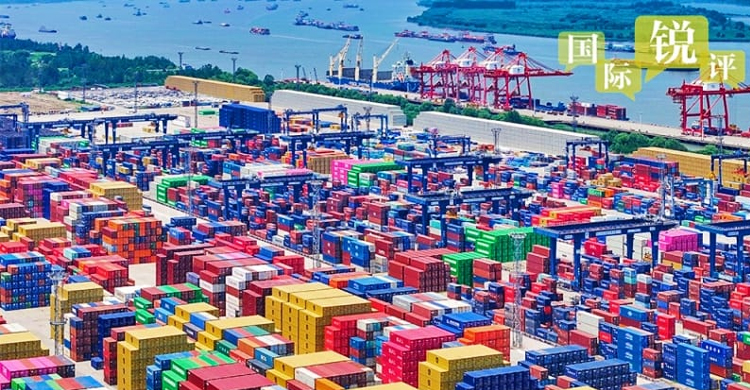
Stability stands out as a defining feature of China’s 2025 annual economic report. Despite weak global growth and various external challenges, China achieved expansion across its three major economic sectors. The Consumer Price Index (CPI) remained stable, while the average urban and rural unemployment rate stood at 5.2 percent. Employment conditions were generally steady. Merchandise trade reached a new record high, and foreign exchange reserves rose to USD 3.3 trillion.
As the world’s second-largest economy, China has demonstrated remarkable resilience under pressure—an outcome that benefits the global economy as a whole.
Meanwhile, new drivers of growth within China’s economy have become increasingly prominent. Total imports and exports rose by 3.8 percent year-on-year, while real per capita income increased by 5.0 percent. At the same time, new productive forces continued to expand, supported by major breakthroughs in scientific research.
The value added by high-tech manufacturing rose by 17.1 percent, while digital product manufacturing grew by 9.3 percent year-on-year. By 2025, China’s spending on research and development exceeded the average level of OECD countries for the first time, and the country entered the top ten of the Global Innovation Index rankings for the first time.
According to a recent report by global audit and consulting firm KPMG, nearly 70 percent of surveyed multinational companies are confident about their growth prospects in China over the next three to five years. Among them, 94 percent remain committed to investing in the Chinese market. Compared with their expectations for the global economy, multinational corporations are notably more optimistic about China’s economic potential—an indication that China is strengthening foreign investor confidence through concrete and targeted measures.
Thanks to the resilience of its economy and the Chinese government’s firm commitment to greater openness, China is set to remain an “oasis of growth” and a “pillar of innovation,” driving global economic development forward.
Source: Xueyi-Touhid-Jiniya, China Media Group.