| |
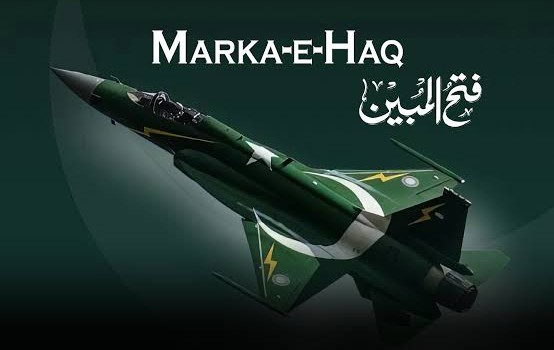
| Marka-e-Haq victory sends clear and strong message to India, Pakistan |
| |
| |
 |
| |
| |
| Special Correspondent: Prime Minister Shehbaz Sharif has announced that May 10 will be observed annually as Youm-e-Marka-e-Haq, commemorating what he described as a “magnificent success” in the recent military confrontation with India and reaffirming national unity.
The declaration follows a brief but intense escalation between the two nuclear-armed neighbors earlier this month, which ended in a ceasefire brokered through international diplomatic efforts.
In a video statement, Defence Minister Khawaja Asif said Pakistan’s armed forces demonstrated exceptional coordination and rapid response capabilities during the conflict. “The retaliatory strength of our Army, Navy, and Air Force is faster and more coordinated than the enemy can imagine,” he said, adding that the nation stood united “like a steel wall” behind its military.
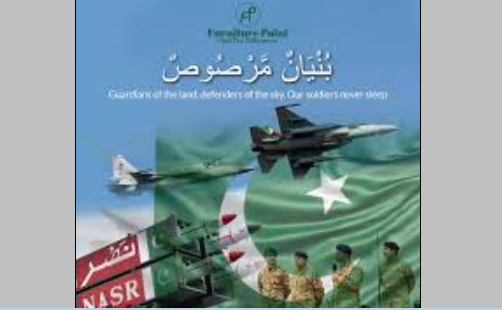
Speaking at the launch of a commemorative publication titled The Battle of Truth (Marka-e-Haq)—produced jointly by the Ministry of Information and Broadcasting and the Inter-Services Public Relations—the minister reiterated that Pakistan had successfully countered what he termed India’s “nefarious designs.” He also claimed that Pakistan’s forces neutralized India’s advanced S-400 air defence system during the confrontation.
The latest tensions were triggered on April 22, 2025, following a deadly attack in Pahalgam that killed 26 people. India blamed Pakistan for the incident, a charge Islamabad firmly denied.
In the aftermath, India undertook a series of retaliatory measures on April 23, including suspending the decades-old Indus Waters Treaty, cancelling visas for Pakistani nationals, shutting the Wagah-Attari border crossing, and scaling down diplomatic presence in both countries.
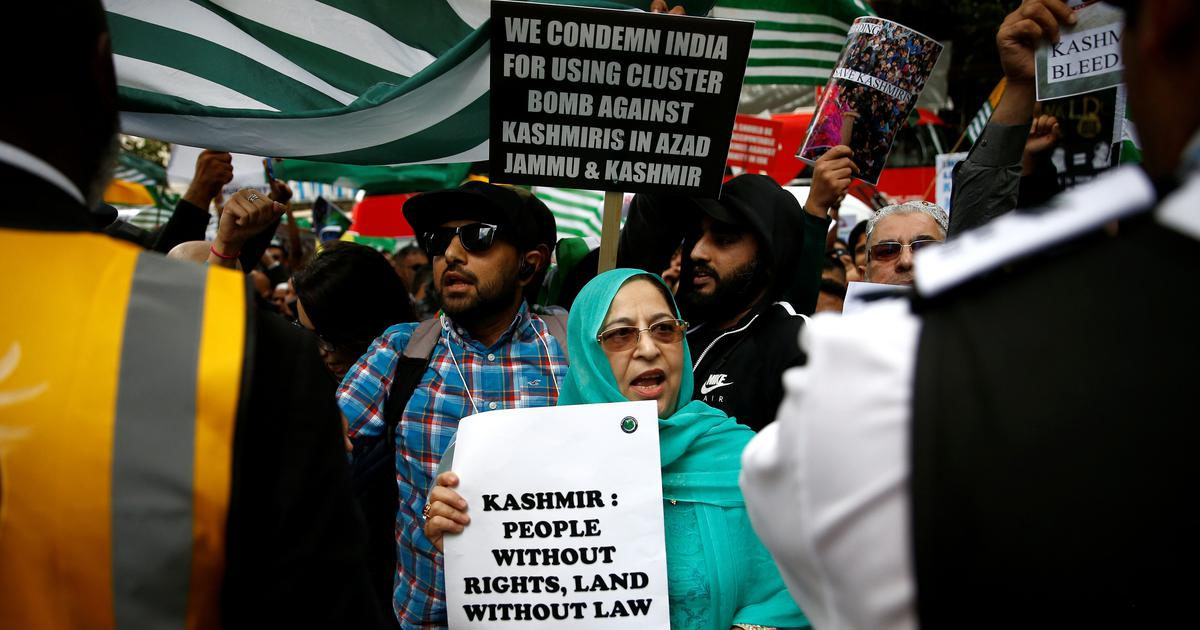
The situation escalated sharply on May 7, when missile strikes hit multiple locations in Pakistan’s Punjab province and Azad Jammu and Kashmir, reportedly causing civilian casualties and infrastructure damage, including the destruction of a mosque.
Pakistan responded by claiming to have shot down several Indian aircraft, including three Rafale jets. Hostilities peaked again in the early hours of May 10, when Indian missile strikes targeted Pakistani airbases. In retaliation, Pakistan launched Operation Bunyanum Marsoos, targeting what officials described as key Indian military installations, including airbases and missile storage facilities.
Later that day, a ceasefire was announced by U.S. President Donald Trump, following overnight diplomatic engagement. The agreement was subsequently confirmed by Pakistan’s Foreign Minister Ishaq Dar and India’s foreign secretary.
While both sides have since stepped back from further military action, the rhetoric remains charged. Pakistani officials have emphasized national unity and military readiness, while also calling attention to regional stability concerns.
The announcement of Youm-e-Marka-e-Haq signals Islamabad’s intent to institutionalize the narrative of the conflict as a defining moment of national resolve, even as questions remain about the broader implications for long-term peace in South Asia.
|
| |
|
|
|
| |

|
|
Chief Advisor: Md. Tajul Islam,
Editor & Publisher Fatima Islam Tania and Printed from Bismillah Printing Press,
219, Fakirapul, Dhaka-1000.
Editorial Office: 219, Fakirapul (1st Floor), Dhaka-1000.
Phone: 02-41070996, Mobile: 01720090514, E-mail: muslimtimes19@gmail.com
|
|
| |
|