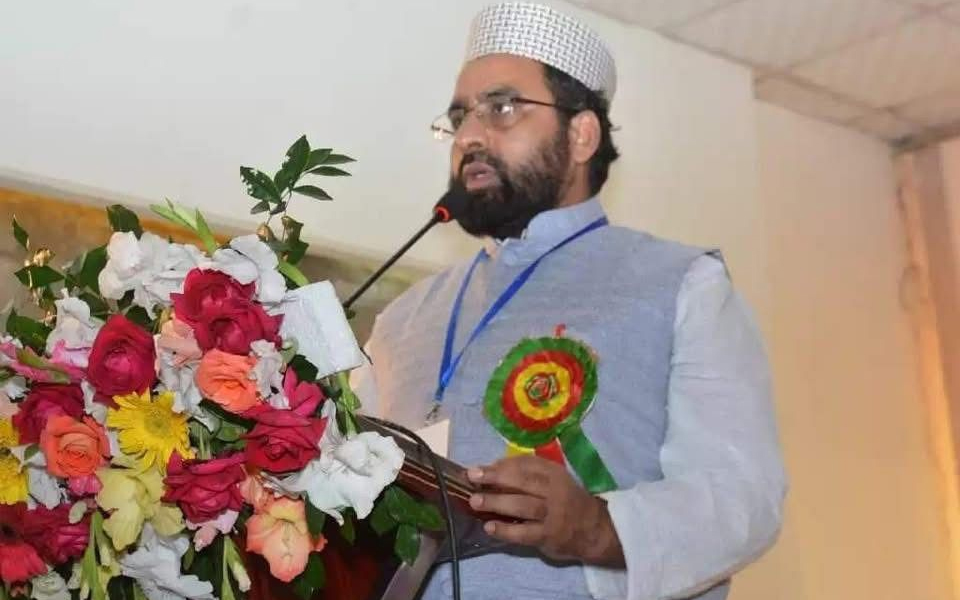
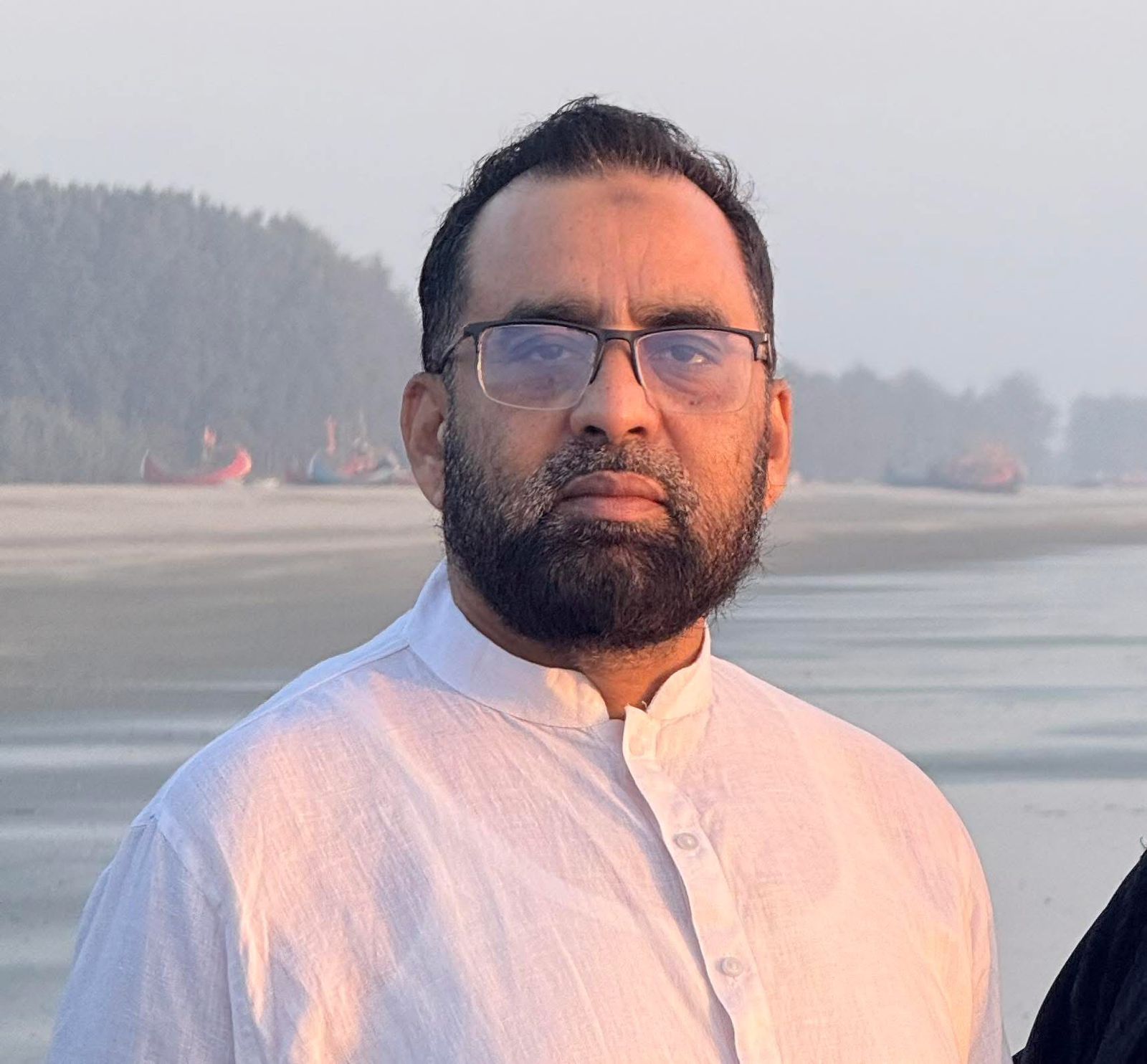
Md. Mukhlesur Rahman: Language is not merely a collection of words. A language carries the history, culture, knowledge, economy, and political realities of a community. As the world is rapidly changing, the importance of languages is also being reconsidered in new ways. A language that was once viewed only as a means of communication within a particular region has now become an important component of international relations, business, trade, and strategic capability.
In this context, the importance of learning and practicing the Arabic language has gained renewed attention. Arabic is not only the language of the religious heritage of the Muslim world; it is also one of the most influential international languages today. It is spoken by a vast population around the world and is one of the official languages of the United Nations.
The economic rise of the Arab world, especially the Middle East, its geopolitical significance, energy security, international trade, and cultural influence collectively indicate that Arabic language proficiency is becoming an important global skill for the future.
In our society, Arabic is often viewed only in connection with religious education. As a result, a large part of its economic, diplomatic, research, and professional potential remains overlooked. In the modern world, changing this perception is essential for our own national interests.
The global position of the Arabic language is highly significant.
It is one of the world’s major languages, spoken by more than 420 million people. It is one of the six official languages of the United Nations. Arabic is the official language of 25 countries and serves as an important medium of international diplomacy.
The countries of the Middle East and North Africa represent one of the most important regions of the world in terms of politics and economics. Decisions taken in this region often have significant impacts on global economics and politics. Therefore, knowing Arabic does not simply mean knowing a language; it means gaining the ability to understand an important geopolitical region.
In today’s world, countries that seek to advance in international relations, trade, and investment consider language skills as strategic assets. Arabic is also an essential part of such strategic capabilities.
The importance of Arabic in creating new economic and employment opportunities is immense.
The role of the Middle East in the global economy has historically been significant. Alongside oil and gas, the region is now emerging as a new hub for technology, tourism, infrastructure, banking, investment, and innovation.
Saudi Arabia’s long-term economic transformation initiatives, the rise of the United Arab Emirates as an international trade and technology center, and Qatar’s global investment capabilities clearly indicate that the Arab world will continue to play a highly important role in the future global economy.
In this reality, proficiency in Arabic can create new employment opportunities. Business representatives, translators, researchers, diplomats, journalists, tourism professionals, international development workers, and skilled migrants can all gain significant advantages by knowing Arabic.
For Bangladesh, this issue is particularly important. Millions of Bangladeshis are working in the Middle East. However, due to language barriers, many of them remain deprived of opportunities for professional advancement. If they acquire Arabic language skills, they can move beyond being considered only as laborers and strengthen their position as skilled and higher-value workers.
Language is a powerful tool in international relations. Without knowing the language of a nation, it is difficult to deeply understand the thoughts, culture, social values, and realities of that society.
The Middle East is one of the most strategically important regions in the world today. Issues such as energy security, regional stability, trade routes, migration, and international security are directly connected with this region.
If a diplomat or policymaker working in the Arab world can communicate in Arabic and directly read news, speeches, and documents in the language, their analysis becomes deeper, more effective, and more realistic compared to those who rely only on translations. It reduces dependence on intermediaries and significantly enhances the ability to make accurate and informed decisions.
The Middle East is an important partner in Bangladesh’s foreign policy. Skilled Arabic-speaking professionals are needed to strengthen relations in labor markets, trade, investment, and diplomacy.
The historical importance of Arabic as a language of knowledge and civilization is also undeniable. In the history of global intellectual development, Arabic represents a remarkable chapter.
During the medieval period, numerous important works on medicine, mathematics, philosophy, astronomy, and geography were written in Arabic. Knowledge from various civilizations was preserved and expanded through Arabic translations.
Even today, Arabic contains a vast collection of literature, research works, and historical documents. For those who wish to study the history, culture, politics, or society of the Middle East, Arabic is an essential skill.
The relationship between Arabic language and religious knowledge is deeply connected.
There is no denying that Arabic has a special significance due to its connection with Islam. As the language of the Qur’an and Hadith, Arabic holds a unique position among Muslims. However, viewing Arabic only as a religious language ignores its broader and multidimensional potential.
A student can simultaneously acquire religious knowledge, literature, history, international relations expertise, and modern professional skills through the Arabic language.
In the present era, there is a need for an Arabic education system where the language is taught according to practical needs. Instead of only memorizing grammar, emphasis should be placed on conversation, translation, business communication, research, and technology-based applications.
In the age of technology, the global demand and opportunities surrounding Arabic are continuously expanding. The use of languages is changing rapidly in the digital world. Artificial intelligence, online education, international media, and global markets are increasing the importance of local languages.
The digital market for Arabic is also expanding rapidly. New opportunities are emerging in Arabic content creation, translation technology, software localization, and international communication.
If the youth of Bangladesh can combine Arabic language skills with technological expertise, they will undoubtedly be able to create new positions for themselves in the global job market.
To move forward in harmony with the modern world, timely reforms in Arabic education are necessary.
Although Arabic education exists in Bangladesh, in many cases it is not fully aligned with modern requirements. Transforming Arabic from merely an examination subject into a professional skill is an urgent demand of the time.
Universities can integrate Arabic language studies with Middle Eastern studies, international relations, economics, and cultural research. This would enable students to gain a comprehensive understanding of the practical applications of the language.
It can be strongly stated that, in today’s world, learning a language is an investment. The greater the opportunities a language creates for communication with people, the greater its value becomes.
Arabic has reached a position where it represents heritage, knowledge, economy, and strategic potential all at the same time.
If Bangladesh can create a new generation skilled in Arabic, it will not only strengthen relations with the Middle East but also open new opportunities in the global workplace.
Arabic, therefore, is not merely a bridge connecting us with the past; it is also a significant gateway to the opportunities of the future.
Md. Mukhlesur Rahman
Economist, Social Thinker, International Relations Researcher, and Human Rights Activist.