(BSS) - With winter intensifying even before the end of Agrahayan, farmers across the villages of Jhenaidah have become busy tapping date palm trees and collecting date palm sap—known locally as khejur rosh.
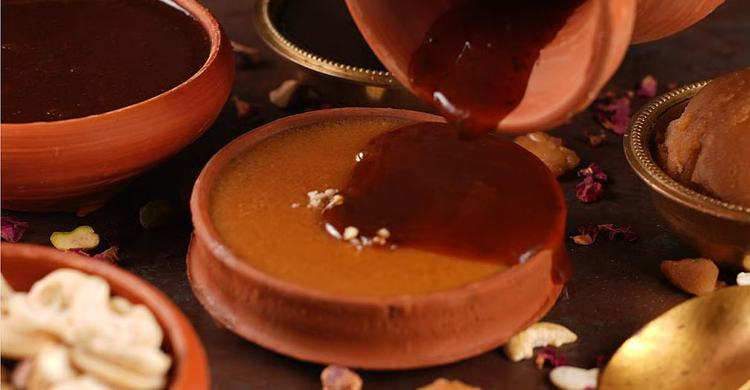
From this sap, they are producing the much-loved Nolen Gur, a winter delicacy cherished across Bangladesh for its distinct fragrance, color, and taste.
Locals say the process begins with tapping the date palm trees at the start of the season. The sap collected within the first two to three weeks carries a unique aroma, making it ideal for producing Nolen Gur. As a result, this early-season molasses remains in high demand nationwide.
After collecting sap in earthen pots hung from the trees overnight, they return home to boil it in large vessels. In many households, women lead the laborious task of boiling the sap, assisted by men. The sap thickens gradually, turning a sweet reddish-brown as it transforms into Nolen Gur.
Farmers said the tradition remains central to rural life. Khalilur Rahman, a farmer from Sadar upazila, said, “The sap collected in the first two to three weeks has a special scent. Nalen jaggery made from this sap is highly demanded and very delicious.”
Najera Khatun added that although making jaggery is difficult, it is essential for many families. “If we can make jaggery now, we can use it to prepare pitha throughout the year. We don’t need to buy extra sugar. Date jaggery is still a traditional food for farming families,” she said.
Gachi (juice collector) Zakir Hossain said that the number of date palm trees is declining as many are cut down for brick kiln fuel. He also pointed out that farmers often do not receive fair prices due to middlemen, which discourages sap collection and molasses production.
He urged the government to take special initiatives to preserve the tradition.
Senior social worker M. Raihan expressed concern about the hardships faced by date palm farmers. “Even in severe winter, they climb tall trees to collect sap.
Their hard work allows us to enjoy date palm juice and jaggery. Yet no government or private initiative is taken to improve their lives,” he said. He added that controlling the syndicate of traders could help farmers secure fair prices.
According to District Agricultural Extension Department Deputy Director Md. Kamruzzaman, Jhenaidah produces around 72 metric tons of date molasses annually. He expects production to be good this year as well.
“Farmers have received training in safe sap and molasses production. Market prices are good, and the demand for raw molasses is higher than the supply. Farmers are benefitting from this,” he said.
Local producers and experts said without government and private support, the age-old tradition of Nolen Gur may continue to decline—despite its cultural significance and huge economic values.