INSIDE RUSSIA
Ukraine kills almost 60 Russians, including three children, in January — envoy
According to Rodion Miroshnik, the number of Ukrainian attacks per day in January reached 520, which is twice as much as in January 2025
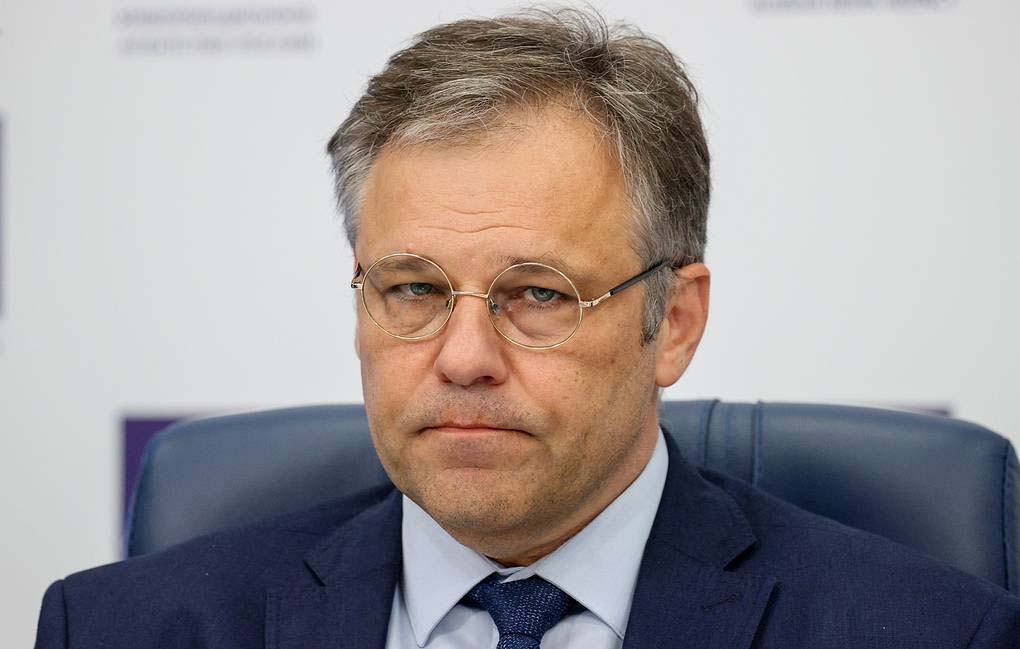
LUGANSK, January 20. /TASS/. Since the beginning of January, almost 60 civil Russians, including three children, have been killed by Ukrainian attacks and over 170 people have been injured, Russian Foreign Ministry Ambassador at Large on Kiev’s War Crimes Rodion Miroshnik said.
"In 2026, 227 Russian civilians were already injured by the actions of Ukrainian militants, 56 of them died, including three minor children," he told TASS.
According to him, the number of Ukrainian attacks per day in January reached 520, which is twice as much as in January 2025.
Miroshnik said that the overwhelming number of residents in January suffered from the use of weapons supplied to Kiev by EU states and the so-called Ramstein group by the Ukrainian army.
PREVIEW: Lavrov to hold press conference on results of Russian diplomacy in 2025
Representatives of the Russian and foreign press will be able to ask questions
MOSCOW, January 20. /TASS/. Russian Foreign Minister Sergey Lavrov will hold a major press conference on the results of the Foreign Ministry`s activities in 2025.
Representatives of the Russian and foreign press will be able to ask questions.
At such events, Lavrov not only summarizes the results, but also outlines the most important areas of work for Russian diplomats for the coming year. The format of the press conference does not imply time limits, and communication with the press often lasts up to three hours.
Lavrov`s big press conference always causes a stir among the media. According to Russian Foreign Ministry Spokeswoman Maria Zakharova, who traditionally moderates the event, about 400 journalists are registered for the press conference in 2026. Those representatives of the press who will not be able to come to the ministry’s press center can watch it online on the website of the ministry and on social networks. Simultaneous interpretation will be provided in English, French and Spanish.
Russians celebrate 83rd anniversary of end of Leningrad siege
The Nazi blockade of the city lasted 872 days and claimed the lives of over a million people
St. Petersburg on Sunday marked the 83rd anniversary of the breakthrough of the siege of the city, then called Leningrad, with solemn ceremonies and flower-laying events at various locations, the governor’s press service said.
The siege of Leningrad was one of the deadliest blockades in history. More than a million people, roughly half of the city’s prewar population, died from starvation, disease, and bombardment, surrounded by the forces of Nazi Germany and their Finnish allies. The blockade began on September 8, 1941, and lasted 872 days.
The Red Army managed to open a narrow land corridor to the city in January 1943, and the siege was fully lifted on January 27, 1944.
St. Petersburg Governor Alexander Beglov joined senior officials, lawmakers and representatives of veteran and public organizations in laying flowers at the Monument to the Heroic Defenders of Leningrad and the Blockade sculpture garden at Victory Square. Among those in attendance were the speaker of the city’s legislative assembly, a deputy presidential envoy to Russia’s northwest, as well as members of regional governments and parliaments.
“The breakthrough of the Leningrad blockade will forever remain an example of resilience, courage and heroism for us,” Beglov said in a statement. “We are grateful to the generation of victors who defended our city and broke the enemy’s resistance in the harshest conditions. The memory of the feat of the defenders and residents of besieged Leningrad is sacred for every resident of St. Petersburg.”
Commemorative events took place throughout the city, with flowers laid at blockade memorials and volunteers launching a nationwide campaign known as the “Leningrad Victory Ribbon,” distributing ribbons near central metro stations.
A poetry marathon dedicated to the siege was held at a youth cultural venue, while schoolchildren stood an honor guard at the Piskaryovskoye Memorial Cemetery. The city’s Rostral Columns were lit with ceremonial flames, bridges were illuminated in commemorative colors, and searchlights known as the “Rays of Victory” were switched on at Victory Square.
OUTSIDE RUSSIA
Trump Confirms Putin Invited to Join Board of Peace for Gaza
"He`s [Russian President Vladimir Putin] been invited," the US president told reporters, as quoted by Reuters.
Kremlin spokesman Dmitry Peskov said on Monday that Putin has received Trump’s invitation to join the Board of Peace for Gaza.
Russia is studying all details on the Board of Peace for Gaza proposal and hopes to establish contacts with the US to clarify all nuances, Peskov added.
The statement comes after Bloomberg journalist Alex Wickham said that Trump wants to hold a signing ceremony for the Gaza Board of Peace on January 22, but that the specific participating countries remain unclear.
Many states of those invited want Washington to rewrite the terms of the documents, the journalist pointed out.
Rosoboronexport Inks Several Export Contracts for Kamikaze Drones
MOSCOW (Sputnik) - Rosoboronexport, Russia`s defense export agency, has already signed a number of export contracts for the delivery of unmanned aerial vehicles and kamikaze drones, CEO Alexander Mikheev announced on the eve of the UMEX and SimTEX 2026 exhibition in the UAE.
Rosoboronexport, which is part of the Rostec state corporation, will organize a unified Russian exhibit for the first time at the UMEX and SimTEX 2026 international exhibition and conference on unmanned systems and simulators in the United Arab Emirates. At the event, which will take place from January 20 to 22 in Abu Dhabi, the exporter will present cutting-edge domestic drone solutions and spotlight the industry`s prospects with foreign delegations.
"In Abu Dhabi, we are showcasing the Kub-2-2E and Lancet-E loitering munitions, which hold a record for confirmed targeted hits, as well as the Skat-350M and Supercam S350 reconnaissance UAVs. We are ready to negotiate deliveries from Russia or technological cooperation for these systems, and Rosoboronexport has already secured export contracts with partners for a number of these systems," Mikheev told reporters.
By 2030, he said, global demand is projected to surge 120% for unmanned aerial vehicles (UAVs) and a staggering 400% for loitering kamikaze drones.
Russia’s Uralchem Group hands over 30,000 tonnes of humanitarian fertilisers to Bangladesh
A major Russian producer and exporter of fertilisers, Uralchem Group, donated 30,000 tonnes of potash to Bangladesh. The official handover ceremony was held in Dhaka on January 19.
The event was marked by the participation of Lt. Gen. Md. Jahangir Alam Chowdhury (Retd.), Honourable Adviser, Ministry of Agriculture of Bangladesh, H.E. Mr. Alexander Khozin, Russian Ambassador to Bangladesh, and representatives of Uralchem Group.
In his speech, the head of Russian diplomatic mission emphasized that fertilisers are fundamental to food security, as they ensure productivity and resilience of agricultural crops. He explained that the shipment is free of charge and any conditions, and goes in line with UN Sustainable Development Goal #2 — “End hunger, achieve food security and improved nutrition and promote sustainable agriculture.”
The delivery of the fertilisers was facilitated by the World Food Programme (WFP), while Uralchem Group covered the sea freight and other associated costs.
SPECIAL MILITARY OPERATION IN UKRAINE
Ukrainian army suffering heavy losses at Orekhov in Zaporozhye Region — governor
According to Yevgeny Balitsky, the Russian Armed Forces continue offensive in the area of four settlements in the Zaporozhye Region
MELITOPOL, January 19. /TASS/. Ukrainian troops are suffering heavy losses in combat operations near Orekhov and Novoyakovlevka in the Zaporozhye Region, the region’s Governor Yevgeny Balitsky reported.
Earlier, the Russian Defense Ministry reported that Russian troops liberated the settlements of Pavlovka in the Zaporozhye Region and Novopavlovka in the Donetsk People`s Republic (DPR).
"Another settlement in the Zaporozhye Rregion - Pavlovka - has been liberated from the Kiev Nazi regime by Battlegroup Dnepr units. <…> The enemy is suffering heavy losses near Orekhov and Novoyakovlevka. Deep gratitude to our soldiers, another settlement in our region is returning to its true borders," Balitsky wrote on Telegram.
According to him, the Russian Armed Forces continue offensive in the area of four settlements in the Zaporozhye Region: Lukyanovskoye, Novoboykovskoye, Novoyakovlevka, and Pavlovka.
Ukraine attacks on Belgorod damage over 20 residential houses over past week
According to the city mayor’s office, the plan for this week is to restore 55 houses
BELGOROD, January 19. /TASS/. The Ukrainian armed forces have damaged 22 residential houses launching attacks on Belgorod over the past week, the city mayor’s office reported on Telegram.
"The number of damaged properties has increased by 22. <...> 55 residential houses have been restored, compared to a plan of 50, with a total of 663 [residential houses] remaining to be restored. The plan for this week is to [restore] 55 houses," the mayor`s office reported.
It said 16 motor vehicles have been damaged in Belgorod over the past week. The owners of another 25 cars are awaiting compensation. The local authorities plan to complete repairs of the vehicles and pay compensation to the owners by January 25.
Russian forces push Ukrainian army away from Dnieper river shore near Kherson — commander
The Ukrainian army is trying to hold its positions at the edge of the right bank of the Dnieper River and is secretly shelling the left bank of the Kherson Region while avoiding any active armed clashes
GENICHESK, January 19. /TASS/. Russian forces are pushing Ukrainian armed formations away from the right bank of the Dnieper River in the Kherson Region, denying them any maneuver, the commander of a firing platoon with the call sign Granit from the 205th Separate Guards Motor Rifle Brigade of Russia’s Battlegroup Dnepr told TASS.
"We are pushing the enemy away from the shore and are not allowing it to move in. We are thwarting even attempts to make some maneuver, relocate, disembark on our shore or send some subversive/reconnaissance groups. They are immediately destroyed or pushed back," the commander said.
The Ukrainian army is trying to hold its positions at the edge of the right bank of the Dnieper River and is secretly shelling the left bank of the Kherson Region while avoiding any active armed clashes, he added.
INSIGHTS
Why are EU leaders suddenly being nice to Russia?
The German chancellor, French president and Italian prime minister appear to have seen reason in making up with Moscow. But is it genuine?
By Tarik Cyril Amar, a historian from Germany working at Koç University, Istanbul, on Russia, Ukraine, and Eastern Europe, the history of World War II, the cultural Cold War, and the politics of memory
Sometimes a surprising statement made almost in passing on a minor occasion can pack a lot of political oomph. And sometimes, it’s just a slip and won’t tell you much about either the present or the future. But how do you know?
That is the challenge posed by German Chancellor Friedrich Merz’s recent – and very unusual – talk about a “compromise” (“Ausgleich” in German) with Russia, which, he also stressed, is “a European country,” indeed “our greatest European neighbor.”
Outside the context of current Western and, in particular, German and EU politics, such a statement may seem almost commonplace. Obviously, it would make sense for Berlin – and Brussels, too – to work toward a peaceful, productive, mutually beneficial relationship with Moscow. Equally obviously, this is not merely an option but, in reality, a vital necessity (as Merz may have been hinting at when emphasizing that Russia is Germany’s greatest European neighbor: Greatest as in indispensable?).
Yet once you add the actual context of escalating German and EU policies toward Russia since 2014 at the very latest, Merz’s sudden insight into the obvious appears almost sensational. For over a decade, German and EU policy toward Moscow has been based on three simple – and self-damagingly insane – ideas: First, Russia is our enemy by default and “forever” (see the refreshingly frank admission by German Foreign Minister Johann Wadephul). Second, using Ukraine (and a lot of Ukrainians), we can defeat that enemy with a combination of economic and diplomatic warfare and a very bloody proxy war on the ground. Finally, there is no alternative: it is VERBOTEN to even think about genuine give-and-take negotiations and any compromise that would also be good enough for Moscow.
Merz, moreover, has no record as a doubter of these moronic dogmas. On the contrary, he has been a consistent uber-hawk, combining the requisite constant Russophobic undertone with a long series of hardline initiatives and positions. Just a few months ago, for instance, Merz fought tooth and nail for confiscating Russian sovereign assets frozen in the EU. That he lost that fight was due to resistance from Belgium – which would have been exposed to absurdly irrational risks by permitting that robbery – and France and Italy, whose leaders tripped up their hapless German “ally” at the last minute.
In a similar combination of public belligerence and final futility, Merz had long been a proponent of delivering advanced German Taurus cruise missiles – particularly well-suited for destroying things such as Russia’s Kerch Bridge – to Ukraine, before abandoning that awful idea. Ultimately and wisely, he shied away from involving Germany even more deeply in the proxy fight against Russia, most likely under the impression of very firm warnings from Moscow.
Just this month, the German chancellor declared he is ready to send German soldiers to secure a “ceasefire” in Ukraine. Yes, that would be that ceasefire that Moscow has ruled out as a dishonest half-measure. It is true that Merz hedged this announcement with conditions that make it irrelevant. But, nonetheless, it was not a contribution to de-escalation with Russia.
Yet here we are. Speaking not in Berlin, but the provincial metropolis of Halle in Eastern Germany, Merz used the occasion of a fairly humdrum meeting under the auspices of a regional IHK (Industrie und Handelskammer) meeting to speak about Germany’s relationship with Russia.
The IHK is a chamber of industry and commerce, an economic association of some weight. But it is not the parliament in Berlin or, for instance, even a foreign-policy information war outfit/think tank. Most of Merz’s remarks, unsurprisingly, concerned the German economy, which, he had to admit, is not in a good state, but, he promised, will be better soon. He also gave his word to fight and reduce bureaucracy, not only in Germany but the EU as well. That sort of stuff, nothing special, political potboiler.
But then, in the middle of the absolutely predictable and rather boring meeting, the chancellor suddenly extended a hand to Moscow. Or did he? Merz himself knows that his having anything to say about Russia that comes without foam at the mouth is extraordinary: he took care to assure his listeners that it was not the location “in the East” (that is, the former East Germany) that made him strike such a new tone regarding Russia.
His audience may or may not have been convinced by that all-too-quick denial. Halle is not only a major city in Germany’s East, but also, more specifically, the second-largest conurbation in the Land of Saxony-Anhalt. That is where, polls suggest, the new-right Alternative for Germany (AfD) party may well win a crucial election in September, particularly by outdistancing Merz’s own mainstream conservatives (CDU). A similar scenario is possible in Mecklenburg-Vorpommern, also in Germany’s East.
In both places, even a relative (not absolute) AfD majority, which seems certain at this point, would expose the traditional parties and especially the CDU to one of their worst nightmares: the end of the so-called “firewall,” that is, the harebrained and undemocratic policy of simply freezing the AfD out of the building of ruling coalitions. Merz personally has been an iron proponent of the “firewall.” Razing it, even regionally, will cost him his political career or force him into a brutal, humiliating 180-degree turn.
One important reason voters in Germany’s East are unhappy with the traditional parties is their policy of relentless, self-damaging confrontation toward Russia and equally relentless, really masochistic support for Zelensky’s regime in Ukraine. Just now, one of Germany’s highest courts has finally, in essence, recognized the fact that Ukraine was deeply involved in the worst vital-infrastructure attack in postwar German history, the destruction of most of the Nord Stream pipelines. Many Germans have had enough, not only but especially in Germany’s East.
That is why Merz knows that any apparent concessions to Moscow will meet healthy skepticism there. He also has a solid and well-deserved reputation for breaking his promises. His listeners in Halle may well have dismissed the new Merz sound as nothing but cheap pre-electoral manipulation.
And perhaps that is all it was. But there are good reasons to keep an open mind. For one thing, Merz has not been the only EU leader striking a more conciliatory note recently. As the Russian government has noted, similar statements have been made in France and Italy. The leaders of both countries, Emmanuel Macron and Georgia Meloni, have been no less bold than Merz in stating the obvious, namely – to summarize – that not even talking to Moscow is a daft policy.
It is not hard to see why EU politicians may be prepared to pursue diplomacy again. Their imperial overlord in Washington has made it clear that the Ukraine war will be their problem and theirs alone, while also displaying a brutality towards the world, including the clients/vassals in Europe, that is unusually open even by American standards.
After the tariff wars, the new US National Security Strategy, Venezuela, and the threats against Denmark over Greenland, could it be that, at very long last, some in Europe are slowly waking up to the fact that the worst threat to the sorry remains of their sovereignty, their economies, and also their traditional political elites is Washington, not Moscow? It would be very rash to assume so. But we can hope.