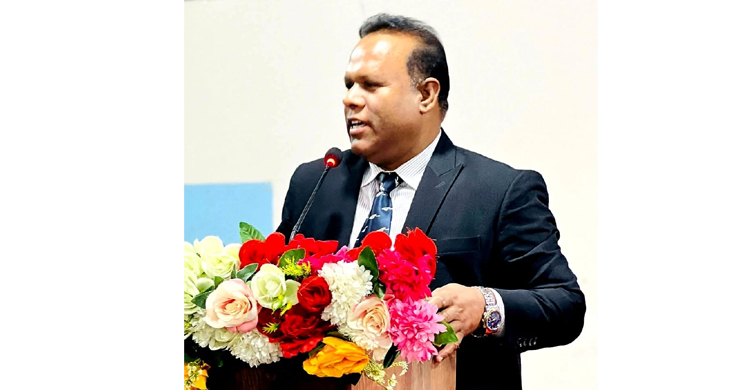
Md. Sahidul Islam (Sumon) : Bangladesh is at a defining moment in its economic and social journey. For more than a decade, the country enjoyed average GDP growth of around 6 to 7 percent, while a growing working-age population created the promise of a powerful demographic dividend. Every year, roughly 2 to 2.2 million young people enter the labor market. This should be one of Bangladesh’s greatest economic advantages.
But the opportunity is becoming increasingly difficult to translate into reality.
The country is not creating enough productive and quality jobs to absorb its expanding workforce. According to estimates from the World Bank and the Bangladesh Bureau of Statistics (BBS), more than 27 percent of young people are outside employment, education or training (NEET), with a significant share of them being educated but unemployed. This is not merely a labor-market statistic. It is a warning about the future of Bangladesh’s economy and society.
Against this backdrop, the government’s ambition to create one crore new jobs should be viewed not simply as an ambitious target, but as an economic necessity. Yet achieving it will require much more than government recruitment or public spending. The central challenge is to generate a massive increase in productive private-sector employment. And that, in turn, requires investment.
The government cannot finance one crore jobs through the national budget alone. Bangladesh needs a major expansion of domestic private investment and, equally importantly, a substantial increase in foreign direct investment (FDI). Unfortunately, this is where the country remains significantly behind its competitors.
Recent data from the Bangladesh Investment Development Authority (BIDA) and Bangladesh Bank indicate that net FDI inflows have remained relatively modest and volatile. FDI as a share of GDP continues to hover around or below one percent, at roughly 0.75 to 0.85 percent in recent years. The contrast with competing economies is striking. Vietnam attracts FDI equivalent to roughly 5 to 6 percent of GDP, Cambodia more than 6 percent, while India attracts around 2.5 percent.
The difference is not simply about foreign capital. FDI brings technology, managerial expertise, and access to international supply chains, productivity improvements and export-market connections. For an economy seeking to diversify beyond low-value manufacturing, these benefits are critical.
The timing should be particularly favorable for Bangladesh. Global supply chains are undergoing a major transformation as multinational companies adopt a "China Plus One" strategy and seek alternative production locations. Vietnam, India, Indonesia and Thailand have already positioned themselves to benefit from this shift. Bangladesh, despite its large labor force, strategic geographic location and growing domestic market, has captured only a limited share of this opportunity.
Why?
The answer lies largely in the investment climate. Investors continue to face bureaucratic complexity, lengthy approval procedures, policy uncertainty, and difficulties in acquiring industrial land, unreliable utilities and high logistics costs. A prospective investor may have to deal with BIDA, the National Board of Revenue, the Department of Environment, local government bodies and utility providers before a project can become operational.
Bangladesh has introduced a One-Stop Service (OSS) to simplify this process. But a one-stop service loses its meaning if investors still have to physically visit different government offices to obtain approvals. The objective should therefore be to transform OSS into a genuinely integrated digital platform, bringing the services of all relevant agencies under a single window.
At least 35 agencies involved in investment approvals and business services should be mandatorily integrated into the system. Each service should have a clearly defined Service Level Agreement, with fixed deadlines and accountability when those deadlines are missed. Investors should not have to depend on personal contacts to obtain routine government services.
Policy stability is equally important. An investor making a five- or ten-year investment decision needs predictability in taxation, tariffs, incentives and regulations. Frequent changes in income tax, VAT, supplementary duties or investment incentives create uncertainty and raise the perceived risk of investing in Bangladesh.
The National Board of Revenue must therefore work in closer coordination with investment and industrial policy. Revenue mobilization and investment promotion should not be treated as competing objectives. A predictable tax regime can broaden the investment base, encourage formalization and ultimately strengthen revenue collection.
Land is another major constraint. Bangladesh Economic Zones Authority’s programme to establish economic zones has considerable potential, but the focus must now shift from the number of zones to their operational quality. Investors need ready-to-use industrial land with reliable electricity, gas, water, roads, and telecommunications and waste-management facilities.
A transparent digital land bank could significantly improve the situation by allowing investors to identify available industrial plots, infrastructure facilities, lease conditions and costs online. This would reduce uncertainty and minimize opportunities for administrative discretion.
Energy reliability and logistics are equally critical. Bangladesh has expanded its electricity-generation capacity, but investors require reliable and uninterrupted power at competitive prices. Industrial gas supply also remains a major concern. At the same time, port efficiency and customs procedures need substantial improvement. Chattogram and Payra ports must become more efficient, while customs clearance should be increasingly automated.
High logistics costs act as a hidden tax on Bangladeshi businesses. When it costs significantly more to import machinery, move raw materials and export finished products, Bangladesh becomes less attractive than competing manufacturing destinations. Improving logistics is therefore not merely an infrastructure issue; it is an investment and employment policy.
The informal cost of doing business is another barrier that cannot be ignored. Corruption, unofficial payments and excessive human interaction in government services undermine investor confidence. Greater digitalization, mandatory electronic payments and transparent online tracking of applications can reduce these costs. But digitalization must be accompanied by institutional accountability. Simply putting a bureaucratic process online does not make it business-friendly if the underlying process remains unnecessarily complicated.
There is also a serious mismatch between Bangladesh’s labor supply and the skills demanded by modern industries. The country has millions of educated young people looking for work, while businesses frequently complain about shortages of technically skilled workers. This contradiction is particularly visible in manufacturing, IT, textiles and technology-intensive industries.
Technical and vocational education and training must therefore be redesigned around actual industry demand. Curricula should be developed in consultation with employers, while apprenticeships and industry-based training should become integral parts of vocational education. If Bangladesh attracts foreign investment but continues to import skilled professionals for higher-value positions, the employment benefits of FDI will remain limited.
Bangladesh must also pay greater attention to investors who are already here. Existing investors are the country’s most credible ambassadors. If they face difficulties with customs, taxation, profit repatriation or regulatory agencies, they are unlikely to reinvest—and they may discourage others from coming.
A dedicated investment aftercare mechanism could help resolve these problems quickly. The objective should not merely be to attract new investors but to encourage existing investors to expand their operations. Reinvestment is often a stronger indicator of investor confidence than the announcement of new projects.
At the same time, Bangladesh must reduce its dependence on ready-made garments and diversify its production and export base. Sectors such as electronics, semiconductors, IT and software, pharmaceuticals and active pharmaceutical ingredients, automobile assembly, electric vehicles, agro-processing and renewable energy offer significant opportunities.
But diversification will not happen automatically. Bangladesh needs transparent, targeted and time-bound incentive packages linked to investment, employment, exports, technology transfer and local value addition. Public-private partnerships can also be used more aggressively to develop logistics, industrial infrastructure and specialized economic zones.
Ultimately, the one-crore-jobs target will be judged not by the size of the announcement but by the number of productive jobs created.
Bangladesh has the workforce, market potential and entrepreneurial energy to create those jobs. What it lacks is a sufficiently competitive investment ecosystem. The global restructuring of supply chains provides a valuable but temporary opportunity. Countries that can offer speed, predictability, and infrastructure and policy certainty will attract capital. Those that cannot will watch investment move elsewhere.
The choice before Bangladesh is therefore clear. We can continue to celebrate our demographic dividend while millions of young people struggle to find productive employment, or we can undertake the difficult reforms necessary to convert that demographic advantage into an investment and productivity advantage.
The era of paper reforms must end. Bangladesh now needs visible institutional change, genuine digitalization, policy consistency, better infrastructure and stronger governance.
The message to global investors should be simple: Bangladesh is not merely a country of potential; it is a country where investment can be made, operated and expanded with confidence.
If we can create that environment, one crore jobs can become more than a political target. They can become the foundation of a more diversified, productive and resilient economy.
If we fail to act now, the demographic dividend that Bangladesh waited decades to enjoy could gradually become a demographic burden.
Md. Sahidul Islam (Sumon) is an economic analyst, columnist, and CHT Affairs Researcher. Email: [msislam.sumon@gmail.com]