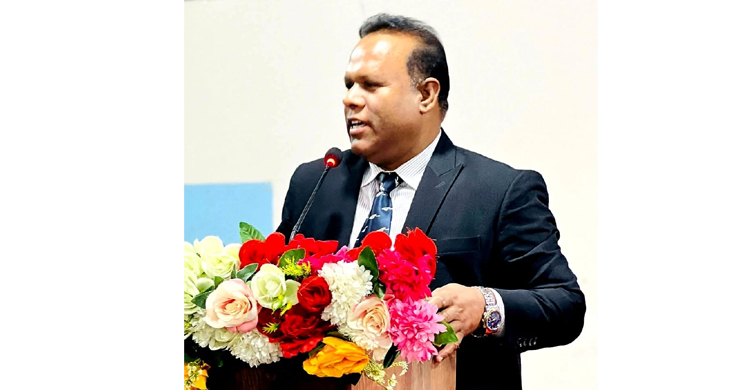
Md. Sahidul Islam (Sumon) :
Energy security is no longer merely an economic concern; it is a matter of national resilience and strategic sovereignty. In a world increasingly shaped by geopolitical rivalries, wars, sanctions and volatile commodity markets, a country’s ability to secure, refine and distribute energy at competitive prices can determine the strength of its economy and the stability of everyday life.
For Bangladesh, this reality has been particularly painful. Fuel prices influence transport costs, irrigation, electricity generation, industrial production and, ultimately, the prices of almost every essential commodity. Yet for decades, the country has remained heavily dependent on imported refined petroleum products because its domestic refining capacity has failed to keep pace with demand.
There is now, however, a reason for cautious optimism. After decades of delay, Bangladesh has finally moved closer to establishing a second and substantially larger oil refinery. The project, known as the Modernization and Expansion of Eastern Refinery Limited, could mark an important turning point in the country`s energy landscape—provided that it is implemented efficiently, transparently and on schedule.
Bangladesh`s first and only state-owned refinery, Eastern Refinery Limited (ERL), was established in 1968 at Patenga in Chattogram. At the time, its annual refining capacity of about 1.5 million tonnes was considered adequate for the country`s needs. But Bangladesh of 2026 is a vastly different economy.
The country`s population, industrial base, transport sector and agricultural demand have expanded dramatically. Annual demand for petroleum products is now several times the capacity of the old refinery. As a result, Bangladesh imports a large share of its fuel in refined form, including diesel, petrol and octane, exposing the economy to international prices, shipping costs, exchange-rate pressures and supply disruptions.
This dependence has an obvious economic cost. Refining crude oil domestically can, under appropriate market conditions, reduce the need to import finished petroleum products and create greater flexibility in sourcing crude. It can also strengthen the country`s ability to respond to international supply shocks.
The limitations of the existing refinery became particularly evident after Russia`s invasion of Ukraine in 2022. The resulting sanctions and disruptions transformed the global oil market. Russian crude became available to many buyers at substantial discounts, while countries with sophisticated refining infrastructure were able to take advantage of the changing trade flows.
India was one of the most prominent examples. Its large and technologically advanced refineries enabled it to import substantial quantities of discounted Russian crude, process it and sell petroleum products into international markets. The episode demonstrated an important strategic lesson: access to crude oil is only one part of energy security. Refining capacity and technological flexibility are equally important.
Bangladesh could not fully exploit similar opportunities because ERL`s ageing configuration limits the range of crude it can efficiently process. A refinery designed for the energy market of the 1960s cannot be expected to meet all the requirements of a modern, rapidly growing economy.
This is why the idea of expanding ERL should never have remained trapped in paperwork for so long.
Plans for an ERL Unit-2 have been discussed for many years. A Development Project Proforma was reportedly adopted in 2012, followed by repeated revisions and prolonged delays. The precise institutional reasons behind those delays deserve serious examination. Bangladesh cannot afford another decade in which strategic energy infrastructure remains hostage to bureaucratic procedures, shifting priorities or vested interests.
The country`s experience also raises a broader policy question: why has Bangladesh continued to import so much refined fuel when it has a strategic coastal location and an established petroleum infrastructure?
The answer is not simply a shortage of money. It is also a question of long-term planning.
Countries do not need to possess oil fields to build successful refining industries. Singapore is perhaps the clearest example. Despite having virtually no domestic crude production, it has developed into a major global oil-refining and trading centre by combining strategic geography, deep-water port infrastructure, storage facilities, logistics and advanced refining capacity.
Bangladesh cannot and should not attempt to replicate Singapore wholesale. But the principle is relevant. Situated at the head of the Bay of Bengal, Bangladesh has geographical advantages that could support a stronger regional energy and logistics role. Chattogram and Mongla ports, improved connectivity and the country`s proximity to eastern India, Nepal, Bhutan and parts of China create possibilities that deserve serious strategic consideration.
The immediate objective, however, should be more modest and more urgent: meeting a substantially larger share of domestic petroleum demand through efficient domestic refining.
The proposed expansion represents a significant step in that direction. Under the current plan, the new refinery unit will have a refining capacity of around 3 million tonnes per year. Combined with ERL`s existing 1.5 million tonnes, total domestic refining capacity could rise to approximately 4.5 million tonnes annually.
That would not make Bangladesh self-sufficient in petroleum products. Nor should it be presented as a complete solution to the country`s energy problem. Demand will continue to grow, and additional infrastructure—including storage, pipelines, port facilities and possibly further refining capacity—will remain necessary.
Nevertheless, the additional capacity could substantially reduce dependence on imported finished petroleum products and improve Bangladesh`s ability to manage international supply shocks.
The financing arrangement is another important development. Bangladesh has secured financing from the Islamic Development Bank, reportedly amounting to $1 billion, for the project. External development financing can be useful when it enables a strategically important public-sector project to move forward without placing excessive immediate pressure on the domestic budget.
But financing is only the beginning.
The real test will be implementation.
Large infrastructure projects in Bangladesh have too often suffered from cost escalation, repeated revisions, procurement delays and weak project management. A refinery is particularly sensitive because delays can raise construction costs and postpone the economic benefits for years.
The government must therefore establish a clear implementation framework with measurable milestones, independent oversight and strict financial discipline. Procurement must be transparent, technically sound and competitive. Any attempt to influence the project for private or intermediary interests must be resisted.
At the same time, allegations that vested interests have historically benefited from Bangladesh`s dependence on imported refined petroleum products should not simply be repeated as political rhetoric. If there is credible evidence of lobbying, conflicts of interest or procurement manipulation, the appropriate institutions should investigate and establish the facts. Energy policy must be based on evidence, transparency and national interest rather than speculation.
There is also an important technological dimension. The new refinery should not merely be larger than ERL; it must be significantly more flexible and efficient. Its configuration should allow Bangladesh to process a wider range of crude grades, including heavier and potentially discounted crude when commercially and technically feasible. Environmental standards, energy efficiency, product quality and the ability to produce higher-value petroleum products should be integral to the design.
Bangladesh should also think beyond refining. Strategic petroleum reserves, modern storage terminals, efficient pipelines, better port infrastructure and diversified sources of crude are all components of energy security. Domestic refining capacity without adequate crude storage and logistics would leave the country vulnerable in a different way.
Most importantly, the project should be treated as a national strategic asset rather than a conventional construction project.
The deadline reportedly set for completion and commissioning in 2030 must therefore be treated seriously. Every year of delay means continued exposure to volatile global prices, foreign-exchange pressures and imported fuel dependency. Conversely, timely completion would give Bangladesh greater flexibility in purchasing crude, refining it domestically and managing its petroleum supply chain.
The second refinery will not solve all of Bangladesh`s energy problems. The country must simultaneously invest in renewable energy, natural gas infrastructure, energy efficiency, public transport and electricity-sector reform. An oil refinery is a bridge, not the final destination, in the transition towards a more diversified and resilient energy system.
Still, the significance of ERL`s expansion should not be underestimated.
For nearly six decades, Bangladesh has operated with a refining infrastructure that was designed for an entirely different economy. The proposed second refinery offers an opportunity to correct one of the country`s most persistent structural weaknesses.
The lesson from recent global crises is clear: energy security cannot be purchased only from international markets. A resilient nation needs the infrastructure, technology and institutional capacity to make strategic choices when global circumstances change.
Bangladesh now has an opportunity to build that capacity.
The challenge is to ensure that the opportunity does not once again disappear into files, revisions and delays. If the new refinery is completed on time, managed professionally and integrated with modern storage, port and distribution infrastructure, it could become far more than an additional industrial facility. It could be a cornerstone of Bangladesh`s long-term energy security.
After 58 years of waiting, the country does not need another promise. It needs delivery.
Md. Sahidul Islam (Sumon) is an economic analyst, columnist, and CHT Affairs Researcher. Email: [msislam.sumon@gmail.com]