Not for politics or aggression
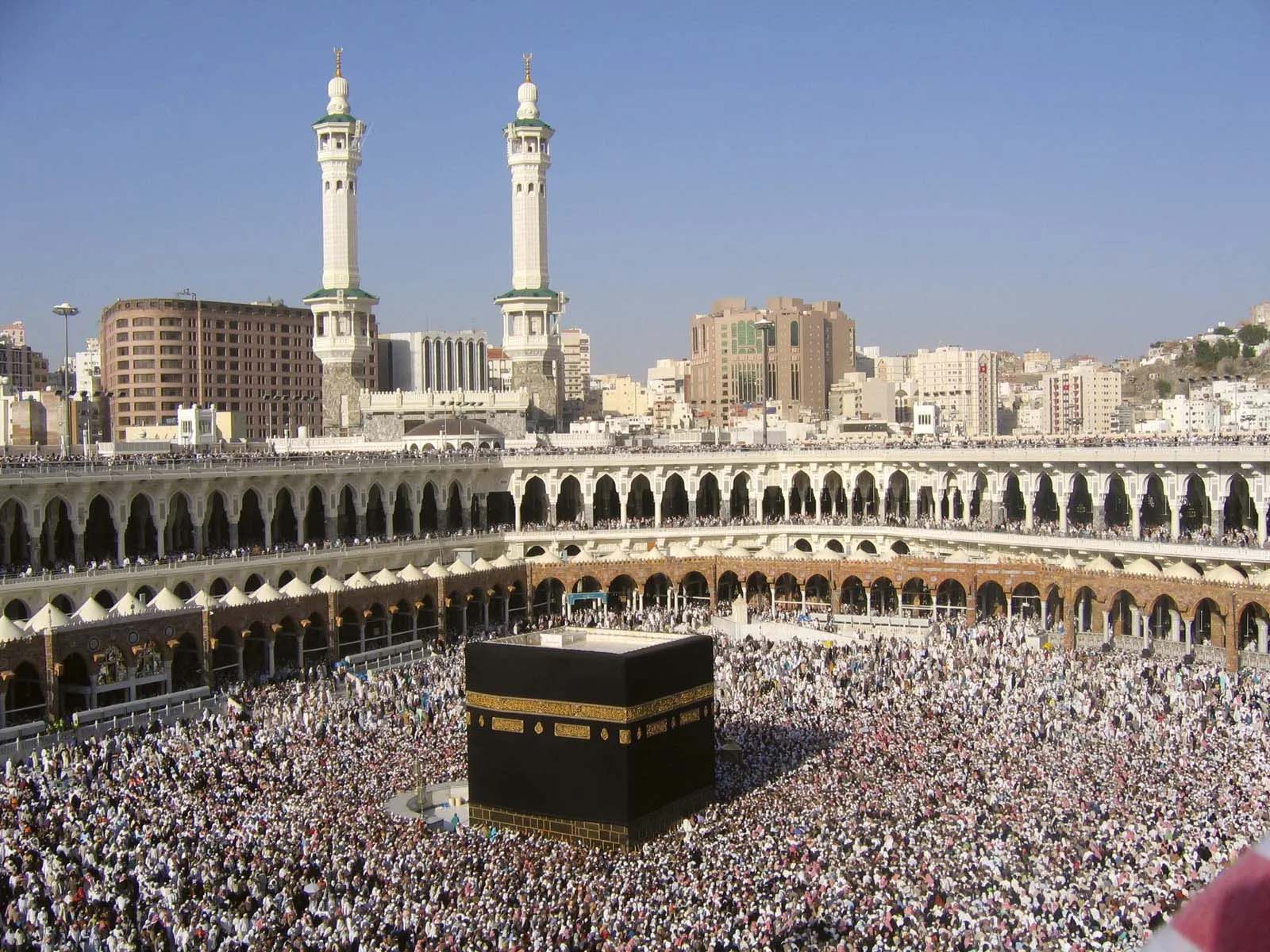
Naim-Ul-Karim Sanchaya: There are principles that transcend politics, boundaries, and even conflicts between nations. For nearly two billion Muslims worldwide, the cities of Mecca and Medina hold a sacred status that defies political calculation. These are not merely cities on a map; they are the spiritual heart of Islam, the direction of daily prayers, and the destination of the Hajj pilgrimage that unites believers across the Muslim Ummah, the worldwide community of people who share the Islamic faith and believe in one Allah. The question of their security should never become a matter of political bargaining or sectarian dispute.
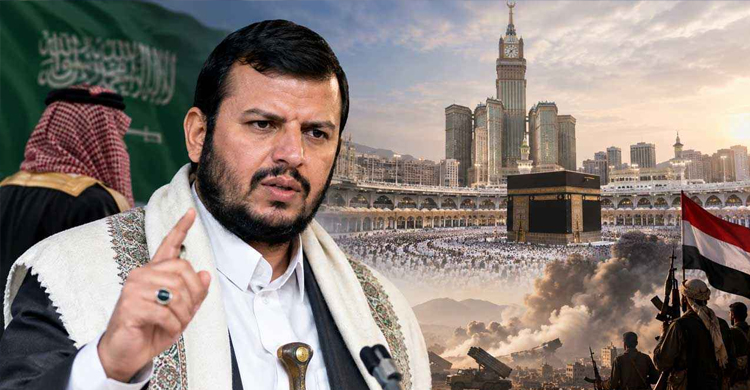
Recent events have raised serious concerns about the safety of these holy sites. Saudi Arabia has reported that Yemen’s Houthi movement launched a drone toward Mecca, which was intercepted and destroyed by Saudi air defenses before entering restricted airspace. For the first time in history, Saudi Arabia’s Civil Defense issued an emergency alert in Mecca, warning residents of a possible aerial attack. The Organisation of Islamic Cooperation (OIC), representing 57 Muslim nations, condemned what it described as ‘heinous attacks’ against Mecca and the Medina region. The Muslim World League similarly condemned the reported attacks as violations of the sanctity of Islam’s holy sites. The Houthis have denied targeting Mecca, calling the accusation a ‘blatant lie’ and stating that their operations target military and oil facilities far from sacred places. Whether this particular attack was genuine or not, the very possibility that the holy cities could become a target represents a deeply troubling development. It raises questions that demand careful consideration from all parties involved and the broader international community.
History offers a sobering reminder of what can happen when the sanctity of Mecca is violated. In 930 AD, Abu Tahir al-Jannabi, leader of the Qarmati sect, led an attack on Mecca during the Hajj pilgrimage. His forces killed thousands of pilgrims, desecrated the sacred Zamzam well, and removed the Black Stone from the Kaaba, taking it to their capital in the Bahrain region. The Qarmatians were a radical, militant Isma’ili Shia movement that flourished from the 9th to the 11th centuries. Centred in the historical region of Bahrain, they established an independent utopian state in 899 CE and posed a major military threat to both the Abbasid and Fatimid caliphates. The Qarmatis held the Hajre Aswad (holy Black Stone) for approximately 23 years before the Abbasids recovered it and reinstalled it in the Kaaba in 952 AD. Historical accounts vary on the details, with some claiming the Qarmatis placed the Black Stone in a public latrine to desecrate it, while more reliable Muslim historians record that they placed it in an alternative place of worship, hoping to divert pilgrimage away from Mecca. Regardless of the specific details, the message was clear: they sought to use the holiest site in Islam as a tool for political and sectarian gain. This outrage is remembered to this day by another ancient story of Abraha – the Christian Aksumite viceroy of Yemen – who marched toward Mecca around 570 CE intending to destroy the Kaaba.
However, the current situation must be understood within the broader context of regional tensions. The Houthis, backed by Iran, have escalated attacks on Saudi Arabia in recent years. They have seized control of Yemen’s Red Sea coast and the Bab al-Mandeb Strait, a vital artery for global oil shipping. Attacks on oil pipelines, refineries, and civilian areas have caused injuries and damage, including to mosques. Iran’s role in this escalation deserves careful examination.
In 2023, China brokered a historic peace agreement between Saudi Arabia and Iran, ending seven years of severed diplomatic ties. The joint trilateral statement affirmed respect for the autonomy of states and non-interference in internal affairs. Both sides committed to implementing the Beijing Agreement and strengthening good neighbourly relations. This represented a genuine opportunity for peace and stability in the region. However, that peace is now at risk. If Iran continues to support Houthi attacks that threaten Saudi Arabia, and if those attacks edge closer to the holy cities, the consequences could be catastrophic. The peace agreement that China worked to achieve could collapse, and the region could be plunged into a wider conflict that no one can control.
It is important to recognise that the Middle East is already experiencing significant instability. In 2025, a twelve-day war between Iran and Israel brought the region to the brink of catastrophe, with Israel carrying out direct strikes on Iranian territory with support from the United States, and the United States bombing Iranian nuclear sites for the first time in history. A fragile ceasefire was brokered, but the situation remains extremely volatile. Iran remains in a state of heightened tension with both the United States and Israel.
Some may argue that Saudi Arabia is not without fault in this conflict. The Saudi-led coalition has been fighting the Houthis in Yemen since 2015, and the war has caused immense suffering for the Yemeni people. These are legitimate concerns that deserve acknowledgment. However, whatever political disagreements exist, whatever grievances are held on any side, there is one principle that must remain above politics: the holy cities must never become targets or bargaining chips.
Mecca and Medina are not Saudi cities to be defended merely as national territory. They are Muslim cities, entrusted to the care of the Saudi government for the benefit of all Muslims. When anyone threatens them, they threaten every Muslim in every country. This is not a matter of Saudi sovereignty alone; it is a matter of Islamic sanctity that concerns the entire Muslim world.
The security of Mecca and Medina is a collective responsibility of the entire Muslim world. Saudi Arabia, as the custodian of the Two Holy Mosques, has a primary role in their defense. Pakistan and Türkiye, with their significant military capabilities and commitment to Islamic causes, have historically expressed support for the protection of these sacred sites.
However, if threats to the holy cities were to escalate, it is reasonable to expect that defense cooperation would expand to include other Muslim countries beyond Saudi Arabia, Pakistan, and Turkey. Nations such as Egypt, Jordan, the United Arab Emirates, Malaysia, Indonesia, Bangladesh and others with significant Muslim populations and military capabilities could potentially join cooperative efforts to safeguard these sites. The OIC could serve as a coordinating framework for such cooperation.
The Middle East has suffered enough. Yemen has suffered enough. The Muslim world has suffered enough. The holy cities of Mecca and Medina are places of peace, where millions of pilgrims come each year to pray, seek forgiveness, and find spiritual solace. They must never become battlegrounds. They must never become political symbols. They must remain what they have always been: the House of Allah, a sanctuary for all Muslims.
Let us hope that reason prevails. Let us hope that the leaders of all parties involved understand the gravity of the moment. The consequences of involving the two holy cities in political conflicts would be terrible beyond imagination. All parties must refrain from making them a subject of political dispute and must work together to ensure their security and sanctity for generations to come.
Author: Naim-Ul-Karim Sanchaya is a journalist and columnist