×
Home National Politics Business Bangladesh International Sports Entertainment Law & Justice More News Capital News Health Features Business Icon Technology Media Features Economy Education Literature Quran & Hadish Photo Gallery Editorial Religion Tours & Travels Tourism Guide Editors Corner Campus Youth Popular Organizations Country Wide Life Style Jobs Prism Notice History & Culture Messages Op-ed Wildlife Activities Foreign relation Accident Environment Asia Videoes Analysis Energy Book Reviews Literature Others KSA Arab World Cricket Football More Banking Corporate Global economy Real Estate Entrepreneur Start-up Telecom Summit Travel Art and Culture Food Book Fourth Estate View Letters to Editor Political Icon Diplomat Scholarship Career Job

Friday 11th of September 2026 E-paper
* Philippine ferry fire kills 5, 87 missing: coast guard   * ইরান যুদ্ধ কবে শেষ হবে জানালেন ট্রাম্প   * ফিলিস্তিনের পক্ষে কথা বলায় কাজ হারাচ্ছেন অস্কারজয়ী অভিনেত্রী   * কারেন্ট জালের কারখানায় অভিযানে ৪২ হাজার রিল জব্দ   * এসএসসির খাতা পুনঃনিরীক্ষণের ফল প্রকাশ, ফেল থেকে পাস ৪৫৮৫ শিক্ষার্থী   * ফিলিপাইনে ফেরিতে আগুন : ৫ জন নিহত, ৮৭ জন নিখোঁজ   * বিশ্ব স্বাস্থ্য সংস্থার পদ ছাড়লেন সায়মা ওয়াজেদ   * Farmers to get solar irrigation pumps within five years: PM   * Alam asks officials to make canal excavation, sewerage management in Dhaka sustainable   * ‘ডেঙ্গুর পিক সময় আসছে সেপ্টেম্বরের শেষ ও অক্টোবরের শুরুতে’  
   Op-ed
  Relevant technological knowledge may become a greater asset than certificates

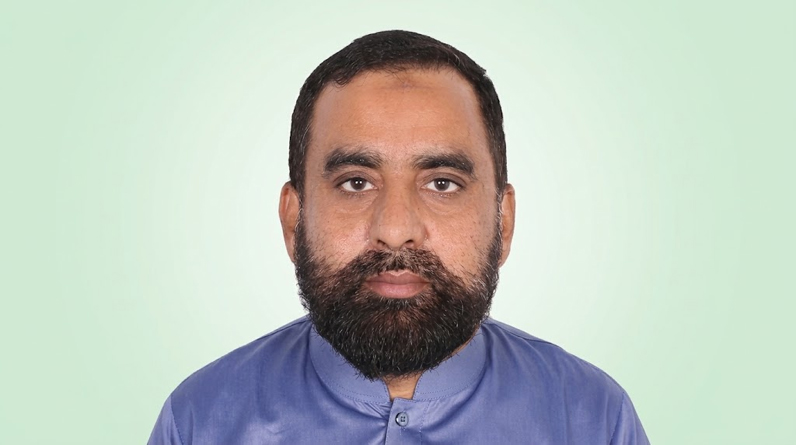
Md. Mukhlesur Rahman: How much value academic certificates will retain in the future may become clear sooner than we think.

The extraordinary progress of Artificial Intelligence (AI) is generating unprecedented ideas about education, employment, and the very meaning of skills and qualifications.

We are passing through an era in which technology is advancing at an almost unimaginable pace. The speed at which the world is moving forward is as clear as daylight.

Until recently, AI was largely a subject of discussion among technology professionals. Today, ordinary people are using AI for writing, translation, research, data analysis, image generation, programming, and many other tasks. Work that once required a human employee can now, in some cases, be completed by an AI system within seconds.

Technology is not standing still. The concept of Superintelligence has already entered public and scientific discussion. It refers to a potential AI system capable of surpassing even the most talented humans in almost all forms of intellectual work. This remains a possibility, not an established reality. However, some AI researchers believe that highly advanced AI could emerge much sooner than many people expect.

Former OpenAI researcher Daniel Kokotajlo and his colleagues have made forecasts concerning the rapid development of AI, including the possible emergence of AI systems far more capable than humans and the serious risks that could accompany such development.

Kokotajlo has also taken the position that the race to develop increasingly powerful AI should be slowed and that governments should prepare in advance. His central concern is that if AI advances faster than society’s ability to control, understand and govern it, the time available for preparation could become extremely limited.

This is precisely where we need to rethink our education system.

Suppose an AI system can write a lengthy report within seconds, correct spelling and language errors, translate texts, perform calculations, analyse information, and develop a preliminary research framework on a particular subject. In that case, the necessity of a certificate merely as proof of one’s ability to perform such tasks may gradually diminish.

Spelling correction, accounting, translation, graphic design, customer service, software coding and countless other fields are already being transformed by AI, potentially reducing the demand for human labour in ways that were previously difficult to imagine.

If AI becomes integrated with robotics, the situation could become even more complex. AI-powered robots could perform physical tasks; autonomous vehicles could transform transportation systems; and industrial production could become increasingly automated. Consequently, the traditional role of human workers could decline not only in offices but also in agriculture, manufacturing, transportation and the service sector.

It would be difficult, however, to claim with certainty that AI will eventually perform all human jobs or that academic certificates will become irrelevant within just a few years. Such claims should not be treated as established facts.

History shows that many predictions about the future of technology have proved wrong. Nevertheless, it would be wise to take such scientific forecasts seriously and use them as a basis for preparation and precaution. If some of these predictions do come true, the resulting damage could be extremely difficult to overcome. We therefore need to sharpen our capabilities and keep pace with technological change while there is still time, and our education system must undergo fundamental transformation.

Creativity, ethical judgment, leadership, empathy, communication, critical thinking, the ability to identify problems, team management, decision-making in real-world situations, and the ability to learn new things may become even more important.

For this reason, it would not be appropriate to say that certificates will become completely unnecessary. Doctors, engineers, lawyers and professionals in many other fields will still require formal education and recognised qualifications to establish professional competence. The bigger question is whether a certificate will continue to be regarded as the only or even the primary proof of competence.

Employers may increasingly focus on what a person can actually do, how quickly they can learn something new, and how effectively they can use AI as a tool.

In other words, the education of the future will not be concerned only with “What do I know?” It will increasingly focus on “What can I do?” and “How quickly can I learn something new?”

There is a particularly important lesson here for Bangladesh.

Our education system remains largely centred on examinations, marks and certificates. When a student fails an examination, they may begin to regard themselves as a failure in life. Yet the result of a single examination can never fully determine a person’s intelligence, potential or worth.

Failure in an examination is not failure in life. A certificate may be important, but a person’s value cannot be determined by a certificate.

In this rapidly changing technological era, the purpose of education must therefore change as well. It is no longer enough to prepare a student merely for a particular job. We must prepare young people for a world in which today’s job may not exist tomorrow.

The fundamental objective of education should be to develop the ability to learn. No matter how rapidly AI advances, one of the most important human capabilities of the future will be the ability to continuously reinvent oneself.

We are a generation that has travelled from a world without the internet to a world of smartphones and AI. The pace of change has become so rapid that even being offline for a few hours can make us feel that the world has already moved forward significantly. The coming decade is likely to bring even faster transformation.

Instead of asking, “What certificates do you have?”, more important questions may become:

“How relevant are you?”

“What can you actually do?”

“How quickly can you adapt to new circumstances?”

Certificates will still exist. Universities will still exist. Teachers will still exist. But the meaning of education must evolve.

Greater importance must be given to human judgment, creativity, ethics, practical skills and the capacity for lifelong learning rather than merely memorised knowledge and examination results.

Whether AI ultimately becomes a blessing or a curse for humanity will be determined by time. But one thing is increasingly clear: in the age of AI, one of the major reasons a person may become irrelevant is the inability to keep pace with the changing landscape of knowledge, science, technology and education.

Human beings must remain relevant by taking into account the contemporary environment and the changing realities around them.

The foundation of relevance is not a certificate. It is knowledge, skills, sound judgment, humanity and the capacity to learn throughout life.

Author: Md. Mukhlesur Rahman is an Economist, Social and State Thinker, Educator and Human Rights Activist.


Share Button


Relevant technological knowledge may become a greater asset than certificates
.............................................................................................
Climate is an engineering constraint: what Bangladesh must learn before building data centres
.............................................................................................
The Nature of Awami Fascists
.............................................................................................
The Legacy of a Mountain of Debt: A Record in Repayment, a Test in Reducing Liabilities
.............................................................................................
Strong Local Government: The Pillar and Driving Force of Development
.............................................................................................
Climate Change: The Silent Threat to Bangladesh’s Economy
.............................................................................................
A New Dawn for Bangladesh’s Energy Security
.............................................................................................
One Crore Jobs: Bangladesh’s Demographic Dividend Is Running Out of Time
.............................................................................................
A Glorious Chronicle: 65 Years of Government Laboratory High School
.............................................................................................
BNP’s Four Decades in Theoretical Light: History, Achievements, and the Dawn of a New Era
.............................................................................................
Nepal’s Vulnerability: The Anguish of a Bangladeshi Vice-Chancellor in Somalia
.............................................................................................
The Golden Fiber at a Crossroads: Temporary Export Gains or Sustainable Economic Transformation?
.............................................................................................
Two Generations, one Baul Soul: A Father and Son`s journey through Music
.............................................................................................
Rebuilding the Economy: What the Government’s First 180 Days Really Mean
.............................................................................................
The Presidential Election and Article 70 of the Constitution: An Unbiased Theoretical Analysis
.............................................................................................
The Silent Thief
.............................................................................................
Children`s right to Childhood
.............................................................................................
Can Ending the Unregulated Sale of Tobacco on Watercraft Ensure Tobacco-Free Water Transport?
.............................................................................................
Begom Khaleda Zia, the Beacon of Democracy: A Birthday Tribute
.............................................................................................
Shifting Politics and the Equations of Power
.............................................................................................
A Handful of Dreams, A Generation of Struggles: A Half-Century Journey of the Bangladeshi Community in Australia
.............................................................................................
Convicted Fugitive on a Political Stage: Delhi’s Mindset and Dhaka’s Indignation
.............................................................................................
Beyond Borrowing: Why Bangladesh Must Build Its Economy on Domestic Revenue
.............................................................................................
The Political Economy of Banking: Cronyism, Capture, and the Cost of Reform
.............................................................................................
Seven Years After Article 370: Modi`s Kashmir Gamble Came at the Cost of Democracy
.............................................................................................
The Architecture of Ownership: Why Protecting Intellectual Property is Bangladesh’s Next Great Frontier
.............................................................................................
The Strait of Hormuz Crisis: The Limits of Military Power, the Imperative of Diplomacy, and the Emerging Global Order
.............................................................................................
Jammu & Kashmir and Abrogation of 370, 35A
.............................................................................................
Anwar Ibrahim’s diplomatic initiative: A new window of opportunity for resolving Rohingya Crisis
.............................................................................................
The historic role of Private University Students in the July Revolution
.............................................................................................
July Warriors: The spirit of revolution and road to a new Bangladesh
.............................................................................................
The Global Energy Landscape Is Transforming Through the Expansion of Clean Energy
.............................................................................................
“Independent Balochistan”: a Facebook fantasy made in India
.............................................................................................
Navigating the Forex Crisis: Devaluation, Import Pressures, and Bangladesh’s Path to Structural Recovery
.............................................................................................
Irregular Weather Patterns Increase Uncertainty in Rice Production
.............................................................................................
Flash Floods Intensify the Crisis of Climate-Displaced Communities
.............................................................................................
Bangladesh ICT: Rich talent, weak institutional mechanism
.............................................................................................
Kashmir’s July 13: Memory, Justice, and the Search for Peace
.............................................................................................
FIFA`s Stained Legacy: How Will It Erase the Shame of 2026?
.............................................................................................
Impossible Peace with the US and the only Option for Iran
.............................................................................................
Political Activism and Muslims’ Failures
.............................................................................................
Money Laundering in Islamic Banks: Is It Time to Rethink the Role of Shariah Boards?
.............................................................................................
Standing Beside People Affected by Natural Disasters Is Our Collective Moral Responsibility
.............................................................................................
Political Activism and the Failures of the Muslims
.............................................................................................
Delayed Settlement of Import Payments Could Damage Bangladesh’s Reputation in the Global Market
.............................................................................................
Bangladesh’s Economic Growth is Promising: Proactive Preparedness is Essential to Manage Future Risks
.............................................................................................
Arabic Language Practice in Bangladesh: A Gateway to New Global Opportunities
.............................................................................................
When a Vision Shapes a City: Leadership, Public Service, and the Future of Patuakhali
.............................................................................................
Bangladesh’s Mango: Exceptional in Taste and Aroma, Yet Lagging Behind in the Global Market
.............................................................................................
Palashi Day in National Consciousness: A Historical Warning
.............................................................................................
Chief Advisor: Md. Tajul Islam,
Editor & Publisher Fatima Islam Tania and Printed from Bismillah Printing Press, 219, Fakirapul, Dhaka-1000
Editorial Office: 219, Fakirapul (1st Floor), Dhaka-1000.
Phone: 02-41070996, Mobile: 01720090514, E-mail: muslimtimes19@gmail.com
2022 @ All Right Reserved By www.themuslimtimes-bd.com