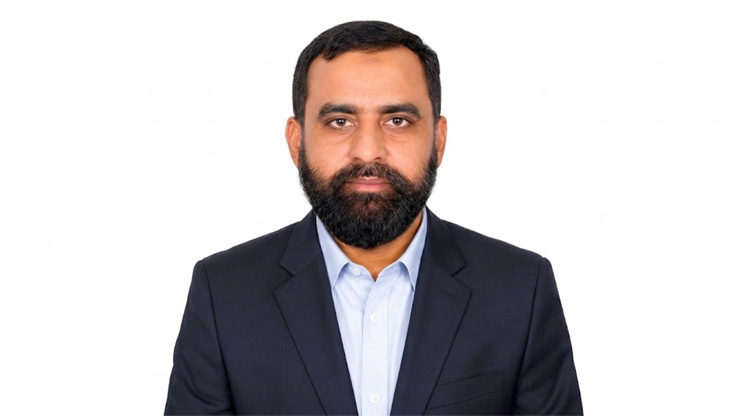
| Md. Mukhlesur Rahman: The Rohingya question is often reduced to a simple dispute: are the Rohingya indigenous to Arakan, or are they recent migrants from Bengal? Such a binary approach does not adequately reflect the region’s complex history.
Arakan—today largely corresponding to Myanmar’s Rakhine State—was a distinct historical region and kingdom on the eastern side of the Bay of Bengal. Its location connected it closely with Bengal, the wider Indian Ocean world, Persia and Arabia, while allowing it to maintain its own political institutions and cultural traditions.
Muslim communities existed in Arakan long before the end of British rule. At the same time, migration from Bengal increased significantly during the British period, when Burma was administered within British India. Both facts are historically important. Neither should be used to erase the other.
The central historical point is therefore straightforward: Bengal is part of the Rohingya story, but it is not a substitute for Arakan.
Arakan and the Muslim Presence
The history of Arakan demonstrates that the region was never isolated from the wider Bay of Bengal. During the Mrauk-U period, the Arakanese kingdom maintained relations with Bengal and incorporated Muslim officials, soldiers, poets and administrators into aspects of its political and cultural life.
This does not mean that every Muslim in Arakan belonged to one homogeneous community or that all present-day Rohingya families descend from the earliest Muslim settlers. Historical populations are shaped by migration, settlement, intermarriage and political change.
What it does establish is that Muslim presence in Arakan cannot reasonably be explained solely by nineteenth-century migration from Bengal.
Francis Buchanan’s 1799 account is frequently cited in this context. He recorded Muslims in Arakan who referred to themselves as “Rooinga” and described themselves as natives of the region. Historians continue to debate the evolution and political use of the term, and it would be inappropriate to assume that its meaning has remained unchanged for centuries. But the record is significant in demonstrating an established Muslim community in Arakan and an early use of a name associated with the modern Rohingya identity.
Bengal and Arakan: Connection Without Confusion
The historical relationship between Bengal and Arakan was exceptionally close. People crossed the frontier for trade, agriculture, refuge, administration and political reasons.
The colonial period intensified this movement. When Burma was administered as part of British India, movement between Bengal and Arakan took place within a single imperial framework. Labour migration increased, and colonial records used categories such as Bengali, Chittagonian, Indian Muslim and Arakan Muslim.
These administrative categories should not be treated as timeless ethnic identities.
A particularly useful contemporary observation appeared in Hafeez-ur-Rahman Khan’s 1961 account of the Chittagong–Akyab frontier. He noted that many people crossed into Arakan to harvest paddy and returned to Chittagong after the season.
This distinction matters. Seasonal agricultural migration, permanent colonial settlement and older Muslim communities rooted in Arakan were not necessarily the same population.
To treat all movement from Bengal as evidence that the entire Rohingya population was a recent immigrant population is therefore historically problematic.
From British Rule to Citizenship Exclusion
The end of British rule changed the political meaning of borders and belonging.
Under the colonial system, movement within British India was not equivalent to crossing an international border. After independence, citizenship increasingly became tied to competing ideas of ethnicity, indigeneity and territorial loyalty.
Rohingya Muslims participated in Burma’s political life around independence and in subsequent periods. The citizenship framework, however, changed dramatically over time.
The 1982 Citizenship Law became a major turning point. Its citizenship categories and requirements effectively excluded large numbers of Rohingya from full citizenship and contributed to their long-term statelessness. Citizenship restrictions were reinforced by limitations on movement, education, employment, land ownership, marriage and political participation.
Thus, the Rohingya crisis is not simply a question of migration. It is also a question of citizenship and political belonging.
Repeated Displacement
The crisis did not begin in 2017.
Rohingya communities in northern Arakan experienced repeated episodes of violence and displacement, including major refugee movements in 1978 and 1991–92. Bangladesh became the principal place of refuge because of geographical proximity.
The direction of flight, however, should not be confused with the direction of historical origin.
People flee toward safety. Refuge does not become homeland simply because a displaced population has remained there for decades.
The massive displacement following the military operations of August 2017 brought the crisis to an unprecedented scale. Hundreds of thousands of Rohingya crossed into Bangladesh amid widespread allegations of killing, sexual violence, destruction of homes and forced displacement. International investigations subsequently documented grave human-rights violations and raised the issue of genocide and crimes against humanity.
The humanitarian consequences have been enormous, but the political consequences are equally important. A population cannot permanently remain displaced simply because the conditions that caused its displacement have not been resolved.
Bangladesh: Refuge, Not Historical Origin
Bangladesh deserves recognition for sheltering more than a million Rohingya refugees and for carrying a humanitarian burden that has continued for years.
But humanitarian refuge should not be confused with historical homeland.
Describing the Rohingya simply as “Bengali-speaking refugees” can unintentionally reinforce the argument that they are essentially foreigners to Arakan. Language, however, does not determine political belonging. Borderland communities often share linguistic and cultural characteristics with neighbouring populations.
The more accurate description is that Bangladesh has become the principal refuge of a people displaced from Arakan.
That distinction matters both historically and politically.
What Can Responsibly Be Said About Indigenousness?
The term “indigenous” itself can have different meanings in international law, anthropology and political discourse. It is therefore unnecessary to claim that the Rohingya were the first inhabitants of every part of Arakan.
A more defensible historical proposition is that Rohingya communities have a longstanding relationship with Arakan; Muslim settlement predates British colonial rule; migration from Bengal also occurred, particularly under British administration; and colonial migration alone cannot explain the entire modern Rohingya population.
This balanced formulation is stronger than either extreme.
History does not require the denial of migration. Nor does migration justify the denial of historical belonging.
From Humanitarian Relief to Political Settlement
Humanitarian assistance can keep refugees alive, but it cannot by itself resolve the political causes of displacement.
A durable solution must address at least four connected issues: citizenship, security, property and political participation.
Return without citizenship can leave people stateless. Return without security can expose them to renewed persecution. Return without property rights can leave families without homes or livelihoods. Return without political participation can reproduce the exclusion that contributed to displacement in the first place.
Repatriation, therefore, should not mean merely crossing a border.
It should mean returning to a political and legal environment in which people can live securely and participate as equal citizens.
The Mayu Question
The historical Mayu Frontier Administration provides an important point of reference for considering a future administrative arrangement in northern Arakan.
It should not be inaccurately described as an independent or autonomous Rohingya state. Rather, it was a distinct administrative arrangement established in 1961 and abolished in 1964.
Its historical significance is that it demonstrates that a separate administrative framework for the northern part of Arakan was once recognised.
A contemporary Mayu-based arrangement could therefore be considered—not as a demand for ethnic domination or automatic separation, but as a possible institutional mechanism for protecting citizenship, security, representation and local administration.
Any such arrangement would need to be negotiated through lawful constitutional processes and designed to protect all communities living in the region.
A Future Arakan Must Protect Everyone
The demand for Rohingya rights should not mean replacing one form of exclusion with another.
Arakan is home to several communities. A durable settlement must protect them all.
For the Rohingya, however, equality after decades of displacement will require more than formal legal recognition. Many families have lost homes, land, livelihoods, education and accumulated wealth.
A credible return process should therefore include:
* citizenship and equal protection under law;
* freedom of movement;
* restoration, compensation or legally secure settlement of property claims;
* reconstruction of homes and public infrastructure;
* access to education and healthcare;
* livelihood opportunities;
* political representation;
* protection of language, religion and culture; and
* independent monitoring of security and human rights.
Humanitarian and development organisations should also have meaningful, non-discriminatory access to areas of return.
If Return Cannot Be Safely Negotiated
If the relevant authorities cannot establish credible conditions for safe and sustainable return, Bangladesh and its international partners should examine other lawful mechanisms for civilian protection.
An internationally supported peace or protection zone could be considered through appropriate multilateral institutions, subject to international law, sovereignty concerns, a clear mandate and an agreed exit strategy.
Such an arrangement should not be presented as automatic or easy. Its purpose would be civilian protection, humanitarian access, stabilisation and preparation for safe return—not permanent foreign rule or territorial partition.
The principle of Responsibility to Protect may also be relevant to international discussions, but it does not automatically authorise military intervention. Any international action must remain consistent with the UN Charter and applicable international law.
A Practical Roadmap
A durable settlement could follow several principles.
First, preparations for repatriation should continue, but return must be safe, voluntary, dignified and verifiable.
Second, citizenship must be addressed at the centre of the process.
Third, property rights, freedom of movement and political participation must be guaranteed.
Fourth, an appropriate Mayu-based or equivalent administrative framework should be examined through negotiation and lawful constitutional processes.
Fifth, international humanitarian access and independent monitoring should accompany the return process.
Sixth, reconstruction should benefit both returnees and other affected communities and should be conducted without discrimination.
Finally, if a credible framework cannot be achieved, lawful international mechanisms for civilian protection should be placed on the diplomatic agenda.
Conclusion
The Rohingya question is rooted in Arakan.
That does not require denying the historical links between Arakan and Bengal or the substantial migration that occurred during British rule. It requires distinguishing migration from the broader history of a community and its relationship with territory.
Bangladesh has provided refuge to a vast displaced population, but refuge cannot become a substitute for a political solution.
Nor can repatriation alone be considered a solution if returnees remain without citizenship, security, property rights or political participation.
The objective should therefore be clear: historical recognition, legal belonging, physical security, dignified return and meaningful political participation.
A contemporary Mayu-based administrative framework could be considered as one possible institutional bridge toward these objectives, provided it is negotiated lawfully and protects all communities.
The real question is no longer simply whether the Rohingya should return.
It is whether they can return and remain—safely, equally, with citizenship, dignity and a genuine stake in the future of Arakan.
That is the difference between repatriation and a durable political settlement.
Md. Mukhlesur Rahman
Islamic Finance Specialist, Economist, Social and Political Thinker, Geopolitical Analyst, and Human Rights Activist
|