×
Home National Politics Business Bangladesh International Sports Entertainment Law & Justice More News Capital News Health Features Business Icon Technology Media Features Economy Education Literature Quran & Hadish Photo Gallery Editorial Religion Tours & Travels Tourism Guide Editors Corner Campus Youth Popular Organizations Country Wide Life Style Jobs Prism Notice History & Culture Messages Op-ed Wildlife Activities Foreign relation Accident Environment Asia Videoes Analysis Energy Book Reviews Literature Others KSA Arab World Cricket Football More Banking Corporate Global economy Real Estate Entrepreneur Start-up Telecom Summit Travel Art and Culture Food Book Fourth Estate View Letters to Editor Political Icon Diplomat Scholarship Career Job

Tuesday 8th of September 2026 E-paper
* সৌদিতে সড়ক দুর্ঘটনায় চার বাংলাদেশি নিহত   * বাঁধনের ওপর হামলায় জড়িতদের আমরা ছাড়বো না: জাহেদ উর রহমান   * রাষ্ট্রপতির সঙ্গে ভারতীয় হাইকমিশনারের সাক্ষাৎ   * কুমিল্লায় বাস খাদে পড়ে মেডিকেল কলেজের ২০ শিক্ষার্থী আহত   * বড়পুকুরিয়ার কয়লায় নতুন বিদ্যুৎকেন্দ্র নির্মাণের নির্দেশ প্রধানমন্ত্রীর   * ইতালিতে অভিনেত্রী বাঁধনকে হেনস্তার অভিযোগ   * PM seeks Japan’s special envoy’s role for Rohingya repatriation   * পাবনায় বিএনপি নেতাকে গুলি ও কুপিয়ে হত্যা   * অটোরিকশার জন্য আসছে কিউআর কোড-ডিজিটাল ট্র্যাকিং   * জ্বালানি সংকট বিগত সরকারের ভুল নীতি ও দুর্নীতির ফসল  
   Op-ed
  Two Generations, one Baul Soul: A Father and Son`s journey through Music

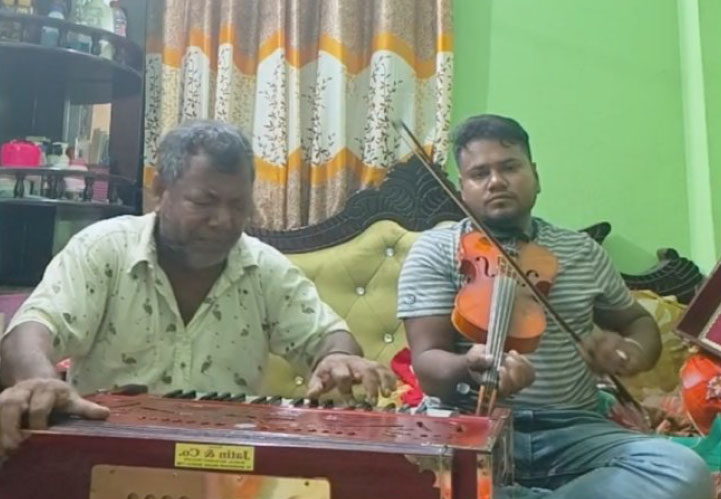
Md. Abdul Hakim plays the harmonium while his son, Alimul Dewan, accompanies him on the violin during a practice session. (Photo: Abida Anjum)


By Abida Anjum

The harmonium was not always his to keep.

For Md. Abdul Hakim, who has spent nearly 25 years in Baul music, even holding a harmonium once felt like a luxury. When money was short, he borrowed one from friends and practiced whenever he could. Some people mocked him, telling him not to touch such an expensive instrument. He still remembers those words.

As he recalled those early days, his eyes became moist.

Hakim`s journey into music began with his father, Osman Goni Mollah, who used to sing Doya songs. His father encouraged him to sing and taught him in his own way. Once, he even slapped Hakim for not singing properly. Yet behind that strictness was a deep desire to see his son become a singer.

"My father is the reason I entered the world of music," Hakim said.

He had another reason to continue. After seeing others sing, a determination grew inside him that he too would become a singer. Despite financial difficulties and social discouragement, he continued.

For Hakim, however, music eventually became more than a profession.

"When I sing, I find my father," he said, his voice filled with emotion. "Music gives peace to my soul. It fills an emptiness inside me."

That musical inheritance did not end with Hakim. It passed to his son, Md. Alimul Islam, known in the music world as Alimul Dewan, who has been involved with music for about 23 years.

Alimul`s journey began at home. His father`s musical practice became part of his childhood. In 2004, an incident involving his father`s musical instruments became particularly significant. After his father`s friend took away the instruments he had been using, his father felt humiliated. That day, he decided to acquire the instruments needed to continue making music.

Alimul, who did not have formal musical training, did not initially know the basics of musical notation or riyaz. To support his father, he began practicing with him every day. Gradually, music became his own path.

At around seven years old, Alimul performed a Baul song at a programme and won the audience`s appreciation. That experience encouraged him to continue as a Baul singer.

But recognition did not come easily.

At different stages of his career, people underestimated him because of his age, appearance and background. At one Baul programme, a respected Baul artist, Mintu Sarkar, initially questioned whether the young Alimul could really sing. Yet after Alimul performed, he won over the audience. Sarkar later apologized for not giving him the respect he deserved before hearing him sing.

Alimul eventually appeared on television, including the Magic Bauliya programme on Maasranga Television. He also received an opportunity to sing on Channel i in a drama featuring popular actor Riaz. But financial difficulties repeatedly forced him to miss opportunities that could have taken his career further.

“Being able to sing on a platform feels different,” Alimul said. “At home, I can sing whatever I want. On a platform, I have to consider the feelings and expectations of the audience.”

Today, balancing music with a job and family responsibilities is another challenge. He no longer has as much time for regular practice as he once did. Still, he refuses to give up.

Coke Studio Bangla has given him some hope. He believes platforms that introduce older songs to younger audiences in new ways are helping keep Baul music alive. Songs such as “Haat Chhaira De Sona Dewra Re” have reached many young listeners, showing that traditional music can still find a place among them.

Yet Alimul worries that music is increasingly being treated as something to hear rather than something to feel. For him, music carries emotion, and Baul music survives because generations of artists have sacrificed for it.

His father shares a similar concern. Hakim feels that modern music has changed the way people listen, while the deeper meaning of older songs is sometimes overlooked.

Still, neither father nor son has abandoned music.

Asked what advice he would give his younger self if he could return to the past, Alimul’s eyes lit up.

“Time and the tide wait for no one,” he said. “Value your time, never stop practicing, and make use of every opportunity.”

For a father who found his own father in music, and a son who inherited that musical journey, the song continues — not simply as a profession, but as a family legacy.


AUTHOR: By Abida Anjum | ID: 2231181001


Share Button


Strong Local Government: The Pillar and Driving Force of Development
.............................................................................................
Climate Change: The Silent Threat to Bangladesh’s Economy
.............................................................................................
A New Dawn for Bangladesh’s Energy Security
.............................................................................................
One Crore Jobs: Bangladesh’s Demographic Dividend Is Running Out of Time
.............................................................................................
A Glorious Chronicle: 65 Years of Government Laboratory High School
.............................................................................................
BNP’s Four Decades in Theoretical Light: History, Achievements, and the Dawn of a New Era
.............................................................................................
Nepal’s Vulnerability: The Anguish of a Bangladeshi Vice-Chancellor in Somalia
.............................................................................................
The Golden Fiber at a Crossroads: Temporary Export Gains or Sustainable Economic Transformation?
.............................................................................................
Two Generations, one Baul Soul: A Father and Son`s journey through Music
.............................................................................................
Rebuilding the Economy: What the Government’s First 180 Days Really Mean
.............................................................................................
The Presidential Election and Article 70 of the Constitution: An Unbiased Theoretical Analysis
.............................................................................................
The Silent Thief
.............................................................................................
Children`s right to Childhood
.............................................................................................
Can Ending the Unregulated Sale of Tobacco on Watercraft Ensure Tobacco-Free Water Transport?
.............................................................................................
Begom Khaleda Zia, the Beacon of Democracy: A Birthday Tribute
.............................................................................................
Shifting Politics and the Equations of Power
.............................................................................................
A Handful of Dreams, A Generation of Struggles: A Half-Century Journey of the Bangladeshi Community in Australia
.............................................................................................
Convicted Fugitive on a Political Stage: Delhi’s Mindset and Dhaka’s Indignation
.............................................................................................
Beyond Borrowing: Why Bangladesh Must Build Its Economy on Domestic Revenue
.............................................................................................
The Political Economy of Banking: Cronyism, Capture, and the Cost of Reform
.............................................................................................
Seven Years After Article 370: Modi`s Kashmir Gamble Came at the Cost of Democracy
.............................................................................................
The Architecture of Ownership: Why Protecting Intellectual Property is Bangladesh’s Next Great Frontier
.............................................................................................
The Strait of Hormuz Crisis: The Limits of Military Power, the Imperative of Diplomacy, and the Emerging Global Order
.............................................................................................
Jammu & Kashmir and Abrogation of 370, 35A
.............................................................................................
Anwar Ibrahim’s diplomatic initiative: A new window of opportunity for resolving Rohingya Crisis
.............................................................................................
The historic role of Private University Students in the July Revolution
.............................................................................................
July Warriors: The spirit of revolution and road to a new Bangladesh
.............................................................................................
The Global Energy Landscape Is Transforming Through the Expansion of Clean Energy
.............................................................................................
“Independent Balochistan”: a Facebook fantasy made in India
.............................................................................................
Navigating the Forex Crisis: Devaluation, Import Pressures, and Bangladesh’s Path to Structural Recovery
.............................................................................................
Irregular Weather Patterns Increase Uncertainty in Rice Production
.............................................................................................
Flash Floods Intensify the Crisis of Climate-Displaced Communities
.............................................................................................
Bangladesh ICT: Rich talent, weak institutional mechanism
.............................................................................................
Kashmir’s July 13: Memory, Justice, and the Search for Peace
.............................................................................................
FIFA`s Stained Legacy: How Will It Erase the Shame of 2026?
.............................................................................................
Impossible Peace with the US and the only Option for Iran
.............................................................................................
Political Activism and Muslims’ Failures
.............................................................................................
Money Laundering in Islamic Banks: Is It Time to Rethink the Role of Shariah Boards?
.............................................................................................
Standing Beside People Affected by Natural Disasters Is Our Collective Moral Responsibility
.............................................................................................
Political Activism and the Failures of the Muslims
.............................................................................................
Delayed Settlement of Import Payments Could Damage Bangladesh’s Reputation in the Global Market
.............................................................................................
Bangladesh’s Economic Growth is Promising: Proactive Preparedness is Essential to Manage Future Risks
.............................................................................................
Arabic Language Practice in Bangladesh: A Gateway to New Global Opportunities
.............................................................................................
When a Vision Shapes a City: Leadership, Public Service, and the Future of Patuakhali
.............................................................................................
Bangladesh’s Mango: Exceptional in Taste and Aroma, Yet Lagging Behind in the Global Market
.............................................................................................
Palashi Day in National Consciousness: A Historical Warning
.............................................................................................
US–Iran Agreement: Prospects for Peace in the Middle East
.............................................................................................
Parliamentary Politics and Historical Inconsistencies: The Conflict Between Ideological Narratives and Biological Reality
.............................................................................................
A Good Budget Must Be Matched by Effective Implementation
.............................................................................................
The Unlimited Accumulation of Wealth by a Few Leads to the Poverty of Many
.............................................................................................
Chief Advisor: Md. Tajul Islam,
Editor & Publisher Fatima Islam Tania and Printed from Bismillah Printing Press, 219, Fakirapul, Dhaka-1000
Editorial Office: 219, Fakirapul (1st Floor), Dhaka-1000.
Phone: 02-41070996, Mobile: 01720090514, E-mail: muslimtimes19@gmail.com
2022 @ All Right Reserved By www.themuslimtimes-bd.com