×
Home National Politics Business Bangladesh International Sports Entertainment Law & Justice More News Capital News Health Features Business Icon Technology Media Features Economy Education Literature Quran & Hadish Photo Gallery Editorial Religion Tours & Travels Tourism Guide Editors Corner Campus Youth Popular Organizations Country Wide Life Style Jobs Prism Notice History & Culture Messages Op-ed Wildlife Activities Foreign relation Accident Environment Asia Videoes Analysis Energy Book Reviews Literature Others KSA Arab World Cricket Football More Banking Corporate Global economy Real Estate Entrepreneur Start-up Telecom Summit Travel Art and Culture Food Book Fourth Estate View Letters to Editor Political Icon Diplomat Scholarship Career Job

Wednesday 12th of August 2026 E-paper
* এসএসসির ফল প্রকাশ, পাসের হার ৬২.২৫   * দেশের জনগণের ভাগ্য নিয়ে কাউকে ছিনিমিনি খেলতে দেওয়া হবে না : প্রধানমন্ত্রী   * কানাডায় ছড়িয়ে পড়েছে ভয়াবহ দাবানল, জরুরি অবস্থা জারি   * সালমান শাহ হত্যা মামলায় ডন গ্রেফতার   * ১০ বছরের জ্বালানি পরিকল্পনা সংসদে তুলে ধরবে সরকার : প্রধানমন্ত্রী   * Fascism beneficiaries not sitting idle, actively working to destabilise energy sector: PM   * শিক্ষা, স্বাস্থ্য ও জ্বালানি খাতকে স্বনির্ভর করার পরিকল্পনা নেওয়া হয়েছে : প্রধানমন্ত্রী   * ব্রাহ্মণবাড়িয়ায় পূর্ব বিরোধের জেরে দুই পক্ষের সংঘর্ষ, আহত অর্ধশতাধিক   * Houthi attacks kill 10 in Yemen as rebels target oil-rich Marib   * সিলেটে দুই বাসের সংঘর্ষে ৮ জন নিহত  
   Op-ed
  Anwar Ibrahim’s diplomatic initiative: A new window of opportunity for resolving Rohingya Crisis

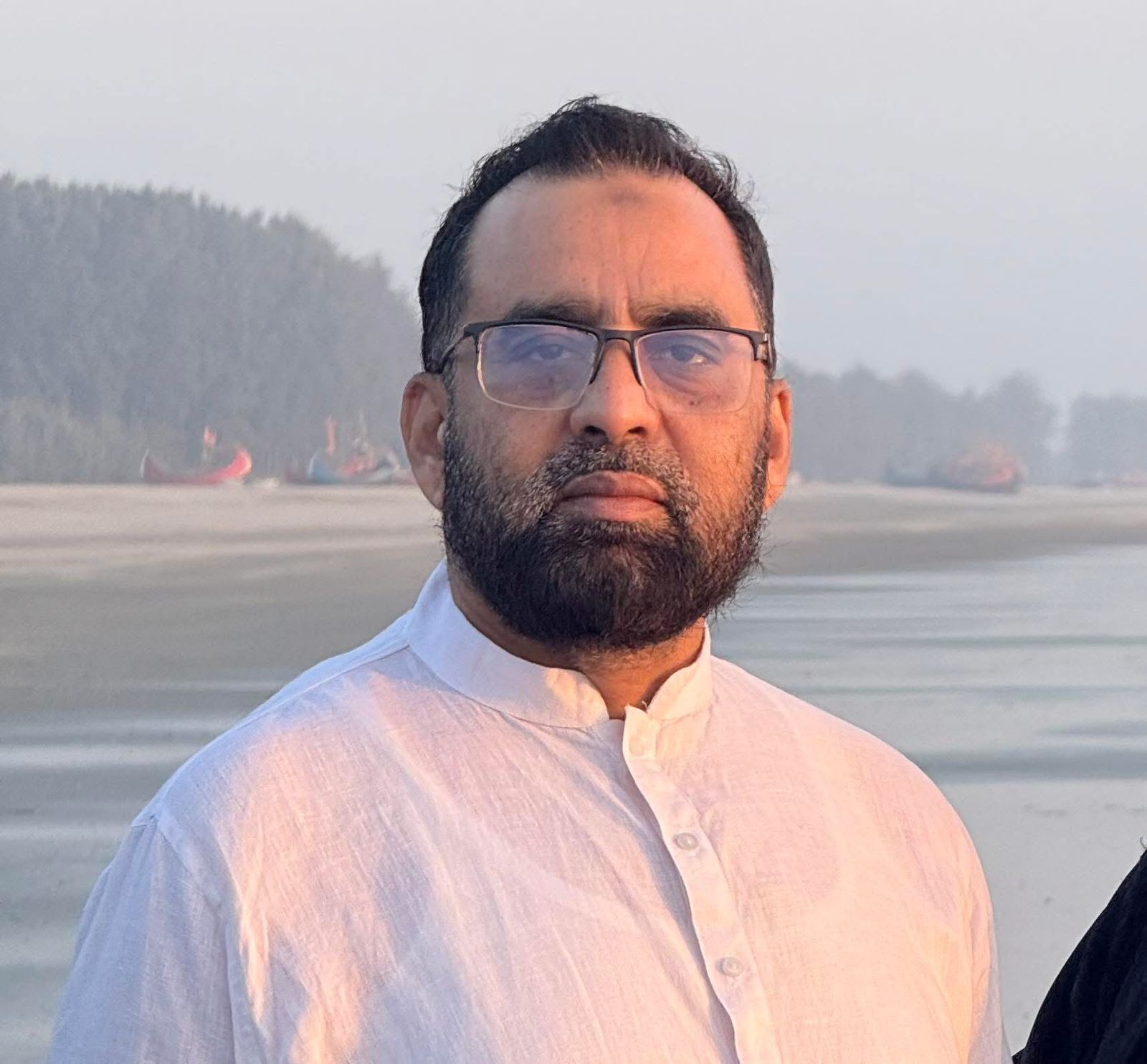
Md. Mukhlesur Rahman: Malaysia’s Prime Minister recently announced that Myanmar has agreed in principle to repatriate 5,000 Rohingya from Malaysia and 300,000 from Bangladesh.

This development may be regarded as a positive outcome of Malaysia’s constructive diplomatic engagement with Myanmar’s military-led government, particularly through the sustained efforts of Prime Minister Datuk Seri Anwar Ibrahim.

Anwar Ibrahim has also emphasized that maintaining a constructive relation with Myanmar is essential, noting that “issues of this nature can only be resolved through careful diplomacy.

The Rohingya crisis is not merely a refugee problem; it is one of the most complex humanitarian, political, and diplomatic crises of the twenty-first century. Systematic ethnic persecution, statelessness, denial of citizenship, and repeated waves of violence have forced hundreds of thousands of Rohingya to flee Myanmar’s Rakhine State in search of safety across the region. Having endured severe persecution and human rights abuses, the overwhelming majority sought refuge in Bangladesh.

Guided by humanitarian values, good-neighborly responsibility, and respect for international moral obligations, Bangladesh has provided shelter to more than one million Rohingya refugees. However, despite the passage of many years, no durable solution to this protracted crisis has yet been achieved.

Against this backdrop, the recent announcement by the Malaysian Prime Minister has rekindled hope. If translated into concrete action, it would represent not only a significant breakthrough for Bangladesh but also a major diplomatic achievement for South and Southeast Asia.

Bangladesh’s position has consistently remained clear: the only sustainable solution to the Rohingya crisis is their safe, voluntary, and dignified repatriation to their homeland in Myanmar. Carrying the responsibility of hosting such a vast displaced population indefinitely poses an enormous challenge for a developing country like Bangladesh. The country has fulfilled this responsibility purely on humanitarian grounds, but humanitarian generosity cannot and should not become a substitute for a permanent political solution.

The reality is that the prolonged presence of the Rohingya population is exerting multidimensional pressure on Bangladesh’s economy, society, environment, and national security, while placing an additional burden on already limited public resources. Concerns over law and order have also intensified. These challenges are no longer confined to Bangladesh; they have become an issue of regional security.

Another growing concern is the gradual decline in international assistance. The strong global solidarity and financial support witnessed during the initial stages of the crisis have diminished considerably. Consequently, serious challenges have emerged in ensuring adequate food, education, healthcare, and other basic services. If this situation continues, rising frustration, unemployment, and vulnerability to radicalization could further threaten regional peace and stability.

Therefore, the reported prospect of repatriating 300,000 Rohingya undoubtedly sends a positive signal. Nevertheless, any repatriation must be accompanied by credible guarantees of citizenship, security, freedom of movement, land rights, and protection from discrimination to ensure that the return is genuinely safe, voluntary, and dignified.

The root cause of the Rohingya crisis does not lie in Bangladesh. Rather, it stems from Myanmar’s long-standing discriminatory state policies. The 1982 Citizenship Law effectively stripped the Rohingya of their citizenship. Over subsequent decades, they faced severe restrictions on movement, education, healthcare, employment, marriage, and property ownership. Successive military operations, widespread violence, and systematic ethnic persecution forced hundreds of thousands of Rohingya to cross the border into Bangladesh. Consequently, the primary responsibility for resolving this crisis rests with Myanmar.

The international community has an indispensable role to play in ensuring the successful return of the Rohingya to their homeland with full citizenship and equal civil rights. Large-scale repatriation is unlikely to be feasible without the active involvement of the United Nations, particularly the United Nations High Commissioner for Refugees (UNHCR) and the International Organization for Migration (IOM). Equally important is the presence of independent international monitors throughout the repatriation process to verify that the returnees’ security, human rights, and fundamental freedoms are genuinely protected.

The Association of Southeast Asian Nations (ASEAN) also has a critical responsibility in this regard. The recent initiative by the Malaysian Prime Minister demonstrates that constructive, dialogue-based regional diplomacy can yield meaningful progress. If Malaysia, Indonesia, and other ASEAN member states continue coordinated diplomatic engagement with Myanmar, the prospects for implementing a broader and more sustainable repatriation process will significantly improve.

Bangladesh, for its part, should immediately formulate a comprehensive diplomatic roadmap. Before any repatriation takes place, stronger international commitments should be secured regarding the verification of each Rohingya’s identity, guarantees of citizenship, restoration of homes and land, independent international security monitoring, and a clearly defined implementation timeline. At the same time, Bangladesh should intensify its diplomatic efforts at the United Nations General Assembly, the United Nations Security Council, the Organisation of Islamic Cooperation (OIC), the Commonwealth, and other international forums to ensure that the Rohingya crisis remains a global priority.

It must be remembered that Rohingya repatriation is not merely a humanitarian programme; it is fundamentally linked to international justice, regional stability, and sustainable peace. Therefore, the true measure of success will not be political declarations but their effective implementation.

Myanmar’s military authorities—or any future government—must recognize that merely promising to accept a limited number of Rohingya in order to reduce international pressure is insufficient. They must establish a political and legal framework that enables the Rohingya to live safely and with dignity as full and equal citizens in their ancestral homeland.

While Bangladesh should welcome every genuine initiative for repatriation, it must not agree to any process driven by haste or lacking adequate guarantees. The safety of every returnee, confirmation of citizenship, restoration of homes and property, access to education and healthcare, employment opportunities, and freedom of movement must all be ensured through internationally verifiable mechanisms.

Bangladesh should also build a coordinated diplomatic coalition involving the United Nations, the OIC, ASEAN, the European Union, China, India, Japan, the United States, and other influential international partners. The Rohingya crisis should be presented not merely as a humanitarian issue but also as a matter of regional security, irregular migration, human trafficking, and global stability. Such an approach would encourage stronger and more sustained international engagement.

The Malaysian Prime Minister’s announcement should therefore be regarded as an important diplomatic opportunity. This opportunity must now be transformed into a transparent, well-organized, and internationally credible framework for repatriation. At the same time, Bangladesh should deepen diplomatic coordination with regional partners such as Malaysia so that repatriation evolves into a genuinely collective regional initiative.

One further point deserves particular emphasis. While treating the Rohingya with humanity is a requirement of international law and a moral obligation, safeguarding the rights and interests of the people of Bangladesh—the host community—is equally important. The economic, social, and environmental costs borne by Bangladesh must also receive due recognition and support from the international community. The responsibility for addressing this humanitarian crisis does not rest with Bangladesh alone; it is a shared responsibility of the entire international community.

The three objectives are inseparably linked: enabling the Rohingya to return safely to their homeland, relieving Bangladesh of the prolonged humanitarian and economic burden it has shouldered for years, and helping Myanmar restore the confidence of the international community. The only viable path to achieving these goals is a repatriation process that is voluntary, safe, dignified, and subject to credible international monitoring. The real test now is whether diplomatic commitments can be translated into meaningful action on the ground.

The recent initiative led by Malaysian Prime Minister Datuk Seri Anwar Ibrahim has created a rare diplomatic opening that should not be allowed to slip away. If pursued with sincerity, transparency, and sustained international cooperation, it could mark an important step toward resolving one of the world’s longest-running humanitarian crises.

Ultimately, lasting peace and stability in the region will depend not on symbolic gestures or political rhetoric, but on Myanmar’s willingness to address the root causes of the crisis. The Rohingya must be recognized as equal citizens, with guaranteed citizenship, legal protection, freedom of movement, access to education and healthcare, secure livelihoods, and the full enjoyment of their fundamental human rights in their ancestral homeland.

Only then can the international community claim meaningful progress toward justice. Only then can Bangladesh be relieved of an extraordinary humanitarian responsibility it has carried with remarkable generosity. And only then can the Rohingya finally return home—not as refugees, but as free, secure, and dignified citizens of their own country.

Md. Mukhlesur Rahman

Geopolitical Analyst, Social and Political Thinker, and Human Rights Activist


Share Button


A Handful of Dreams, A Generation of Struggles: A Half-Century Journey of the Bangladeshi Community in Australia
.............................................................................................
Convicted Fugitive on a Political Stage: Delhi’s Mindset and Dhaka’s Indignation
.............................................................................................
Beyond Borrowing: Why Bangladesh Must Build Its Economy on Domestic Revenue
.............................................................................................
The Political Economy of Banking: Cronyism, Capture, and the Cost of Reform
.............................................................................................
Seven Years After Article 370: Modi`s Kashmir Gamble Came at the Cost of Democracy
.............................................................................................
The Architecture of Ownership: Why Protecting Intellectual Property is Bangladesh’s Next Great Frontier
.............................................................................................
The Strait of Hormuz Crisis: The Limits of Military Power, the Imperative of Diplomacy, and the Emerging Global Order
.............................................................................................
Jammu & Kashmir and Abrogation of 370, 35A
.............................................................................................
Anwar Ibrahim’s diplomatic initiative: A new window of opportunity for resolving Rohingya Crisis
.............................................................................................
The historic role of Private University Students in the July Revolution
.............................................................................................
July Warriors: The spirit of revolution and road to a new Bangladesh
.............................................................................................
The Global Energy Landscape Is Transforming Through the Expansion of Clean Energy
.............................................................................................
“Independent Balochistan”: a Facebook fantasy made in India
.............................................................................................
Navigating the Forex Crisis: Devaluation, Import Pressures, and Bangladesh’s Path to Structural Recovery
.............................................................................................
Irregular Weather Patterns Increase Uncertainty in Rice Production
.............................................................................................
Flash Floods Intensify the Crisis of Climate-Displaced Communities
.............................................................................................
Bangladesh ICT: Rich talent, weak institutional mechanism
.............................................................................................
Kashmir’s July 13: Memory, Justice, and the Search for Peace
.............................................................................................
FIFA`s Stained Legacy: How Will It Erase the Shame of 2026?
.............................................................................................
Impossible Peace with the US and the only Option for Iran
.............................................................................................
Political Activism and Muslims’ Failures
.............................................................................................
Money Laundering in Islamic Banks: Is It Time to Rethink the Role of Shariah Boards?
.............................................................................................
Standing Beside People Affected by Natural Disasters Is Our Collective Moral Responsibility
.............................................................................................
Political Activism and the Failures of the Muslims
.............................................................................................
Delayed Settlement of Import Payments Could Damage Bangladesh’s Reputation in the Global Market
.............................................................................................
Bangladesh’s Economic Growth is Promising: Proactive Preparedness is Essential to Manage Future Risks
.............................................................................................
Arabic Language Practice in Bangladesh: A Gateway to New Global Opportunities
.............................................................................................
When a Vision Shapes a City: Leadership, Public Service, and the Future of Patuakhali
.............................................................................................
Bangladesh’s Mango: Exceptional in Taste and Aroma, Yet Lagging Behind in the Global Market
.............................................................................................
Palashi Day in National Consciousness: A Historical Warning
.............................................................................................
US–Iran Agreement: Prospects for Peace in the Middle East
.............................................................................................
Parliamentary Politics and Historical Inconsistencies: The Conflict Between Ideological Narratives and Biological Reality
.............................................................................................
A Good Budget Must Be Matched by Effective Implementation
.............................................................................................
The Unlimited Accumulation of Wealth by a Few Leads to the Poverty of Many
.............................................................................................
The Tears of Farmers Under the Grip of Middlemen: How Much Longer Must Market Reform Wait?
.............................................................................................
A Diplomatic Path to Resolving the Middle East Conflict
.............................................................................................
Bangladesh’s New Achievement on the World Stage: Honor Accompanied by Great Responsibility
.............................................................................................
No politics around Islami Bank; Let the focus be on reform
.............................................................................................
Failure to Make the Right Decisions Regarding Islamic Banks Could Trigger Political and Economic Instability
.............................................................................................
Justice must be ensured swiftly but through due process
.............................................................................................
Indian Muslims need to unite under a single banner
.............................................................................................
Qurbani: A Lesson in Humanity
.............................................................................................
Padma Barrage under Tarique Rahman’s Visionary Leadership: A New Chapter of Development and National Dignity
.............................................................................................
Lightning Season: From Fear to Preparedness and Prevention
.............................................................................................
Fuel Prices Surge, Markets in Turmoil: Inflation Strangles Everyday Life
.............................................................................................
The Pakistani Era of East Bengal & the Lost Opportunities of the Bengali Muslims
.............................................................................................
From Shiab Abi Talib to today: A long history of economic sanctions
.............................................................................................
Zinnat Ara Ifa: A Silent Force for Humanity
.............................................................................................
Hold Friends and Leave Foes
.............................................................................................
Low-profit policies are essential for local markets amid global crisis
.............................................................................................
Chief Advisor: Md. Tajul Islam,
Editor & Publisher Fatima Islam Tania and Printed from Bismillah Printing Press, 219, Fakirapul, Dhaka-1000
Editorial Office: 219, Fakirapul (1st Floor), Dhaka-1000.
Phone: 02-41070996, Mobile: 01720090514, E-mail: muslimtimes19@gmail.com
2022 @ All Right Reserved By www.themuslimtimes-bd.com