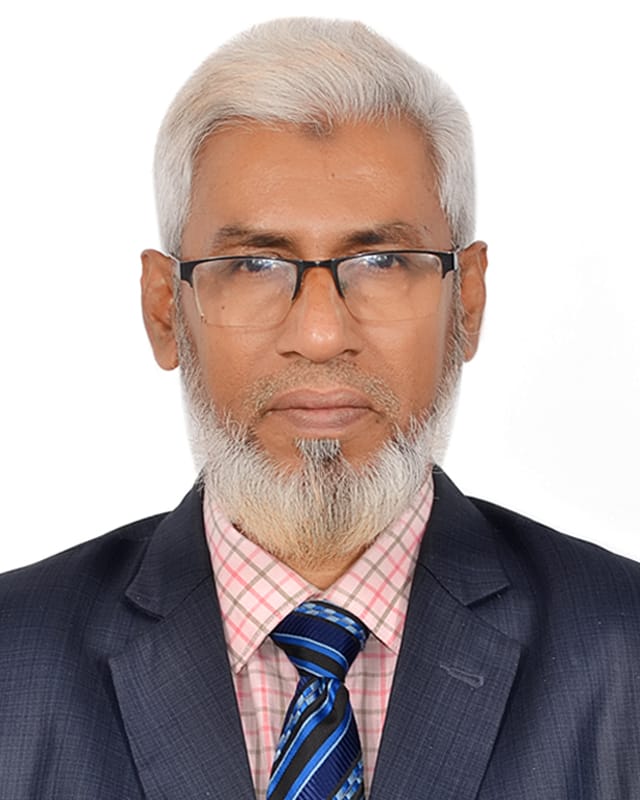
| Dr. Dewan Azad Rahman: The mass uprising that took place in Bangladesh in July and August 2024 was not merely confined to a sudden political shift or the demand for quota reform; it was a glorious anti-autocratic grand struggle in the history of independent Bangladesh. The unprecedented explosion of students and the general public against fifteen years of accumulated political oppression, suppression of freedom of speech, extreme corruption, economic anarchy, and the deprivation of civil rights will remain immortalized in the pages of global history as the `July Revolution`. Through this revolution came the downfall of a long-standing fascist regime, marking the historical beginning of building a new Bangladesh.
The force that broke the trajectory of this historic mass movement out of its conventional bounds overnight and spread it through every main artery of Dhaka was the students of Bangladesh’s private universities. Through fearlessly fighting on the streets, taking bullets to their chests, sacrificing themselves in the haze of teargas, shattering the regime`s propaganda in cyberspace, and building a wall of humanitarian aid, they proved that youth never lag behind when it comes to protecting the country`s sovereignty, democracy, and civil rights.
A discriminatory viewpoint had long been nurtured in Bangladeshi society. It was believed that private university students were predominantly children of upper or upper-middle-class families who remained busy with modern studies in air-conditioned classrooms, were comfortable in Western culture, and were largely detached from the country`s political and social crises.
However, the first major answer to this societal misconception came through the 2015 `No VAT on Education` movement. When private university students brought Dhaka`s streets to a standstill demanding the withdrawal of unfair taxes imposed on higher education, the people of the country realized their organized resistance capacity for the first time. Later, during the 2018 `Road Safety Movement`, students from various universities—including East West, BRAC, North South, and Daffodil—courageously took to the streets to demand traffic discipline and structural reforms of the state.
The July Revolution of 2024 was a wild, roaring blaze of that latent and conscious student spirit. In this movement, they demonstrated how a blueprint for a mass uprising could be created based purely on patriotism and a demand for justice, without any conventional political party affiliation or partisan servitude.
During the first two weeks of July 2024, the main epicenter of the movement was primarily public universities like Dhaka University, Jahangirnagar University, Rajshahi University, and Chittagong University. They had been conducting peaceful marches and road blockades demanding reform of quotas in government jobs. However, on July 15, the situation took a turn toward terrible violence. Unprecedented torture was unleashed upon general students of various public universities in a joint attack by armed cadre forces of the ruling party and state forces.
On July 16, Abu Sayed, a student at Begum Rokeya University in Rangpur, embraced martyrdom when he was shot point-blank by the police while standing with his arms outstretched and chest bare. This scene spread instantly across social media and international media outlets. The glorious martyrdom of Abu Sayed ignited a fierce wildfire of rage in the hearts of private university students.
From July 17 and 18, the scene on the streets changed radically. Capitalizing on the roaring slogan, "Why is my brother`s blood spilled? Administration must answer!", private universities across the capital erupted. Thousands of students from BRAC University, East West University, North South University, Independent University Bangladesh, American International University-Bangladesh, United International University, Daffodil International University, University of Asia Pacific, Stamford University, State University, Primeasia, BGMEA University, and private universities in Uttara, Dhanmondi, and Mirpur took to the streets. The artificial wall between public and private universities crumbled into dust in a single instant.
When the `Complete Shutdown` program was declared on July 18 as part of the Anti-Discrimination Student Movement, private university students took control of major transit points and highways across the capital city of Dhaka. Their strategic presence crippled Dhaka`s entire traffic system and emerged as a major blow to the autocratic regime.
The stretch from Rampura Bridge to Aftabnagar and Merul Badda became the bloodiest epicenter of the movement. Students of East West University and BRAC University took to the streets and blocked this entire road. Even in the face of thousands of tear shell canisters, sound grenades, and live ammunition, the students of East West and BRAC did not back down an inch. The Merul Badda campus of BRAC University virtually turned into a battleground and a field hospital, where first aid and emergency shelter were provided to shot and injured protesters.
At the Bashundhara Residential Area gate and Kuril Bishwa Road areas, students from North South, IUB, and AIUB erected an impenetrable barricade of resistance. When hundreds of armed police and ruling party cadres attempted to enter inside Bashundhara, the students courageously resisted them. The strong stance of these students on Pragati Sarani completely severed transit connections in the northeastern part of the capital.
The Uttara area truly turned into a war zone from July 18 to 21. Students from Daffodil International University, IUBAT, Shanto-Mariam University, and BGMEA University took positions at Uttara Housebuilding, BNS Center, and Azampur intersections. By completely blocking the Dhaka-Mymensingh highway, they brought the government`s transportation system to a halt. Even when teargas and bullets were fired from security force helicopters in Uttara, students clung to the streets, risking their lives.
In the Dhanmondi 27, Sobhanbag, and Science Lab areas, students from United International University, University of Asia Pacific, Stamford University, and State University occupied the streets. Standing before repeated gunfire coming from Peelkhana and surrounding areas, these students maintained their resistance.
The contribution of private university students in the July Revolution was not limited merely to slogans or occupying streets; it was drenched in the fountains of their fresh blood. Many brilliant students were martyred in this struggle to restore the democratic rights of the country. Their sagas of bravery will remain immortal in the pages of Bangladesh`s history.
Mir Mahfuzur Rahman Mugdho, who completed his Master’s in Mass Communication and Journalism from BUP, was pursuing an MBA at BRAC University. As a skilled freelancer, scout, and footballer, Mugdho was an exceptionally optimistic young man. On July 18, while police and BGB were firing live bullets and teargas at protesters in Uttara, Mugdho was distributing water bottles and biscuits among fellow fighters amid the smoke on the streets. His last words were—"Does anyone need water, water?" Just minutes later, a killer bullet struck his forehead, and he attained martyrdom. Mugdho’s sacrifice became one of the primary humanitarian symbols of the anti-autocracy movement worldwide.
Farhan Faiyaz, a 16-year-old first-year Computer Science student at Daffodil International University, was martyred by police gunfire in the Dhanmondi 27 area on July 18. When parents and ordinary citizens heard the news of this teenager`s fresh blood being shed, a fire of rage ignited in the hearts of tens of millions of people across the country.
Additionally, martyred Touhid Zaman Pranto (North South University), martyred Tahmid Abdullah (IUBAT), martyred Zakir Hossain, and many other private university students sacrificed their lives on the streets, laying the foundation for the fall of the autocratic regime.
A highly significant aspect of the participation of private university students was their maximum utilization of modern technology, social media, and international connections. Alongside the traditional street movement, they built a modern resistance against the regime in cyberspace:
• Private university students used Facebook, X (Twitter), Instagram, Reddit, and Discord to circulate hundreds of field-level videos and evidence, shattering the government`s false narratives.
When the government suddenly cut off internet access nationwide starting July 19, students from the Computer Science and IT departments used offline Bluetooth mesh networking apps, proxy servers, and Wi-Fi Direct technology to maintain the coordination of the movement.
Owing to their proficiency in the English language and familiarity with global networks, they were able to swiftly send video and factual evidence to international media outlets and organizations like Amnesty International and Human Rights Watch, which contributed significantly to generating international pressure.
Students from BRAC, North South, or East West fought shoulder to shoulder on the streets with rickshaw pullers, street hawkers, day laborers, and general pedestrians. When police fired rubber bullets and teargas, ordinary rickshaw pullers turned their rickshaws into ambulances to transport wounded students to hospitals. On the other hand, students bought medicine, bandages, and food out of their own pockets to distribute among the public. This unprecedented class unity gave the movement a universal character.
The organizational discipline of private university students during the July Uprising gained appreciation worldwide. During the movement, they did not operate solely on emotion; instead, they divided work by forming various sub-teams similar to a professional structure:
Converting university labs and corridors into emergency medical centers, students from the medical and pharmacy departments ensured care for the injured.
Law students formed legal aid panels to support arrested classmates and supplied blood to hospitals across the city.
On August 5, 2024—in the face of a surging ocean of students and citizens—the second independence of Bangladesh was achieved through the resignation and flight of autocrat Sheikh Hasina. However, even in the post-government fall situation when an extreme administrative vacuum was created due to the absence of law enforcement agencies, private university students set a unique example as responsible citizens.
For several consecutive days, braving intense sun and rain, students kept the city functional by performing the role of traffic police at every major intersection in Dhaka. To prevent any evil force from taking political advantage, these youths stayed awake at night guarding places of worship belonging to minority communities, including Hindus and Christians, as well as national assets.
Students filled the gloomy gray walls of Dhaka with color through strokes of paintbrushes. Wall murals painted with anti-autocratic slogans, memories of martyrs, and dreams of a new Bangladesh stand today as new cultural symbols of the nation.
The contribution of private university students in the July Revolution of 2024 is not merely the history of a street movement; it is an epic of reconstructing the self-identity of an entire generation. They forever shattered the devaluations and baseless walls built against them by society. They proved that when the existence of the motherland is in crisis, and when humanity and civil rights are trampled into the dust, the youth of private universities can sacrifice their lives to bring forth the sun of a new dawn.
The non-discriminatory, democratic, and self-respecting state reconstruction phase that Bangladesh has stepped into today found its auspicious beginning built upon the fresh blood of Mir Mahfuzur Rahman Mugdho and Farhan Faiyaz, alongside the indomitable courage of thousands of private university students. Their sacrifice and historic struggle will remain history as an eternal warning to any future autocracy.
Author: Researcher and Essayist
E-mail: azad2069@gmail.com
|