×
Home National Politics Business Bangladesh International Sports Entertainment Law & Justice More News Capital News Health Features Business Icon Technology Media Features Economy Education Literature Quran & Hadish Photo Gallery Editorial Religion Tours & Travels Tourism Guide Editors Corner Campus Youth Popular Organizations Country Wide Life Style Jobs Prism Notice History & Culture Messages Op-ed Wildlife Activities Foreign relation Accident Environment Asia Videoes Analysis Energy Book Reviews Literature Others KSA Arab World Cricket Football More Banking Corporate Global economy Real Estate Entrepreneur Start-up Telecom Summit Travel Art and Culture Food Book Fourth Estate View Letters to Editor Political Icon Diplomat Scholarship Career Job

Tuesday 8th of September 2026 E-paper
* সৌদিতে সড়ক দুর্ঘটনায় চার বাংলাদেশি নিহত   * বাঁধনের ওপর হামলায় জড়িতদের আমরা ছাড়বো না: জাহেদ উর রহমান   * রাষ্ট্রপতির সঙ্গে ভারতীয় হাইকমিশনারের সাক্ষাৎ   * কুমিল্লায় বাস খাদে পড়ে মেডিকেল কলেজের ২০ শিক্ষার্থী আহত   * বড়পুকুরিয়ার কয়লায় নতুন বিদ্যুৎকেন্দ্র নির্মাণের নির্দেশ প্রধানমন্ত্রীর   * ইতালিতে অভিনেত্রী বাঁধনকে হেনস্তার অভিযোগ   * PM seeks Japan’s special envoy’s role for Rohingya repatriation   * পাবনায় বিএনপি নেতাকে গুলি ও কুপিয়ে হত্যা   * অটোরিকশার জন্য আসছে কিউআর কোড-ডিজিটাল ট্র্যাকিং   * জ্বালানি সংকট বিগত সরকারের ভুল নীতি ও দুর্নীতির ফসল  
   Op-ed
  The Presidential Election and Article 70 of the Constitution: An Unbiased Theoretical Analysis

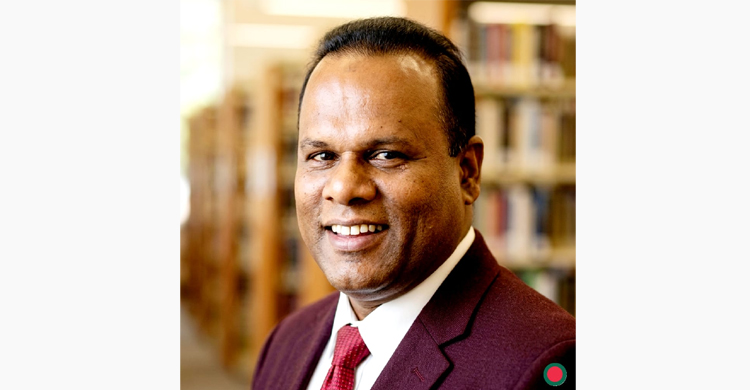
By Professor Dr. Asif Mizan Political, Human Rights, and Criminology Analyst; Vice-Chancellor, Daaru Salaam University (Somalia)

In a parliamentary democracy, the election of the Head of State—the President—is a vital constitutional and political process designed to balance executive power, ensure institutional accountability, and uphold legislative sovereignty. In Bangladesh’s contemporary political landscape, the upcoming presidential election has revived an enduring legal and theoretical debate.

At the eye of this storm lies Article 70 of the Constitution of the People’s Republic of Bangladesh, widely known in political parlance as the anti-floor-crossing law. The debate centers on a crucial question: If a Member of Parliament (MP) votes against their own party`s nominated candidate in a presidential election, do they automatically forfeit their parliamentary seat?

This query has split politicians, jurists, and constitutional experts into two distinct camps. On one side stands the strict warning and uncompromising stance on party discipline issued by the Chief Whip of the ruling party; on the other lies a strategically nuanced interpretation offered by several legal experts. Stripping away political bias and emotional rhetoric, a objective theoretical and legal analysis reveals the underlying mechanics of this constitutional dilemma.

Constitutional Framework: Presidential Election vs. Article 70

To grasp the depth of this debate, one must first examine the legal design and underlying philosophy of the relevant constitutional provisions. Under Article 48(1) of the Constitution, Bangladesh shall have a President who is elected by the members of Parliament in accordance with the law. This process is governed by the Presidential Election Act, 1991, alongside its corresponding rules.

Conversely, the mandate of Article 70 is clear, strict, and uncompromising. It stipulates:

"If a person elected as a member of Parliament at an election where he was nominated as a candidate by a political party resigns from that party, or votes in Parliament against that party, his seat shall become vacant."

In parliamentary parlance, "floor crossing" refers to voting or acting against one’s own party’s policy, decisions, or candidates within the legislature. Incorporated into the original 1972 Constitution, this provision was designed to safeguard government stability and curb opportunistic party-switching.

The Chief Whip’s Stance and Party Discipline

Ahead of the upcoming election, the ruling party`s Chief Whip asserted that Article 70 will be fully enforced during the presidential ballot. The political and legal reasoning behind this position carries significant weight.

The Chief Whip argues that Article 70 is a paramount provision that compels lawmakers to maintain party discipline. Because the text explicitly penalizes anyone who "votes in Parliament against that party," and because the presidential election takes place physically inside the parliament chamber, an MP cannot cast a ballot against their party`s official candidate. From this perspective, a presidential election is not an isolated event outside parliamentary jurisdiction; it is an intrinsic constitutional duty. Consequently, voting against a party-nominated candidate directly constitutes voting against the party in Parliament, resulting in the immediate vacation of the MP’s seat.

The Opposing View: Legal Caveats and Technicalities

Conversely, several constitutional lawyers and opposition figures present a different argument. They contend that a presidential election is qualitatively different from regular legislative functions, such as passing bills or approving the national budget. Their arguments rely on three primary points:

The Electoral College Theory: Opponents argue that during a presidential election, MPs do not act as traditional lawmakers, but rather as members of an "Electoral College." They view the vote not as a standard legislative proceeding, but as an extraordinary constitutional election administered inside the house by the Election Commission.

Jurisdiction of the CEC over the Speaker: In regular parliamentary sessions, the Speaker or Deputy Speaker presides over proceedings and maintains order. During a presidential election, however, the chamber functions as a temporary polling station presided over by the Chief Election Commissioner (CEC) acting as the Returning Officer. Thus, critics argue this setting does not constitute a routine parliamentary "sitting."

Protection of the Secret Ballot: Under the Presidential Election Act, voting is conducted via a secret ballot. Legal theorists argue that because the vote is strictly confidential, it is legally impossible to prove how an individual MP voted. Without verifiable proof of defiance, invoking Article 70 to disqualify a member becomes practically unenforceable.

Theoretical Analysis: Why Defiance Must Forfeit the Seat

Examining both arguments through the lens of political science, legal philosophy, and political criminology leads to a clear conclusion: voting against one’s own party in a presidential election theoretically and constitutionally amounts to floor crossing, rendering the loss of a parliamentary seat inevitable. This position rests on four foundational pillars:

1. The Literal and Comprehensive Meaning of "Voting in Parliament"

Article 70 explicitly uses the phrase "votes in Parliament against that party." Crucially, the text does not restrict this prohibition to "votes on bills, motions, or no-confidence votes." Any formal vote cast by an MP acting in their official capacity inside the parliamentary chamber falls under this umbrella. Because presidential balloting occurs in Parliament, voting against the party candidate violates the literal wording of Article 70.

2. Theory of Party Mandate and Representation

In modern parliamentary systems, candidates are elected largely on the basis of their party`s platform, symbol, and manifesto. An MP`s legislative identity is inextricably linked to their party`s collective mandate. When a party officially fields a candidate for the highest office in the state, its members are bound to support that decision. Defying the party line on such a critical vote represents a betrayal of the electoral mandate—what political criminology terms a "political breach of trust."

3. Legal and Moral Obligations of the Party Whip

Parliamentary systems rely on the Chief Whip to issue binding directives (whips) to party members. If a party issues a directive to support a specific presidential candidate, MPs are legally and morally obligated to comply. Relying on the anonymity of a secret ballot offers only temporary protection; if a party establishes reasonable grounds or political proof of sabotage, it can initiate internal disciplinary proceedings. Expulsion from the party fulfills the primary condition of Article 70 ("resigns from that party" or cessation of allegiance), thereby vacating the member`s seat.

4. Political Stability and Constitutional Philosophy

The overarching purpose of Article 70 is to prevent political horse-trading, floor-crossing opportunism, and instability within the legislature. Allowing MPs to vote freely against their own party in a high-stakes presidential election would undermine the foundations of parliamentary democracy—a outcome directly contrary to the framers` intent.

While the secret ballot mechanism creates practical hurdles for proving individual votes, the theoretical, philosophical, and constitutional reality remains clear: voting against one`s party candidate in a presidential election constitutes floor crossing. Under Bangladesh`s current constitutional framework, defying the party line in a presidential vote logically leads to the forfeiture of one`s parliamentary seat. In a parliamentary democracy, collective party discipline supersedes individual discretion on matters of state importance. The Chief Whip`s assertion is legally and theoretically sound: maintaining this constitutional rigor is essential for preserving legislative integrity and political stability.


Share Button


Strong Local Government: The Pillar and Driving Force of Development
.............................................................................................
Climate Change: The Silent Threat to Bangladesh’s Economy
.............................................................................................
A New Dawn for Bangladesh’s Energy Security
.............................................................................................
One Crore Jobs: Bangladesh’s Demographic Dividend Is Running Out of Time
.............................................................................................
A Glorious Chronicle: 65 Years of Government Laboratory High School
.............................................................................................
BNP’s Four Decades in Theoretical Light: History, Achievements, and the Dawn of a New Era
.............................................................................................
Nepal’s Vulnerability: The Anguish of a Bangladeshi Vice-Chancellor in Somalia
.............................................................................................
The Golden Fiber at a Crossroads: Temporary Export Gains or Sustainable Economic Transformation?
.............................................................................................
Two Generations, one Baul Soul: A Father and Son`s journey through Music
.............................................................................................
Rebuilding the Economy: What the Government’s First 180 Days Really Mean
.............................................................................................
The Presidential Election and Article 70 of the Constitution: An Unbiased Theoretical Analysis
.............................................................................................
The Silent Thief
.............................................................................................
Children`s right to Childhood
.............................................................................................
Can Ending the Unregulated Sale of Tobacco on Watercraft Ensure Tobacco-Free Water Transport?
.............................................................................................
Begom Khaleda Zia, the Beacon of Democracy: A Birthday Tribute
.............................................................................................
Shifting Politics and the Equations of Power
.............................................................................................
A Handful of Dreams, A Generation of Struggles: A Half-Century Journey of the Bangladeshi Community in Australia
.............................................................................................
Convicted Fugitive on a Political Stage: Delhi’s Mindset and Dhaka’s Indignation
.............................................................................................
Beyond Borrowing: Why Bangladesh Must Build Its Economy on Domestic Revenue
.............................................................................................
The Political Economy of Banking: Cronyism, Capture, and the Cost of Reform
.............................................................................................
Seven Years After Article 370: Modi`s Kashmir Gamble Came at the Cost of Democracy
.............................................................................................
The Architecture of Ownership: Why Protecting Intellectual Property is Bangladesh’s Next Great Frontier
.............................................................................................
The Strait of Hormuz Crisis: The Limits of Military Power, the Imperative of Diplomacy, and the Emerging Global Order
.............................................................................................
Jammu & Kashmir and Abrogation of 370, 35A
.............................................................................................
Anwar Ibrahim’s diplomatic initiative: A new window of opportunity for resolving Rohingya Crisis
.............................................................................................
The historic role of Private University Students in the July Revolution
.............................................................................................
July Warriors: The spirit of revolution and road to a new Bangladesh
.............................................................................................
The Global Energy Landscape Is Transforming Through the Expansion of Clean Energy
.............................................................................................
“Independent Balochistan”: a Facebook fantasy made in India
.............................................................................................
Navigating the Forex Crisis: Devaluation, Import Pressures, and Bangladesh’s Path to Structural Recovery
.............................................................................................
Irregular Weather Patterns Increase Uncertainty in Rice Production
.............................................................................................
Flash Floods Intensify the Crisis of Climate-Displaced Communities
.............................................................................................
Bangladesh ICT: Rich talent, weak institutional mechanism
.............................................................................................
Kashmir’s July 13: Memory, Justice, and the Search for Peace
.............................................................................................
FIFA`s Stained Legacy: How Will It Erase the Shame of 2026?
.............................................................................................
Impossible Peace with the US and the only Option for Iran
.............................................................................................
Political Activism and Muslims’ Failures
.............................................................................................
Money Laundering in Islamic Banks: Is It Time to Rethink the Role of Shariah Boards?
.............................................................................................
Standing Beside People Affected by Natural Disasters Is Our Collective Moral Responsibility
.............................................................................................
Political Activism and the Failures of the Muslims
.............................................................................................
Delayed Settlement of Import Payments Could Damage Bangladesh’s Reputation in the Global Market
.............................................................................................
Bangladesh’s Economic Growth is Promising: Proactive Preparedness is Essential to Manage Future Risks
.............................................................................................
Arabic Language Practice in Bangladesh: A Gateway to New Global Opportunities
.............................................................................................
When a Vision Shapes a City: Leadership, Public Service, and the Future of Patuakhali
.............................................................................................
Bangladesh’s Mango: Exceptional in Taste and Aroma, Yet Lagging Behind in the Global Market
.............................................................................................
Palashi Day in National Consciousness: A Historical Warning
.............................................................................................
US–Iran Agreement: Prospects for Peace in the Middle East
.............................................................................................
Parliamentary Politics and Historical Inconsistencies: The Conflict Between Ideological Narratives and Biological Reality
.............................................................................................
A Good Budget Must Be Matched by Effective Implementation
.............................................................................................
The Unlimited Accumulation of Wealth by a Few Leads to the Poverty of Many
.............................................................................................
Chief Advisor: Md. Tajul Islam,
Editor & Publisher Fatima Islam Tania and Printed from Bismillah Printing Press, 219, Fakirapul, Dhaka-1000
Editorial Office: 219, Fakirapul (1st Floor), Dhaka-1000.
Phone: 02-41070996, Mobile: 01720090514, E-mail: muslimtimes19@gmail.com
2022 @ All Right Reserved By www.themuslimtimes-bd.com