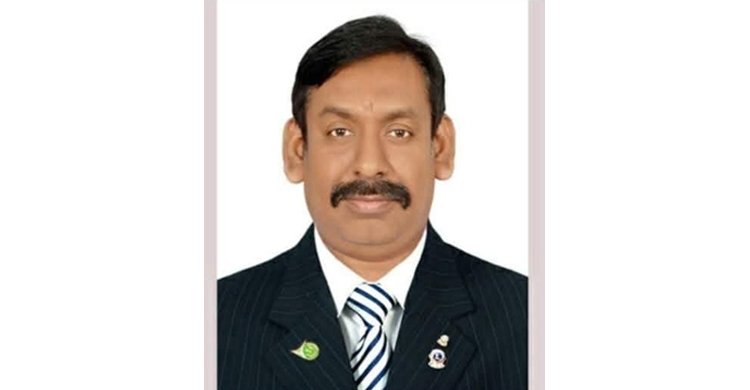
| Lion Md. Gani Miah Babul
Food is a basic human right. In the context of Bangladesh, while on one hand, countless families are struggling to manage the cost of daily food essentials, on the other hand, a massive amount of food is being wasted in various ways. There is no longer any scope to view this contradiction merely as a lack of social awareness. Food waste is now a national problem directly linked to the economy, agriculture, public health, environment, and national food security.
According to the World Food Programme (WFP), a large number of people in Bangladesh face food insecurity, and children are also at risk of malnutrition. Inflation, disasters, economic pressure, and a shortage of humanitarian aid are placing additional stress on food security. In this reality, if a portion of the produced food is ruined due to unplanned storage, a weak supply chain, or unnecessary consumption, it cannot be brushed off as personal waste. It is a waste of national resources.
The global picture is equally alarming. According to the United Nations Environment Programme`s (UNEP) Food Waste Index Report 2024, approximately 1.05 billion tonnes of food were wasted globally in 2022. Around 19 percent of the food available to consumers was wasted at the household, food service, and retail levels. Of this, 631 million tonnes were wasted at the household level, 290 million tonnes in the food service sector, and nearly 120 million tonnes at the retail level. Beyond this, food is also lost at various stages of the supply chain.
This reality confronts us with a crucial question: Is it enough to count only how much food we produce? Or should the accounting of how much of the produced food ultimately reaches people`s dining tables also be part of the national food policy?
The distinction between food loss and food waste is important here. The destruction of food after harvesting during storage, transportation, and marketing is part of food loss. On the other hand, discarding edible food in households, shops, hotels, restaurants, or events constitutes food waste. Although the causes differ, the result is the same: the country`s food resources diminish, and a portion of the land, water, labor, fertilizer, fuel, transport, and money used to produce that food becomes ineffective.
In Bangladesh, a major portion of the problem originates right from the farmers` fields. Agricultural produce spoils due to lack of adequate post-harvest storage facilities, transportation crises, oversupply in markets, or failure to get a fair price. The farmer suffers financial losses, yet urban consumers are forced to buy the same produce at higher prices. That is, under the same system, the farmer loses, the consumer pays a higher price, and the country`s food resources are destroyed. Therefore, alongside increasing production, protecting the produce is an essential part of food security.
Food waste is also glaringly visible at weddings, social events, buffets, hotels, restaurants, and various gatherings. Preparing more food than necessary, overfilling plates, and later throwing it away has become a habit in many cases. Yet, taking food according to need and taking a second helping if required is a very simple solution. The dignity of hospitality lies not in the quantity of food, but in care and hospitality.
However, alongside civic awareness, institutional accountability is also essential. It is possible to keep track of how much food is being prepared, served, and left unused in major hotels, restaurants, catering services, hospitals, educational institutions, and large event management outfits. Government institutions should also maintain records of food consumption. Food purchased with public money is ultimately a public asset.
What is most urgent now is to transform food waste into a measurable national indicator. Because the loss we do not measure cannot be effectively planned for reduction. A national food waste database could be developed in Bangladesh. By involving the Bangladesh Bureau of Statistics, the Ministry of Food and Agriculture, local government bodies, universities, and research institutions, it is necessary to determine every year how much food is being lost at which stage and what the underlying causes are. This system could be initiated in major cities first and later expanded to district and upazila levels.
Along with this, a National Food Waste Index could be introduced. This would measure loss and waste across production, storage, transportation, marketing, retail, food service, and household levels. A new question for food policy would then emerge: Alongside how much food we produced, how much food were we able to save?
The government should set a measurable target for food waste reduction by 2030, based on its own reality and a reliable baseline year. The United Nations Sustainable Development Goal (SDG) 12.3 has also set a global target to halve food waste by 2030. Bangladesh can adopt its own action plan aligned with this international commitment.
Merely setting goals will not suffice. A National Food Waste Report must be published annually. It should detail how much food was wasted, which stage experienced the highest loss, how much it decreased compared to the previous year, and what portion of safe surplus food was redistributed. As a result, food waste will no longer remain a matter of speculative discussion; it will turn into a measurable indicator of state accountability.
Government institutions must also be brought under this framework. Food consumption and waste could be tracked in hospitals, universities, residential facilities, prisons, training programs, and major state functions. If excess food is prepared anywhere, the reasons should be documented alongside a record of how safe, unused food was managed. This is not a bureaucratic burden; it is part of ensuring the proper utilization of public funds.
At the same time, to minimize the causes of food loss from farmers` fields, rural and upazila-level storage, cold storage, modern packaging, rapid transit, and better market connectivity must be expanded. We must not stop at simply burdening the farmer with the responsibility of production; ensuring that the produced yield reaches the market safely and commands a fair price is an integral part of food security.
A national framework is also needed for redistributing safe surplus food. Unused, safe food from large hotels, restaurants, catering businesses, and events can be delivered to food-insecure people following proper hygiene protocols. Local administration, city corporations, social organizations, and private entities can participate in this process. However, a strict boundary between safe surplus food and spoiled food must be maintained. Distributing unsafe food is no solution.
The moral foundation for preventing food waste already exists within our society. The Holy Quran states: "Eat and drink, but do not waste." This teaching calls for restraint and responsibility. Awareness against food waste can be raised through mosques, madrasas, educational institutions, social organizations, and the media. However, alongside awareness, effective state policy and institutional accountability are essential.
Public health is also deeply connected to food security. Chronic food shortages and malnutrition can weaken human immunity. On the other hand, unsafe food itself poses a risk to public health. Therefore, in the redistribution of surplus food, food safety and hygiene must be given the highest priority. Similarly, during floods, cyclones, droughts, or market supply crunches, regular evaluations are needed regarding how many days of emergency demand the national food reserve can meet.
Most importantly, food waste must be viewed as a waste of national assets. The government provides subsidies for agricultural production, farmers invest labor and money, irrigation consumes water and electricity, transportation incurs fuel costs, and infrastructure is used for marketing food. If that food is ruined at any stage of the system, it is not just the food, but a portion of all these resources that goes to waste. Thus, the new philosophy of food security could be: how much was produced, how much was saved, and how much reached the people in times of need.
Now, answers to a few questions are required from the government: How much total food is being wasted in the country every year? Which stage suffers the most loss? Which agricultural produce is spoiled the most? How is food waste tracked in government institutions? Where is the framework for safe surplus food redistribution? What is the target for 2030, and how much progress is being made each year?
The public has a right to know the answers to these questions. Because food is not merely a matter of individual consumption; it involves farmers` labor, state infrastructure, natural resources, fuel, transportation, and people`s hard-earned money. Reducing food waste makes it possible to protect the value of farmers` output, increase market efficiency, strengthen food security, and reduce pressure on the environment. Thus, this is not a luxury program; it is a initiative to safeguard national assets.
The food we carelessly waste today might be the very food a family has to go without tomorrow. The agricultural produce we lose today due to lack of storage might be the very commodity we have to buy at a higher price tomorrow. And the safe food that goes into the trash bin today could have been a meal for a hungry person. Therefore, food waste can no longer be accepted as a normal social sight.
Where the reality of hunger still persists, food waste cannot be a normal occurrence.
Food is for human consumption, not for the dustbin. Behind a handful of rice is the sweat of a farmer. Behind a kilogram of vegetables is the labor of a farmer. Behind a plate of food lies land, water, fuel, transportation, money, and human effort. Preserving the dignity of that food is not merely an individual`s responsibility; it is the collective duty of the state, institutions, and society.
The time has arrived to combine the accounting of production with the accounting of waste, to bring every stage of food under accountability, and to build a Bangladesh where food after production reaches human needs—not the dustbin. Every grain of food is not just sustenance; it represents the farmer`s labor, the country`s wealth, human rights, and the security of future generations.
Preventing food waste is not merely a matter of economic savings; it is a humanitarian, social, religious, and environmental responsibility. It is deeply tragic that while a massive population suffers from hunger and malnutrition globally, huge amounts of food are wasted every day. Therefore, proper usage, mindful purchasing, correct storage, and distribution of surplus food among the poor and helpless must be ensured. Families, educational institutions, businesses, concerned stakeholders, and the state must work together cohesively to prevent food waste. Through raising public awareness and enforcing effective laws, food waste can be significantly reduced. Only a collective effort can prevent food waste and build a hunger-free, prosperous society. Thus, effective steps are imperative to prevent food waste.
Author`s Profile
Lion Md. Gani Miah Babul
(Teacher, Poet, Columnist, Social Worker & Organizer)
Founder President, Bangladesh Government Secondary Teachers` Association (Agriculture) Central Committee
Joint Secretary General, Nirapad Sarak Chai (NISCHA) Central Committee
Phone: 01552631118, 01842631118
Email: lionganibabul@gmail.com
|