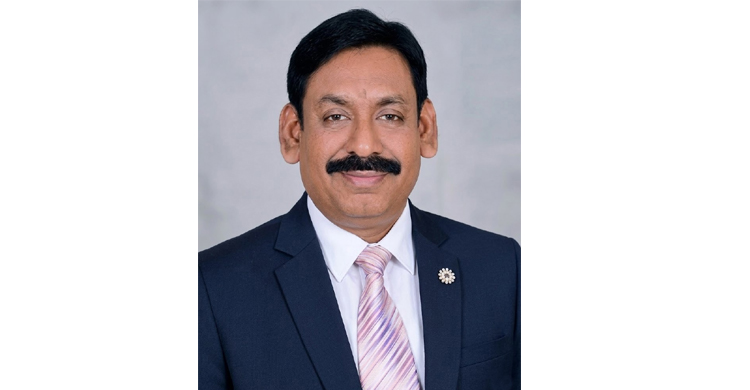
| Lion Md. Gani Miah Babul : Education is a human right, the foundation of social progress and one of the principal means of shaping a country’s future. Its purpose is not merely to achieve high marks or obtain certificates; education enables people to acquire knowledge, skills, judgment and values. But when access to a good education begins to depend on a family’s financial means, the right to education gradually turns into a commodity. In Bangladesh, school fees, coaching, private tutoring, guidebooks, notes, model tests and other costs are placing pressure on many families. Preventing the commercialisation of education is therefore not only a matter of reforming the education sector; it is also essential to protect human values, equal rights and fairness.
Commercialisation does not mean that every private educational institution, or every educational service provided for a fee, is a problem. Institutions have operating costs, and private institutions can also contribute to education. The problem arises when increasing revenue takes priority over students’ learning, when fees and services are not transparent, or when students must repeatedly pay for support beyond regular classes to learn effectively. If a family pays school fees and still has to spend large sums on coaching, tutoring, notes and model tests, it is reasonable to ask whether the education provided at school meets students’ needs.
Research on the cost of education for families presents a concerning picture. According to CAMPE’s Education Watch 2023 report, the average annual family expenditure for a primary school student in 2022 was Tk 13,882. Of this, the average cost of private tutoring and coaching was Tk 7,868. The study also reported that, in the first six months of 2023, education costs had risen by 25 per cent at the primary level and 51 per cent at the secondary level compared with the corresponding period. These are findings from a survey conducted during a specific period, not a calculation of what every family spends today. However, they show that out-of-school study costs can make up a substantial share of a family’s total education expenses.
Coaching and private tutoring are not always unnecessary. Additional support can help a student who is struggling with a subject. But when students cannot understand their lessons in the classroom and coaching become almost essential for good results, that points to a weakness in the education system. Affluent families can afford several tutors or coaching programmes; poorer families cannot. Students in the same class therefore do not have equal opportunities to prepare. Success in education begins to depend not only on merit and hard work, but also on a family’s financial circumstances.
This commercial pressure is linked to an excessive focus on examinations. When marks become the main measure of success, students spend more time memorising exam questions likely than understanding a subject or applying what they have learned. Guidebooks, suggestions and model tests can then become the main means of getting through examinations instead of supplementary resources. Coaching centres may exploit this anxiety through claims such as “guaranteed results” or “special preparation.” For students and parents, education can begin to feel less like a process of learning and more like a competition to buy better results. To address this trend, examinations should assess understanding, analysis and problem-solving skills rather than the repetition of memorised information.
The commercialisation of education is not limited to coaching. If the reasons for charges related to admission and readmission, development, examinations, identity cards, transport, activities or other items are unclear, families cannot tell what they are paying for. Institutions naturally have operating expenses, but they should disclose fees and services in advance and explain the justification for additional charges. Similarly, if there are allegations that students are being pressured to pay separately for tutoring, those allegations should be investigated impartially and supported by evidence. Most teachers work with dedication, so it would be wrong to blame everyone without proof. However, if weak classroom instruction creates dependence on paid tutoring, there is a risk of a conflict of interest. Institutions need clear policies and a safe system for reporting complaints.
A 2024 UNICEF report stated that, after completing primary education, around half of children in Bangladesh cannot read a text appropriate for their grade, while roughly two-thirds struggle with basic numeracy. This shows that enrolling in school or progressing through grades does not necessarily mean that students have achieved the expected learning outcomes. When classroom learning falls short, families arrange coaching or private tutoring on their own, adding to their expenses. A fundamental way to reduce commercial pressure is therefore to improve the quality of education within schools, so that students do not have to pay extra to acquire essential knowledge.
The effects of education costs are not the same for everyone. Schools in urban and rural areas differ in their access to teachers, libraries, science laboratories, technology and supplementary learning. Affluent families can make up for shortcomings at school by paying for coaching, tutoring and learning materials, but low-income families often cannot. This can deepen existing inequalities in educational opportunity. UNICEF’s 2025 Multiple Indicator Cluster Survey reported adjusted attendance rates of 85 per cent at the primary level, 60.1 per cent at lower secondary and 50.8 per cent at upper secondary. These figures measure attendance, not learning quality directly. They do, however, point to the challenge of keeping students in education as they progress to higher levels. The financial burden may make it even harder for disadvantaged students to continue their studies.
The first step in addressing the problem should be transparency in fees and additional charges. Every institution should publish a list of fees for admission, monthly tuition, examinations, transport and other items. Parents should be informed of the reason and amount before any new charge is introduced. There should be an accessible and safe way to submit complaints, along with a defined timeframe for resolving them. Allegations of irregularities should be investigated impartially, with audits where necessary. If an allegation is substantiated, action should be taken in accordance with the rules. Weak regulations or inadequate oversight that made the irregularity possible should also be corrected.
Classroom teaching must be strengthened so that students can understand their core lessons at school. This requires transparent, merit-based teacher recruitment, subject-specific training, appropriate learning materials and a respectful working environment. Teacher shortages and overcrowded classrooms make it difficult to provide individual support to students who are falling behind. Schools could regularly assess reading, writing and numeracy skills and provide additional support on campus. Simply banning coaching will not solve the problem: if classroom instruction remains inadequate, demand for coaching will persist. Creating an effective alternative is the lasting solution.
Low-income and disadvantaged students need targeted support, including stipends, books and learning materials, free supplementary lessons and appropriate facilities for students with disabilities. Alongside increased public funding, the government should disclose how that funding is used. The Centre for Policy Dialogue’s budget analysis states that education received approximately 1.53 per cent of GDP in the 2025–26 fiscal year. CPD’s budget analysis Increasing the allocation matters, but the results must also be measured: Are students learning more? Are teacher shortages declining? Is support reaching the students who need it most?
There have also been proposals to reduce reliance on coaching and private tutoring. News reports in 2026 said that a draft education law proposed phasing out private tutoring and guidebooks over time. However, this remains a draft proposal, not a final law or an implemented policy. Report on the draft education law CPD has also published an analysis of the 2026–27 budget. According to its figures, the education allocation for that fiscal year is Tk 122,495 crore, equivalent to 13.06 per cent of the national budget and 1.79 per cent of GDP. CPD says this is 28 per cent higher than the previous year’s proposed allocation. Improvements in education will succeed only if schools provide quality teaching, supplementary support and fair assessment. Banning coaching without providing alternatives could simply shift the burden onto students and their families.
The commercialisation of education cannot be prevented through a single measure. The government must implement policies on fee regulation, oversight, transparency and accountability. Institutions must disclose the quality of their services and how fees are used. Teachers need an environment that enables them to prioritise classroom learning. Parents, too, should focus on students’ understanding and intellectual development instead of placing unreasonable pressure on them for marks. Students’ views must be heard, because they can explain directly which costs are becoming barriers and where they are struggling to learn. Each reform is more likely to produce results when it specifies the responsible authority, a timeframe and a way to measure progress.
Education may involve paid services, but access to quality education must not become a privilege reserved for those who can afford it. If students cannot learn effectively without coaching, tutoring, guidebooks and unclear additional fees, the right to education becomes unequal. Education must not be allowed to become a market that tests a family’s ability to pay. Transparent fees, quality classroom instruction, support for disadvantaged students, impartial investigations and effective accountability can reduce commercial pressures. The central purpose of education must be students’ learning and intellectual development. Establishing that principle in practice is why effective measures are urgently needed to prevent the commercialisation of education.
About the Author:
Lion Md. Gani Miah Babul
Teacher, poet, columnist, social worker and organiser
Founding President, Bangladesh Government Secondary Teachers Association (Agriculture), Central Committee
Joint Secretary-General, Nirapad Sarak Chai (NISCHA), Central Committee
Phone: 01552631118, 01842631118
Email: lionganibabul@gmail.com
|