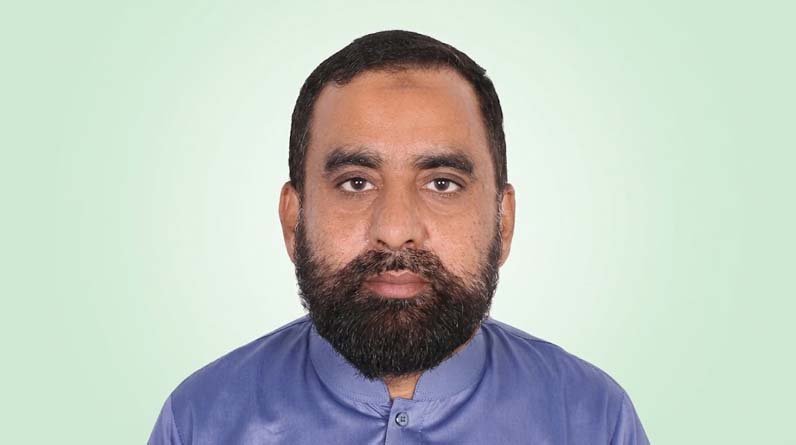
| Md. Mukhlesur Rahman: Changes in the international order are a recurring feature of history. Nations rise and decline, economic power shifts, alliances evolve, and new centers of influence emerge. Such transformations rarely result from a single event. They are usually the cumulative outcome of changes in economic strength, military capabilities, technological competition, trade routes, investment patterns, and diplomatic alignments.
The world today appears to be entering another such period of transformation.
From Unipolarity to a More Complex World
The international order that emerged after the Second World War was shaped to a considerable extent by American leadership. Following the collapse of the Soviet Union, US influence expanded further, producing what many analysts described as a predominantly unipolar international system.
The United States acquired extraordinary influence across the global economy, international finance, military alliances, advanced technology, and major international institutions. Yet the geopolitical landscape of the twenty-first century is becoming increasingly complex.
China’s remarkable economic rise, India’s growing economic and diplomatic weight, Russia’s military and energy influence, Europe’s strategic reassessment, and the increasing activism of countries across the Global South are all contributing to a redistribution of global power.
Some observers describe this as the decline of the unipolar order. Others argue that the world has not yet become genuinely multipolar and that the central strategic rivalry remains that between Washington and Beijing.
The reality may lie somewhere between these interpretations.
The world is becoming more plural in terms of power centers, but that does not mean competition among major powers is disappearing. In fact, competition itself is becoming one of the defining features of the emerging order.
Economics: The Principal Driver of Change
Economic power remains at the heart of this transformation.
China has become one of the world’s largest manufacturing and trading powers, playing a central role in global supply chains. Its influence has expanded beyond manufacturing into infrastructure, technology, investment, logistics, and international trade.
India, meanwhile, is strengthening its global position through rapid economic growth, a vast population, technological capabilities, and increasingly active diplomacy.
The European Union remains a major economic and trading bloc, although the changing security environment has compelled Europe to reassess its strategic and defense priorities.
Russia, despite significant economic constraints, continues to exercise considerable geopolitical influence through its military capabilities, energy resources, and strategic position.
At the same time, developing countries are increasingly seeking greater room for maneuver. Rather than relying excessively on a single major power, many are attempting to diversify their trade, investment, technology, energy, and diplomatic relationships.
This diversification may prove to be one of the defining characteristics of the emerging global order.
BRICS and the Global South
The expansion of BRICS is an important element of this changing landscape.
Originally comprising Brazil, Russia, India, China, and later South Africa, BRICS expanded in 2024 to include Egypt, Ethiopia, Iran, Saudi Arabia, and the United Arab Emirates. Indonesia formally became a full member in January 2025. (BRICS)
BRICS should not, however, be viewed simply as an immediate replacement for the Western-led international system. Its members have significant differences in their political interests, economic structures, foreign policies, and strategic priorities.
Its importance lies elsewhere.
The grouping provides an additional platform through which major countries of the Global South can coordinate positions on global governance, economic cooperation, development, and international institutions. BRICS itself describes its role as a political and diplomatic coordination mechanism rather than a conventional military or treaty-based alliance. (BRICS)
Its expansion therefore represents less a finished alternative international order than an indication of the broader redistribution of global economic and diplomatic influence.
Military Power Is Also Being Reconfigured
The transformation is equally visible in the military sphere.
Military competition is no longer confined to conventional forces. Missiles, drones, cyber capabilities, artificial intelligence, space technology, naval power, satellite systems, and control of strategic maritime routes are becoming increasingly important components of national power.
This means that the balance of power can no longer be measured simply by troop numbers or conventional weapons.
Yet the expansion of military capabilities does not necessarily produce greater security.
It can also increase mutual suspicion, accelerate arms competition, and raise the risk of miscalculation. In a world of several competing centers of power, a local conflict can potentially acquire wider geopolitical implications.
For smaller and medium-sized countries, this is particularly important. They may have little influence over great-power competition, but they can still experience its economic, security, and diplomatic consequences.
The United States Is Not Disappearing
Any serious assessment of the changing world order must avoid another form of oversimplification: the assumption that the United States is simply losing its global position.
The United States remains a leading economic, military, technological, financial, and diplomatic power. The international role of the US dollar, American financial institutions, military alliances, technological companies, universities, and global diplomatic networks continues to give Washington considerable influence.
The more important change is therefore not the disappearance of American power, but the changing environment in which that power operates.
Many countries that once depended heavily on a single strategic relationship are now pursuing multiple partnerships simultaneously—with the United States, China, Europe, India, Russia, Japan, the Gulf states, and others.
This is not necessarily a rejection of American leadership.
It is a movement away from excessive dependence on any single center of power.
Multipolarity: Opportunity and Risk
A more multipolar international system could create opportunities.
If no single power can dominate every major issue, the interests of more countries and regions may receive greater consideration. Long-standing debates about reforming the United Nations, improving representation in international financial institutions, expanding development finance, and making international trade more equitable could gain renewed importance.
But multipolarity should not be romanticized.
A world with several powerful states is not automatically a more peaceful or just world. If major powers compete for influence by turning smaller countries into strategic arenas, weaker states may face new forms of pressure.
The replacement of one dominant power by several competing powers does not, by itself, guarantee greater justice.
The critical issue is therefore not simply how many centers of power exist, but how power is exercised and constrained.
International law, sovereign equality, diplomatic dialogue, and effective multilateral institutions must remain central to the emerging order.
What Does This Mean for Bangladesh?
For Bangladesh and other developing countries, the changing international environment presents both opportunities and risks.
Competition among major powers can create new possibilities for trade, investment, infrastructure, technology transfer, energy cooperation, and access to new markets.
But it can also create difficult choices.
Excessive dependence on any one major power—whether economically, technologically, financially, or strategically—can reduce a country’s room for diplomatic maneuver.
Bangladesh therefore needs a foreign policy based primarily on national interests rather than geopolitical alignment.
Its relationships with major powers should not be defined by choosing one side against another. They should be guided by the country’s economic development, national security, employment, export interests, technological advancement, energy security, and sovereignty.
In practical terms, Bangladesh should seek constructive relations with all major powers while avoiding unnecessary dependence on any single one.
National Strength Is the Foundation of Diplomatic Independence
Foreign policy cannot remain independent if the domestic economy is structurally weak.
A country’s diplomatic leverage ultimately depends on its internal capabilities.
For Bangladesh, strengthening productive capacity, diversifying exports, improving human capital, developing technological skills, ensuring energy security, attracting productive investment, and strengthening institutions will be more important than merely aligning with one geopolitical bloc or another.
Good governance is equally important.
A country with strong institutions, predictable laws, economic stability, skilled human resources, and a competitive productive sector has greater freedom to pursue an independent foreign policy.
In other words, economic resilience is a foundation of strategic autonomy.
A New Balance—But What Kind?
The world appears to be moving away from an era in which one power enjoyed an exceptionally dominant position toward a more complex distribution of influence.
But the ultimate character of this new order remains uncertain.
It could develop into a more balanced international system in which different powers cooperate, compete, and negotiate within a framework of international law.
Or it could become an arena of intensified rivalry in which smaller countries are pressured to choose sides.
The outcome will depend not only on the behavior of major powers but also on the ability of international institutions to adapt and on the collective diplomatic strength of smaller and medium-sized states.
The emerging world order should therefore not be judged simply by whether it is unipolar or multipolar.
The more important question is whether it will be rules-based, peaceful, inclusive, and respectful of sovereign equality.
The transition from predominantly unipolarity toward a world with multiple centers of power is undoubtedly an important historical development. But the success of that transition should not be measured by the number of powerful countries.
It should be measured by something more fundamental:
Does the new balance of power create a world in which justice is stronger, peace is more secure, sovereignty is respected, and human dignity is protected?
That is the real test of the emerging international order.
Md. Mukhlesur Rahman
Economist, International Political Analyst and Human Rights Activist
|