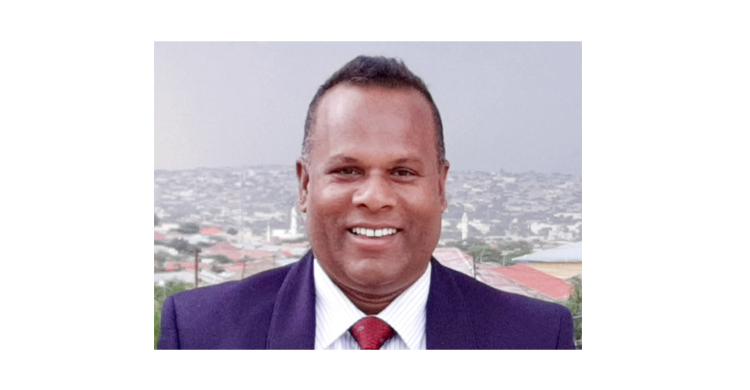
| By Prof. Dr. Sheikh Asif S. Mizan
Vice-Chancellor, Daaru Salaam University, Somalia; Specialist in Criminology, Governance, and Human Rights.
In a democratic state, protesting against injustice, irregularities, or corruption is a recognized right of every citizen. However, the right to protest can never serve as a license to humiliate, threaten physical assault, issue decrees to forcefully oust someone, or hurl abusive language. The emerging trend of aggressive, derogatory, and intimidating behavior targeting administrative officials and public servants under the guise of "protesting irregularities" is a matter of profound concern for democratic culture, administrative discipline, and the rule of law alike.
Should a state official engage in misconduct, mechanisms for accountability must exist—and they must operate swiftly, impartially, and transparently. However, resorting to public intimidation, character assassination, and mob pressure instead of seeking institutional redress is not the path to justice; it establishes a climate of fear as a substitute for adjudication. Attempting to legitimize such conduct by labeling it as "public outrage," "a demand for justice," or an "anti-corruption protest" is merely granting political and social cover to unlawful extremism.
The Boundaries Between Protest and Mob Behavior
A protest is an organized, peaceful, evidence-based, and accountable civic stance. Mob behavior, on the other hand, relies on agitation, fear, humiliation, implied force, and collective pressure to coerce an individual or institution into submission. These two concepts cannot be conflated.
When a senior government official is publicly threatened with forceful removal or subjected to abusive language, a form of public trial takes place long before the veracity of the allegations can be verified. The complainant, the onlookers, and the agitated crowd simultaneously assume the role of judge and jury. This directly contradicts the rule of law and poses a severe threat to civic security.
The core premise of A.V. Dicey’s theory on the Rule of Law is that the law, not the individual, is supreme—and that the same legal framework applies to all. If an official commits an offense, they must be held accountable. However, determining guilt and dispensing punishment is the responsibility of the state’s constitutional and legal institutions, not an unruly crowd. Bypassing the law to inflict extrajudicial retribution eventually risks turning even innocent individuals into targets of mob fury.
Legal and Ethical Crises
Threats, harassment, forced resignations, or public abuse cannot be considered normal civic behavior in any civilized society. Where allegations of wrongdoing exist, established mechanisms—such as formal complaints, departmental inquiries, administrative tribunals, courts, anti-corruption commissions, human rights bodies, the right to information, and the media—are available to enforce accountability.
When individuals take the law into their own hands, the primary casualty is the judicial authority of the state. Second, honest and dedicated officers are forced to operate in an environment of fear and uncertainty. Third, actual perpetrators of corruption often exploit mob dynamics to create spectacles that derail genuine investigations.
The more acceptable vulgarity becomes in public discourse, the more aggressive political and social language will grow. Today an official is humiliated; tomorrow a teacher, journalist, physician, judge, or ordinary citizen could fall victim to the same mob logic. Therefore, this is not merely a question of administrative security—it touches upon the dignity and safety of every citizen.
The Erosion of the Social Contract
Jean-Jacques Rousseau’s Social Contract theory reminds us that civic liberties are inextricably linked with civic duties. In a civilized society, citizens express grievances, demand rights, and hold rulers accountable—but they do so without infringing upon the rights, dignity, and security of others.
Using vulgar language, personal attacks, and threats of force under the banner of protest fosters moral decay within society. When society or political leadership glorifies such behavior as "courage," "heroism," or "people’s justice," it sends a flawed message to the youth. They learn that power stems not from reason, law, or evidence, but from loudness, fear, and mob dynamics.
Over time, this culture weakens public trust in state institutions. A breakdown of institutions does not diminish corruption; rather, it empowers personal influence, factional muscle, and politics driven by intimidation.
The Psychology of Aggression
Beyond political motives, several psychological and sociological factors underpin this phenomenon:
Frustration-Aggression Theory: Prolonged deprivation of services, experiences of corruption, or administrative red tape generate deep-seated frustration among citizens. In the absence of swift and credible remedies, this frustration frequently manifests as aggression.
Deindividuation: Within a crowd, individual identity dissolves. An individual who would hesitate to use abusive language or issue threats on their own easily does so under the cover of collective frenzy, as personal responsibility diminishes and group excitement overpowers individual judgment.
Moral Justification: Individuals often attempt to evade moral responsibility by framing their aggressive behavior as a "noble struggle for justice." As Leon Festinger’s concept of Cognitive Dissonance suggests, people construct such rationalizations to align their actions with their internal moral self-image.
Temporary Psychological Gratification: Individuals who feel powerless against bureaucratic structures may derive a fleeting sense of power by humiliating an official. However, this form of catharsis offers no real solution; instead, it triggers deeper systemic aggression within both the individual and society.
The Perils of Political Instability
In Bangladesh`s recent political context, the tendency to deploy mobs to exert pressure, instill fear, and conduct extrajudicial trials is particularly alarming. There is a tangible concern that elements seeking to exploit the volatility seen during interim governance periods may attempt to perpetuate these disruptive dynamics under an elected government.
Following any significant democratic transition, opportunistic factions seek to leverage instability for political gain. They recognize that weakening administration, hesitance in law enforcement, and widespread public anxiety disrupt the normal functioning of the state, creating opportunities to exploit the chaos.
If any political entity or leadership condones mob behavior—or mischaracterizes legal actions against offenders as the "suppression of protest"—it sets a dangerous precedent. The state must evaluate acts strictly based on the law and evidence, irrespective of the offender`s identity, political affiliation, or ideology. Concurrently, immature, irresponsible, or provocative actions by the governing party can inadvertently facilitate the destabilization plans of opposing factions. Thus, the party in power carries an even greater responsibility to demonstrate restraint, prudence, and unwavering accountability.
The current elected government must prioritize administrative stability, public security, and the impartial application of the law to fulfill public expectations. BNP Chairman and Prime Minister Tarique Rahman MP leads the nation with the deep trust and affection of its people. At this historic juncture, his resolute leadership, commitment to justice, and patriotic vision serve as an inspiration for establishing good governance and a state grounded in the rule of law. We remain confident that under his stewardship, Bangladesh will achieve a peaceful, equitable, and progressive future—where every citizen is guaranteed security, dignity, and equal rights.
The Imperatives for the State
Countering mob culture requires more than immediate tactical interventions by law enforcement. It demands systemic accountability, visible remedies, and strong ethical leadership across political and social spheres. The following measures are critical:
Impartial Application of Law: Swift legal action must be taken against threats, assaults, public humiliation, and mob incitement, regardless of whether the perpetrator is a public official, political leader, activist, or ordinary citizen. Penalties must be based strictly on evidence and law, free from political or partisan bias.
Rapid Grievance Redressal Mechanisms: An efficient digital grievance redress system should be instituted to receive, investigate, and resolve complaints regarding administrative corruption, harassment, and service delays. Ensuring whistleblower protection and strict resolution timelines is essential.
Independent Oversight and Accountability: Independent investigative bodies, administrative tribunals, and a robust Ombudsman system must be empowered for serious allegations. When citizens witness fair and institutional justice, the social incentive to resort to mob action diminishes.
Zero Tolerance for Extremism: Aggressive behavior must not be minimized as "legitimate protest" or "political emotion." Media, political organizations, and community leaders must clearly articulate that while protest is valid, intimidation and harassment are unacceptable.
Ethical Leadership by Example: As Albert Bandura’s Social Learning Theory demonstrates, individuals model their behavior on leaders. Therefore, political figures, public representatives, educators, and community leaders must embody restraint, civility, and respect for legal processes.
Practice of Non-Violent Communication: Conflict management, civic etiquette, and non-violent communication training should be integrated into educational institutions, professional associations, and civil service training modules. A culture must be nurtured where grievances are expressed through reasoned argument, verified facts, and constitutional channels.
Reaffirming Human Dignity
Citizens will question, protest, and criticize the state—these actions are the lifeblood of democracy. However, when questioning degrades into abuse, protests escalate into threats, and public opinion transforms into a weapon wielded by mobs, democracy loses its moral authority.
One wrong cannot be corrected by committing another. Corruption must be confronted, but not by breaking the law. Administrative accountability must be demanded, but not by destroying the personal dignity of an official. The state must be strengthened, but never through intimidation or anarchy.
The primary challenge facing Bangladesh today is establishing a healthy balance between the right to protest and the rule of law. The state must remain astute, strategic, just, and decisive. The true measure of public trust will be the realization of a Bangladesh where offenders face justice, the innocent remain secure, the administration operates with accountability, and no mob can hold the law of the land hostage.
About the author:
Vice-Chancellor, Daaru Salaam University, Somalia; Specialist in Criminology, Governance, and Human Rights.
|