| |
| Sovereignty Hanging on Barbed Wire: The Felani Killing, Water Disputes, and the Long Shadow of Hegemony |
| |
| |
 |
| |
| |
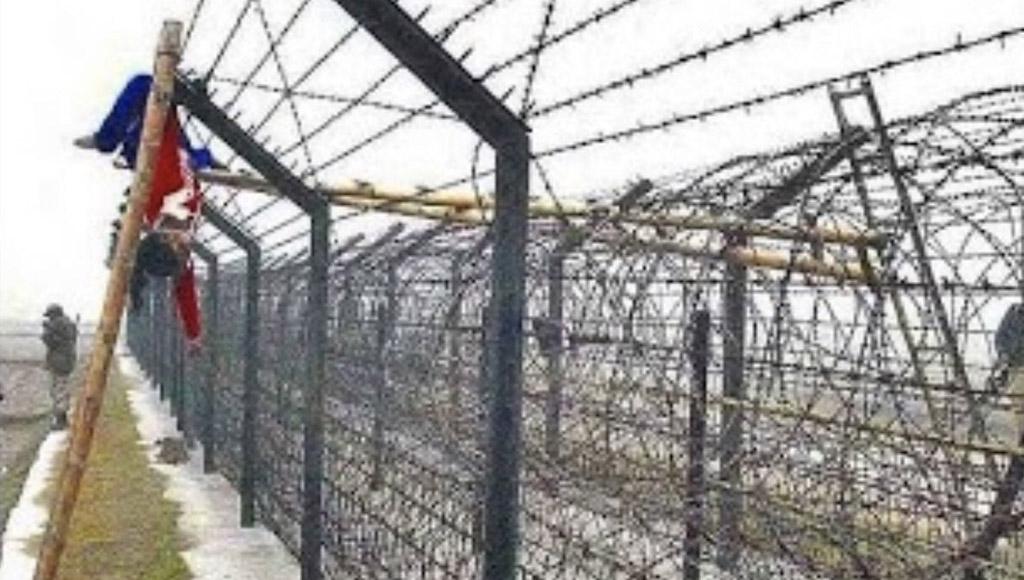
| Lion Umar Razi: 7 January marks a deeply painful and disgraceful chapter in Bangladesh’s history. On this day in 2011, Felani Khatun, a teenage Bangladeshi girl, was shot dead by India’s Border Security Force (BSF) at the Anantapur border in Kurigram. Death, however, did not end her suffering. For four hours and four minutes, her lifeless body remained suspended from the barbed-wire fence separating the two countries.
That haunting image did not merely shock the conscience of the world; it exposed, with brutal clarity, the contradictions between India’s proclaimed friendship with Bangladesh and its persistent hegemonic behaviour. Nearly fifteen years later, justice for Felani remains elusive, border killings continue, and equitable solutions to shared river waters remain unresolved.
The Felani Killing: A Travesty of Justice-
Following international outrage, India initiated proceedings against the accused BSF constable, Amiya Ghosh, in a special BSF court. On 6 September 2013, and again after a retrial on 2 July 2015, the accused was acquitted on grounds of “lack of evidence”.
The acquittal of a border guard who shot a minor at point-blank range stands as one of the most glaring judicial farces in modern history.
Felani’s father, Md Noor Islam, with support from the Indian human rights organisation MASUM, filed a writ petition (No. 45/2015) in the Supreme Court of India. Since 2015, the case has remained pending. Hearings have been repeatedly deferred. This prolonged delay underscores a troubling reality: India appears more concerned with safeguarding impunity for its border forces than with delivering justice for the life of a neighbouring country’s citizen.
Border Killings: Slaughter in the Name of Friendship-
In the aftermath of Felani’s killing, Indian authorities repeatedly pledged to adopt a “zero tolerance” policy and to use non-lethal weapons along the border. Yet human rights data tells a starkly different story.
Over the past fifteen years, hundreds of Bangladeshi nationals have been killed or tortured to death by the BSF. These killings are overwhelmingly one-sided. Such conduct cannot be reconciled with the norms of friendly relations between sovereign states; rather, it resembles a pattern of coercion and dominance, bordering on an undeclared low-intensity conflict.
Friendship cannot be built on the bodies of unarmed civilians.
Water Rights: The Deadly Trap of Farakka and Teesta-
India’s hegemonic posture extends far beyond border violence; it penetrates the lifeblood of Bangladesh- its 54 shared rivers.
Farakka and the Ganges
Commissioned experimentally in 1975, the Farakka Barrage has become a slow-burning catastrophe for Bangladesh’s north-west and south-west regions. By unilaterally diverting dry-season flows of the Ganges- often in violation of international water law- India has rendered the Padma River nearly lifeless, intensified salinity intrusion, and placed the fragile ecosystem of the Sundarbans at grave risk.
The Unending Teesta Delay
The Teesta Water Sharing Agreement was expected to be signed in 2011. More than a decade later, it remains stalled, hostage to India’s domestic political calculations. For the people of northern Bangladesh, the Teesta has become a symbol of deprivation and broken promises.
Floods in Monsoon, Drought in Winter
India’s upstream dam management follows a troubling pattern: gates remain closed when Bangladesh needs water most, and are suddenly opened during the monsoon, unleashing artificial floods downstream. The strategic manipulation of water as a tool of pressure cannot be described as cooperation- it is hydro-hegemony.
Economic and Political Dominance:
Despite granting India extensive access through transit routes, corridors, and port facilities, Bangladesh continues to face severe trade imbalances and non-tariff barriers. Indian protectionism undermines the very spirit of economic partnership.
Equally concerning are persistent allegations of India’s overt and covert involvement in Bangladesh’s internal political processes. Such influence over the decision-making of a sovereign state poses a serious threat to regional stability and mutual trust.
Conclusion: A Call for Relations Based on Equality-
Felani Khatun is no longer merely a victim of a border killing; she has become a symbol of Bangladesh’s constrained sovereignty.
Her memory reminds us that independence remains incomplete so long as our borders are unsafe, our rivers are denied, and our citizens can be killed without consequence.
India must recognise that enduring friendship cannot be forged through fear, coercion, or asymmetry. Genuine partnership rests on equality, accountability, and mutual respect. Ensuring justice for Felani, ending border killings, and guaranteeing Bangladesh its fair share of shared waters would be meaningful steps towards that goal.
Until then, Felani will continue to hang- on barbed wire and in our collective conscience- posing an unanswered question to both nations.
|
| |
|
|
|
| |

|
|
Chief Advisor: Md. Tajul Islam,
Editor & Publisher Fatima Islam Tania and Printed from Bismillah Printing Press,
219, Fakirapul, Dhaka-1000.
Editorial Office: 219, Fakirapul (1st Floor), Dhaka-1000.
Phone: 02-41070996, Mobile: 01720090514, E-mail: muslimtimes19@gmail.com
|
|
| |
|