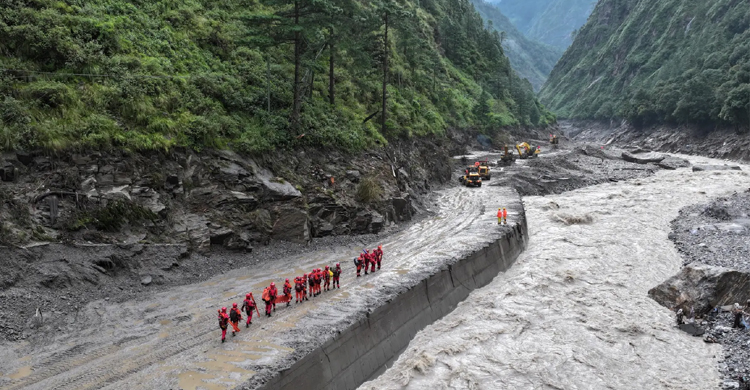
Prof. Dr. Asif Mizan : The devastating natural disaster in our neighboring nation, Nepal, has once again laid bare human vulnerability in the face of nature’s wrath. Nepal—a serene and picturesque realm in the lap of the Himalayas—has transformed into a landscape of grief. On Wednesday morning, August 26, 2026, around 8:45 AM local time, a massive glacier collapse struck the mountainous terrain along the Nepal-Tibet border. The resulting catastrophic debris flow and violent flash floods obliterated vast swathes of the country within moments. Sitting far away in East Africa as the Vice-Chancellor of Darus Salam University in Somalia, watching the media coverage of this tragedy unfold amidst my official duties continually draws my thoughts back to South Asia. The distress of our Nepali brothers and sisters weighs heavily on my heart.
Geographically, Nepal has always been highly vulnerable to natural hazards, but the sheer scale of this disaster is profound. According to international media and local law enforcement, the August 26 catastrophe has already claimed over 469 lives, with more than a thousand people still missing, including foreign tourists and local workers. Hundreds of homes, medical facilities, educational institutions, and critical public infrastructure have been destroyed. With road networks, communication lines, and power grids severely disrupted, delivering emergency relief and medical aid to remote mountain areas remains a daunting challenge. This immense loss of life and property is not merely an internal crisis for Nepal; it is a deep wound for humanity.
I offer my deepest condolences and heartfelt sympathy to the victims and their grieving families. No scale can measure the trauma of those who have lost loved ones or seen their homes swept away. In this hour of darkness, I stand in solidarity with the government and the resilient people of Nepal. History bears witness to the strength and endurance of the Nepali nation. Having overcome catastrophic earthquakes and crises in the past, I am confident they will rise above this tragedy as well.
However, a crisis of this magnitude cannot be resolved by Nepal alone. In an era of escalating climate vulnerability, the disaster facing Nepal today could strike any nation tomorrow. This is not just a localized regional calamity, but a test of global conscience.
I appeal to the international community—including the United Nations, international aid agencies, the OIC, and donor nations—to set aside geopolitical boundaries and extend immediate assistance. Nepal urgently requires large-scale food supplies, clean drinking water, life-saving medicines, and emergency shelter. Let us fulfill our shared humanitarian duty to alleviate this suffering. Combined global action can help restore stability to the Himalayas and bring hope back to its people. May humanity prevail.
The writer is the Vice-Chancellor of Daaru Salaam University, Somalia, and a specialist in Criminology, Governance, and Human Rights.